By the MiamiPermitAI team · July 16, 2026 · Updated September 30, 2026
Code Compliance's Role in Closing Real Estate Deals

Code compliance is the legal and structural foundation that determines whether a Miami-Dade real estate transaction can proceed to closing. The role of code compliance in closing deals is not procedural. It is decisive. A single open permit, an unpermitted addition, or a missing inspection record can stop a sale in its tracks, cost the seller tens of thousands of dollars, and send buyers walking. Real estate professionals, contractors, and homeowners in Miami-Dade operate under some of the most detailed building code requirements in Florida, including Miami 21 zoning, FEMA flood zone standards, and Florida DBPR contractor licensing rules. Understanding how compliance affects transactions is the difference between a clean closing and a deal that collapses at the finish line.
How does compliance documentation affect deal timelines?
Compliance documentation has become a mandatory entry requirement in real estate transactions, not an optional add-on. 67% of enterprise buyers now require formal compliance documentation before signing contracts, up from 49% in 2023. That shift means sellers and contractors who cannot produce organized permit records are disqualified before negotiations even begin.
The financial stakes are equally clear. Missing compliance certifications cause 23% of deals to be lost outright, with the remaining affected deals facing an average 4.2-month delay. For a Miami-Dade property transaction, a four-month delay can mean carrying costs, rate changes, and a buyer who simply moves on.

Well-organized documentation accelerates buyer decisions by removing uncertainty. When a seller presents a clean permit history, closed inspections, and current certificates of occupancy, the buyer’s attorney and lender have less to question. That speed advantage is real. Companies treating compliance as sales enablement report 30–40% shorter sales cycles because ready documentation reduces buyer risk friction.
The documents that most often determine deal speed in Miami-Dade real estate transactions include:
- Certificate of occupancy or certificate of completion for all permitted work
- Closed building permits with final inspection sign-off
- Miami 21 zoning compliance confirmation for the property’s use and setbacks
- FEMA elevation certificate for properties in flood zones
- Florida DBPR contractor license verification for any recent construction
- Open permit search results from Miami-Dade County’s public records portal
- Notice of Commencement (NOC) for major renovations or additions
Pro Tip: Pull an open permit search from Miami-Dade’s online portal before listing a property. Sellers who discover open permits after a buyer’s attorney flags them lose negotiating leverage and time.
What are the risks of non-compliance when closing in Miami-Dade?
Non-compliance in Miami-Dade does not produce a warning letter. It produces Stop Work Orders, daily accumulating fines, and in severe cases, condemnation orders that freeze a property entirely. Code compliance failures such as unpermitted work or open permits trigger these enforcement actions, halting transactions until every violation is resolved. A seller facing a Stop Work Order during escrow has almost no leverage and very little time.
Unpermitted work creates a specific legal problem called a cloud on title. Title companies will not insure a property with unresolved permit issues, and lenders will not fund a mortgage against a clouded title. Unpermitted work often goes undetected on title records until a buyer’s attorney or inspector surfaces it, at which point the seller must pursue retroactive permits. That process frequently uncovers additional violations, pushing closing dates back by months.
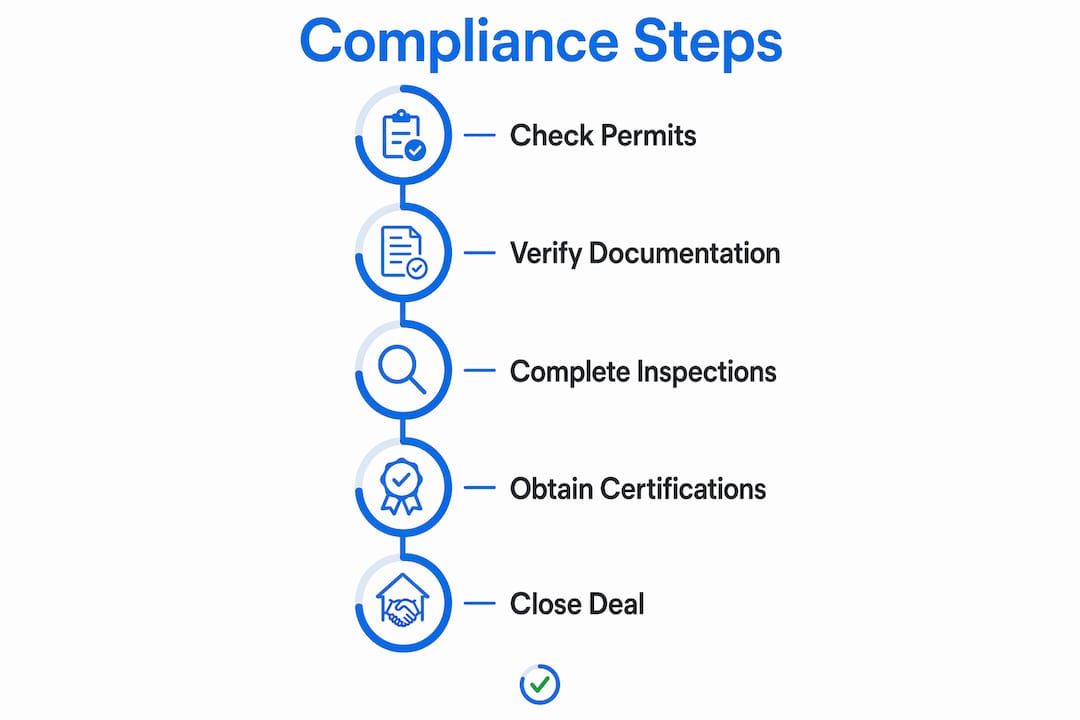
The cost of retroactive compliance is almost always higher than the original permitted work would have cost. Homeowners cannot simply pay fines for unpermitted work. Miami-Dade inspectors require full upgrade to current code standards, which can mean opening walls and floors to assess concealed electrical, plumbing, or structural elements. A homeowner who added a bathroom without a permit in 2018 may face a 2026 code upgrade for the entire wet area, not just the original work.
Real estate attorneys in Miami-Dade routinely see deals collapse within days of closing because a permit listed as “issued” was never finalized. Publicly listed permit status does not confirm that final inspections were completed or that the permit was properly closed. That distinction kills deals.
How can contractors, realtors, and homeowners manage compliance proactively?
Proactive compliance management is the single most effective way to protect deal timelines. The following steps apply to sellers, listing agents, and contractors preparing a property for sale or transfer.
-
Run a permit history audit at least 60 days before listing. Pull all permit records from Miami-Dade County’s public portal and verify that every permit has a final inspection and a closed status. Permit history audits catch open or improperly closed permits that create lender financing roadblocks. Sixty days gives you time to resolve issues without pressure.
-
Address open permits before the buyer’s attorney does. Contact the original contractor or a licensed Florida DBPR contractor to schedule the missing inspection. If the contractor is no longer available, a new licensed contractor can pull a permit extension or file for permit closure.
-
Verify that all unpermitted work is disclosed and remediated. Sellers in Florida have a legal obligation to disclose known material defects, and unpermitted work qualifies. Proactive disclosure paired with a remediation plan is far less damaging than a buyer discovering it independently.
-
Align all work with current Miami 21 zoning and Florida Building Code standards. Setback violations, height violations, and use violations under Miami 21 can require physical modifications to the structure, not just paperwork. Confirm compliance before listing, not during escrow.
-
Use compliance as a sales advantage. A property with a clean permit history, closed inspections, and current certificates commands buyer confidence. Realtors who present a compliance package alongside the listing attract more serious buyers and fewer contingencies. Tracking lost deals due to missing certifications justifies the upfront investment in getting the permit record clean.
For contractors, the best practice is to never leave a permit open after project completion. File for final inspection immediately, and confirm the permit status in Miami-Dade’s system within 30 days of inspection. For homeowners, review the required documents for renovation permits before starting any project to avoid creating future title problems.
Common compliance pitfalls that delay or kill Miami-Dade closings
The most dangerous assumption in Miami-Dade real estate is that a “permitted” record means a compliant property. Permitted status only means a permit was issued. It says nothing about inspections, corrections, or final closure.
| Pitfall | What actually happens | How to avoid it |
|---|---|---|
| Assuming “permitted” means closed | Permit was issued but final inspection never scheduled | Pull full permit history and confirm closed status |
| Ignoring open permits from prior owners | Buyer’s lender flags open permit and refuses to fund | Run a title and permit search before listing |
| Paying fines instead of fixing violations | Miami-Dade requires code-compliant upgrades, not just payment | Hire a licensed contractor to bring work to current code |
| Missing final inspections on recent work | Deal breaks days before closing when attorney reviews records | Schedule final inspection immediately after project completion |
| Overlooking FEMA flood zone requirements | Elevation certificate missing, lender requires flood insurance proof | Obtain elevation certificate for any property in a designated flood zone |
Understanding why permits get rejected in Miami-Dade is equally important for contractors submitting new permit packages during a sale or renovation. Rejection adds weeks to timelines that are already under pressure. Reviewing the types of code violations that most commonly surface during transactions gives sellers and agents a clear checklist to work from before listing.
Non-compliance costs extend well beyond fines. They include lost deals, higher insurance premiums, and reduced property valuation. Treating compliance as a revenue decision rather than a paperwork burden changes how quickly problems get resolved.
Key Takeaways
Code compliance is a direct driver of deal success in Miami-Dade real estate. Sellers and contractors who resolve permit issues before listing close faster, face fewer contingencies, and protect their asking price.
| Point | Details |
|---|---|
| Compliance documentation is mandatory | 67% of buyers require formal compliance records before signing, making permit history a deal entry requirement. |
| Missing certifications kill deals | 23% of deals are lost outright when compliance records are incomplete, with others delayed an average of 4.2 months. |
| Retroactive permits cost more | Miami-Dade requires full code upgrades for unpermitted work, not just fines, often requiring invasive inspections. |
| “Permitted” does not mean “closed” | A permit listed as issued may lack a final inspection, which lenders and title companies will flag before funding. |
| Proactive audits protect timelines | Running a permit history audit 60 days before listing gives sellers time to resolve issues without losing negotiating leverage. |
Why compliance belongs first on every deal checklist
Real estate professionals often treat compliance as a closing condition, something to sort out after a buyer is under contract. That sequencing is a common source of deal failures in Miami-Dade. By the time a buyer’s attorney surfaces an open permit or a title company flags unpermitted work, the seller has lost all control of the timeline and much of their negotiating position.
The professionals who close cleanly and on schedule treat compliance as a pre-listing requirement. They pull permit records, verify final inspections, and resolve open items before the property hits the market. That approach does not just protect the deal. It actively accelerates it. Buyers and their lenders move faster when the compliance record is clean because there is nothing to investigate or negotiate around.
The financial argument for proactive compliance is straightforward. A permit audit and remediation that costs $3,000 to $8,000 before listing is far less damaging than a deal that collapses in escrow, requires price renegotiation, or delays closing by four months. The carrying costs alone on a Miami-Dade property during a four-month delay routinely exceed the cost of fixing the permit issue upfront. Compliance is not a legal obligation to manage at the last minute. It is a financial decision that belongs at the top of the deal preparation checklist.
Miamipermitai helps you catch permit issues before they cost you a deal
Permit problems surface at the worst possible moment in a real estate transaction. Miamipermitai gives contractors, realtors, and homeowners a way to catch those problems before they become deal-breakers.
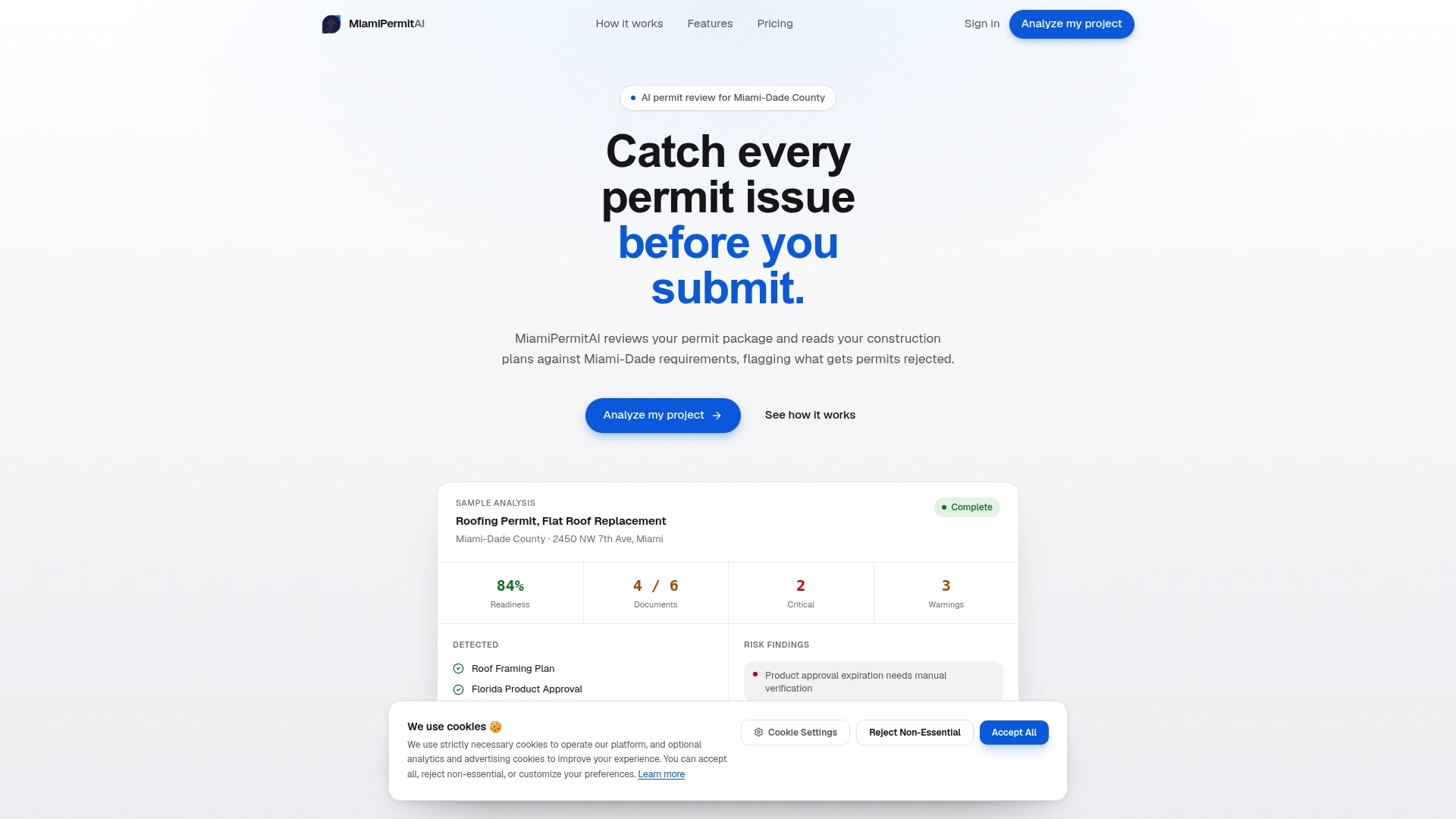
Miamipermitai reviews your building permit package against Miami-Dade requirements before you submit to the county. It flags missing documents, plan inconsistencies, and the issues that most often cause rejections and delays. The platform checks Miami 21 zoning, FEMA flood zone data, folio property records, and Florida DBPR contractor license status in a single review. You get a clear readiness score and a plain-language list of what to fix. Check your permit package before submission and go into your next closing with a clean compliance record.
FAQ
What is the role of code compliance in closing deals?
Code compliance determines whether a property can legally transfer ownership. Open permits, unpermitted work, or missing inspections block title insurance and lender financing, preventing closing.
How does unpermitted work affect a real estate sale in Miami-Dade?
Unpermitted work creates a cloud on title that title companies will not insure. Sellers must obtain retroactive permits and bring all work up to current Miami-Dade code standards before the sale can proceed.
Can a buyer’s lender reject financing due to permit issues?
Yes. Lenders require a clear title and confirmed code compliance before funding a mortgage. Open or improperly closed permits are a direct cause of financing denial or delay.
How early should sellers check permit status before listing?
Sellers should run a full permit history audit at least 60 days before listing. That window allows time to schedule missing inspections and resolve open permits without disrupting the sale timeline.
Does paying a Miami-Dade code violation fine resolve the compliance issue?
No. Miami-Dade inspectors require full upgrade to current code standards for unpermitted work, not just fine payment. Remediation often involves opening walls or floors to inspect concealed systems.
Recommended
Is your permit package ready?
Run an AI readiness check against Miami-Dade requirements before you submit.
Start your first projectThis article is general guidance and not legal, engineering, or official county advice. Always verify requirements with Miami-Dade County before submitting a permit.