By the MiamiPermitAI team · July 15, 2026 · Updated September 30, 2026
Electrical Permit Submittal Workflow: Miami-Dade Guide
The electrical permit submittal workflow is a managed series of steps that takes your project from scope confirmation through code review to final inspection approval. In Miami-Dade, this process runs through the county’s Building Department and requires alignment with Florida Building Code, the current National Electrical Code (NEC) edition, and Miami 21 zoning rules. Get it right and your project moves on schedule. Get it wrong and you face correction cycles that add weeks to your timeline. Miamipermitai reviews your permit package against Miami-Dade requirements before you submit, flagging the issues that most often cause rejections.
What documents and prerequisites does an electrical permit require?
Every electrical permit application process starts with the same foundation: the right paperwork, assembled correctly, before you touch the portal.
Required documents for most electrical permits in Miami-Dade:
- Completed permit application form with correct property folio number and address
- Florida-licensed electrical contractor’s license and certificate of insurance (or homeowner affidavit for owner-occupied primary residences)
- Scope of work narrative describing exactly what electrical work will be performed
- Panel schedule and load calculations
- Single-line diagram for service upgrades or new panels
- Site plan showing electrical service entry location
- Product data sheets for major equipment (panels, generators, EV chargers)
Homeowners can pull their own permits on their primary residence using a homeowner affidavit. Rental properties, commercial buildings, and second homes require a licensed electrician to pull the permit. That distinction trips up a lot of applicants early.
Code compliance is non-negotiable from the first page. You must verify the current NEC edition adopted in Miami-Dade before assembling your documents. Code enforcement is strictly bound to the NEC version in force at permit issuance, so referencing an outdated edition guarantees a rejection.
Pro Tip: Call the Miami-Dade Building Department before you submit. A 30-minute pre-submittal call with AHJ staff clarifies exact submission requirements and current fees, and it can save you weeks of delays from intake rejections.
Permit fees for commercial electrical work typically run 1.5%–4% of total project value, with plan review deposits of 25%–40% due at submission. Residential fees are generally lower and calculated per unit or per square foot. Budget for these costs before your submission date so they do not stall your application.
| Document | Required for residential | Required for commercial |
|---|---|---|
| Permit application form | Yes | Yes |
| Contractor license and insurance | Yes (or affidavit) | Yes |
| Load calculations | Panel upgrades and above | Yes |
| Single-line diagram | Panel upgrades | Yes |
| Site plan | Yes | Yes |
| Equipment data sheets | Major equipment only | Yes |
How to navigate the electrical permit submittal process in Miami-Dade
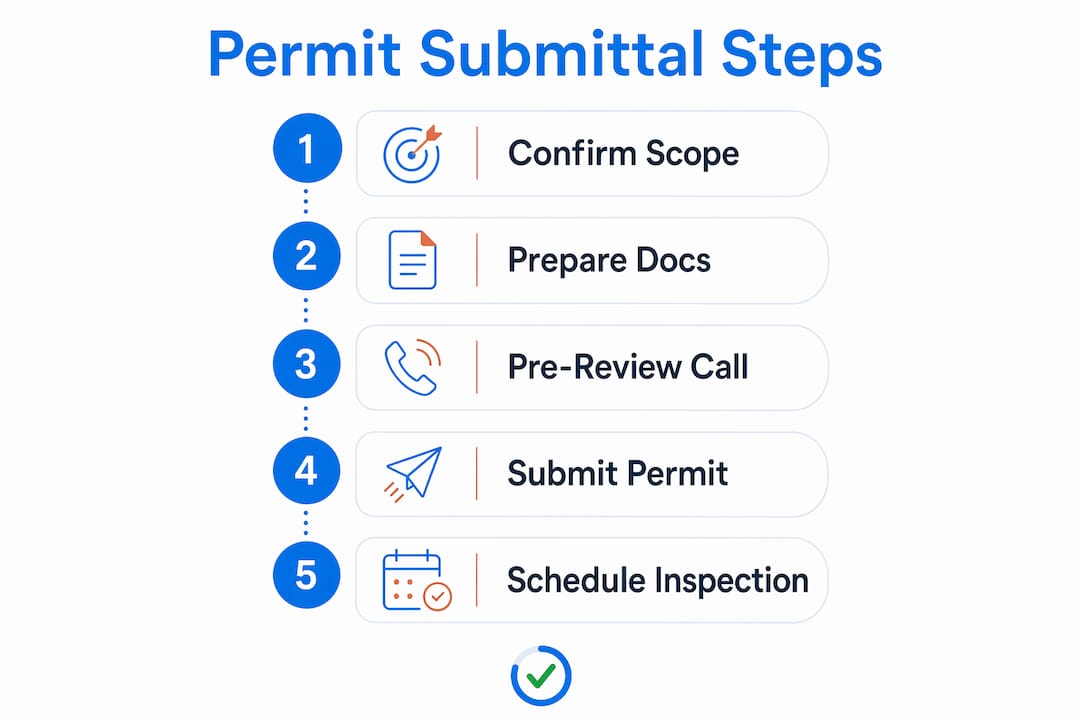
The workflow for electrical permits in Miami-Dade follows a clear sequence. Skipping steps or submitting out of order is the fastest way to generate a correction notice.
Step-by-step electrical permit approval steps:
- Confirm your scope. Define exactly what work is covered. Vague scopes like “electrical work” get flagged at intake. Write it as “200A service upgrade with new main panel and 10 branch circuits.”
- Assemble your documents. Use the checklist from the previous section. Every item must match: the name on the license must match the application, and the address must match the folio record exactly.
- Submit through the Miami-Dade permit portal. Most residential and commercial electrical permits go through the county’s online system. Upload all documents in the required format and pay the plan review deposit.
- Manage the plan review. Commercial plan review typically takes 10–20 business days. Some jurisdictions offer express review at a premium. Residential reviews for simple projects can clear in 1–5 business days.
- Respond to corrections promptly. If the reviewer issues a correction notice, address every item before resubmitting. Partial responses restart the clock.
- Receive your permit and post it. The permit must be posted at the job site before any work begins.
- Schedule your inspections. Rough-in inspection happens before walls close. Final inspection happens after all work is complete and the panel is energized.
Pro Tip: Schedule your rough-in inspection the same day you request your permit. Miami-Dade inspection slots fill quickly. Waiting until the rough-in is done to call for an inspection adds unnecessary days to your project.
Utility coordination is a separate track that runs parallel to the permit process. If your project involves a service upgrade, Florida Power & Light (FPL) must approve the new service size before the final inspection. Start that coordination early. FPL’s approval timeline does not pause for your construction schedule.

Small additions and simple circuits clear in 1–5 business days. Panel upgrades take 5–15 business days. Whole-house rewires run 2–4 weeks. Build those windows into your project schedule from day one.
| Project type | Typical permit timeline |
|---|---|
| New circuit or outlet addition | 1–5 business days |
| Panel upgrade (200A service) | 5–15 business days |
| Whole-house rewire | 2–4 weeks |
| Commercial electrical (new build) | 10–20 business days |
What are common mistakes that delay electrical permit submissions?
Most permit delays do not come from a slow building department. Submission gaps cause the majority of delays, and those gaps are entirely preventable.
The most common rejection triggers in Miami-Dade electrical submissions:
- License number on the application does not match the Florida DBPR record exactly
- Missing or unsigned homeowner affidavit on owner-pulled permits
- Load calculations reference an outdated NEC edition
- Single-line diagram missing for service upgrades
- Scope of work too vague to confirm code compliance
- Documents uploaded in the wrong format or with incorrect file names
Poor coordination among design and MEP (mechanical, electrical, plumbing) teams creates a specific type of problem. When the electrical drawings conflict with the mechanical drawings, the plan reviewer flags both. You then need corrections from two disciplines before you can resubmit. That coordination failure alone can add 2–6 weeks to a project timeline.
A pre-submittal checklist that verifies address formats, license matching, and owner authorization catches the errors that cause immediate application rejections. A 30-minute call with AHJ staff before submission saves weeks of delays that no amount of rushing can recover.
Managing revision submittals is its own skill. When you receive a correction notice, read every comment before responding. Addressing nine of ten comments and missing the tenth means another full review cycle. Create a correction log that tracks each comment, your response, and the revised document version.
Pro Tip: Build a pre-submittal checklist specific to Miami-Dade electrical permits. Run through it 48 hours before submission, not the morning of. Catching a missing signature the day before beats discovering it after the portal rejects your package.
Understanding why permits get rejected in Miami-Dade specifically gives you a real advantage. The county has its own local amendments to the Florida Building Code, and reviewers enforce them consistently.
How can contractors and homeowners get the most out of the permit workflow?
Treating the electrical permit application process as a managed project, not a one-time submission, is the single biggest shift that separates contractors who rarely get rejections from those who routinely do. Managing submission as a structured workflow aligned with AHJ expectations reduces rejections and speeds approval.
Strategies that actually work:
- Assign a dedicated permit owner on every project. One person tracks every document, every deadline, and every correction notice.
- Tie permitting milestones to design phases. At the 30% design checkpoint, confirm your scope. At 60%, have your load calculations and single-line diagram drafted. At 90%, run your pre-submittal checklist.
- Use a centralized submittal log. Meticulous device and fixture takeoffs mapped to a centralized log prevent the documentation gaps that generate correction cycles.
- Hold a permitting kickoff meeting before finalizing construction documents. Joint meetings among architecture, structural, and MEP teams catch conflicting information before it reaches the plan reviewer.
- Coordinate inspection scheduling with your construction progress. Do not close walls until the rough-in inspection is signed off.
Miamipermitai fits directly into this workflow. Before you submit to Miami-Dade, Miamipermitai reads your uploaded construction plans against Miami-Dade requirements, including Miami 21 zoning, FEMA flood zone rules, and Florida DBPR contractor license verification. You get a readiness score and a plain-language list of what to fix. That review catches the issues that would otherwise come back as correction notices.
| Approach | Result |
|---|---|
| Submit without pre-review | Higher rejection rate, correction cycles, added weeks |
| Pre-submittal checklist only | Catches document gaps, misses code conflicts |
| Pre-submittal review with Miamipermitai | Flags document gaps, code issues, and zoning conflicts before submission |
Pro Tip: After permit issuance, Miamipermitai tracks your permit status through Miami-Dade public records and sends email updates. You do not need to log in and check manually every day.
Key takeaways
A structured electrical permit submittal workflow, built around pre-submittal verification, correct documentation, and coordinated inspections, is the most reliable way to avoid rejections and keep Miami-Dade projects on schedule.
| Point | Details |
|---|---|
| Verify code and license first | Confirm the current NEC edition and match your license to the DBPR record before assembling documents. |
| Use a pre-submittal checklist | A checklist reviewed 48 hours before submission catches the errors that cause immediate intake rejections. |
| Coordinate MEP teams early | Conflicting drawings between disciplines trigger multi-discipline corrections that add weeks to timelines. |
| Build inspection scheduling in | Request rough-in inspection slots early; Miami-Dade slots fill fast and waiting adds unnecessary days. |
| Treat permitting as a managed project | Assign a dedicated permit owner and tie milestones to design phases to prevent documentation gaps. |
Common reasons Miami-Dade electrical permits fail
The contractors who move fastest through Miami-Dade permitting tend to share one habit: they treat the permit package like a deliverable, not an afterthought. They assign someone to own it, they build it in parallel with design, and they check it before they submit. The ones who struggle treat it as the last step before construction starts.
Some of the most avoidable delays come from a single mismatch: the name on the electrical contractor’s license does not match the name on the application. It sounds trivial. The building department does not think so. That error alone sends the package back to day one.
Early coordination with the AHJ is underused. Most contractors submit and wait. The ones who call first, confirm the current requirements, and ask about any recent local amendments to the Florida Building Code move through review faster. Reviewers notice when a package is clearly prepared by someone who did their homework.
Pre-submittal tools like Miamipermitai exist precisely because the gap between “I think this is ready” and “this is actually ready” is where most delays live. Closing that gap before submission is not extra work. It is the work.
Your electrical permit package, checked before it counts
Submitting an electrical permit in Miami-Dade without a pre-review is like turning in a test without checking your answers. Miamipermitai reads your uploaded plans against Miami-Dade’s actual requirements, including Miami 21 zoning, FEMA flood zones, and Florida DBPR license records, before you submit to the county.
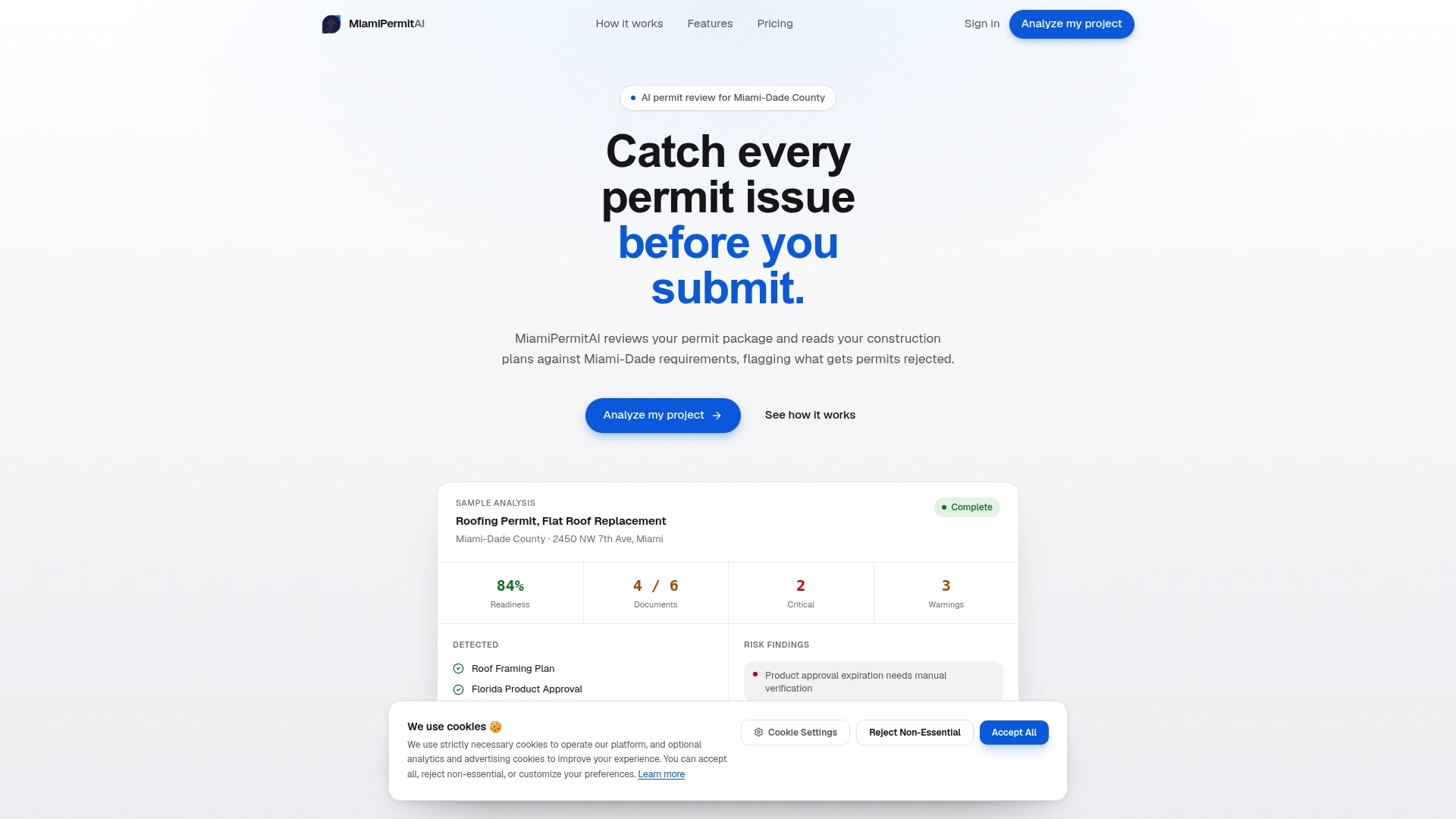
You get a clear readiness score, a list of specific issues to fix, and plain-language guidance on each one. After you submit, Miamipermitai tracks your permit through Miami-Dade’s public records and sends you status updates by email. Check your permit package before it goes to the county, and give your project the best chance of clearing review on the first submission.
FAQ
What documents are required for an electrical permit in Miami-Dade?
Most electrical permits require a completed application, contractor license and insurance, a scope of work narrative, load calculations, and a single-line diagram for panel upgrades. Homeowners pulling their own permit on a primary residence must also include a signed homeowner affidavit.
How long does an electrical permit take in Miami-Dade?
Simple additions clear in 1–5 business days, panel upgrades take 5–15 business days, and whole-house rewires typically run 2–4 weeks. Commercial projects follow a plan review timeline of 10–20 business days in most jurisdictions.
Can a homeowner pull an electrical permit in Miami-Dade?
Yes, homeowners can pull electrical permits on their primary residence using a homeowner affidavit. Rental properties, commercial buildings, and second homes require a Florida-licensed electrical contractor to pull the permit.
What causes most electrical permit rejections in Miami-Dade?
The most common causes are license information mismatches, missing documents, outdated NEC code references, and vague scope of work descriptions. Submission gaps, not slow review offices, cause the majority of permit delays.
How do I check the status of my electrical permit in Miami-Dade?
You can check permit status through Miami-Dade County’s public permit portal using your permit number or property address. Miamipermitai also tracks permit status automatically after submission and sends email updates when the status changes.
Recommended
Is your permit package ready?
Run an AI readiness check against Miami-Dade requirements before you submit.
Start your first projectThis article is general guidance and not legal, engineering, or official county advice. Always verify requirements with Miami-Dade County before submitting a permit.