By the MiamiPermitAI team · June 29, 2026 · Updated September 30, 2026
Permit Revision Submittal Best Practices for Miami-Dade

Permit revision submittal best practices are the protocols that determine whether your revision package clears review in one cycle or gets stuck in a loop of corrections and resubmittals. In Miami-Dade, the stakes are high. The county’s building department enforces Miami 21 zoning, FEMA flood zone requirements, and Florida DBPR contractor license standards simultaneously. A single missing revision cloud or an expired contractor certificate can send your package back and cost you weeks. Whether you are a contractor, homeowner, or real estate investor, following a disciplined approach to permit revisions is the fastest path to approval.
1. What goes into a well-prepared permit revision submittal package?
A complete revision package is the foundation of every efficient permit revision. Reviewers should be able to identify every change at a glance without comparing documents side by side.
The core elements every package must include:
- Revision clouds and delta symbols on every sheet that contains a change. Clear markings speed approval by eliminating the need for reviewers to hunt for what changed.
- Updated revision schedule in the title block of each modified sheet. The revision number, date, and brief description must match across all sheets and the cover sheet.
- Coordinated document sets where site plans, floor plans, sections, and written scopes all reflect the same work. Uncoordinated packages generate multiple rounds of comments across departments.
- Architect’s or engineer’s stamp with the revision date on every corrected sheet. Miami-Dade requires the stamp and revision date to match the package submission date exactly.
- Updated cover sheet notes that summarize the revision scope and reference the original permit number.
Pro Tip: Print a single-page revision summary listing every changed sheet by number, revision delta, and a one-line description. Attach it as the first page of your resubmittal. Reviewers notice the effort and it reduces back-and-forth questions.
Skipping any of these elements forces the reviewer to stop, request clarification, and restart the clock on your review cycle.

2. How to respond to plan review corrections without losing weeks
Responding to corrections is where most permit revision cycles either accelerate or stall. The standard industry term for a structured response is a “plan review response matrix,” and it is the single most effective tool for moving through corrections quickly.
Follow these steps to build a response that closes every comment:
- List every comment verbatim. Copy each reviewer comment into a spreadsheet or table. Do not paraphrase. Paraphrasing creates ambiguity about whether you addressed the actual concern.
- Map each comment to a specific action. State exactly what you changed and on which sheet. A response like “See revised plans” with no sheet reference causes the comment to carry forward, prolonging review cycles.
- Justify any comment you dispute. If you believe a comment is incorrect, write a clear code citation explaining why. Leave no comment blank. A blank response is treated as an unresolved issue.
- Review all changes holistically. Fixing one comment often affects adjacent details. Revisions addressing one comment can inadvertently create new code conflicts if you do not check the full scope of the change.
- Call the plan checker before resubmitting on ambiguous comments. A 20-minute phone call can replace multi-week written disputes for unclear or technically questionable items.
Pro Tip: Applicants often avoid calling the building department, fearing friction. Plan checkers prefer quick clarifications. A brief call saves 4–6 weeks of written back-and-forth.
The response matrix travels with your resubmittal package. It shows the reviewer that every comment received a deliberate answer, which builds confidence and speeds re-approval.
3. Administrative pitfalls that cause delays in Miami-Dade
Administrative rejections are the most preventable category of permit delays. They have nothing to do with design quality and everything to do with paperwork currency and jurisdictional specifics.
Watch for these common traps:
- Expired contractor documentation. Failing to update contractor bonds, licenses, and workers’ compensation certificates during the review period is a leading cause of administrative delays in 2026. Monthly verification of these documents is the standard practice to prevent rejection.
- Missing jurisdiction-specific checklists. Miami-Dade has its own submittal checklists by project type. Using a generic checklist from another county misses local requirements and triggers correction notices.
- Undeclared deferred submittal items. Deferred items must be declared at initial submittal to avoid mandatory amendments requiring full re-review and additional fees later. Over-declaring deferred items carries no penalty. Missing them risks a stop-work order.
- Confusing revisions with amendments. A revision submitted during active plan review typically does not require a new application or separate fee. An amendment filed after permit issuance does. Submitting the wrong form type triggers administrative rejection before a reviewer even looks at your plans.
- Fee calculation errors. Miami-Dade calculates revision fees differently depending on project type and scope of change. Confirm the correct fee schedule with the building department before submitting.
Keeping a running log of contractor license expiration dates and insurance renewal dates removes the risk of an administrative rejection derailing a project that is otherwise ready to build.
4. Digital tools that improve accuracy and track review progress
Digital pre-submission checks are now the most reliable way to catch errors before they reach a reviewer. Platforms like Miamipermitai automate checklist verification tailored to Miami-Dade requirements, flagging missing documents and plan inconsistencies before you submit to the county.
Key advantages of using digital tools in your revision workflow:
- Automated document completeness checks. The system compares your package against Miami-Dade’s required document list and flags gaps. You fix them before submission, not after a rejection notice.
- Plan consistency verification. Miamipermitai reads uploaded construction plans against Miami 21 zoning, FEMA flood zone data, and folio property records to identify conflicts between sheets.
- Permit status tracking. After you submit to the county, Miamipermitai tracks the permit through approval using public Miami-Dade records and sends email updates. You do not need to call the building department to check status.
- Version management. Keeping track of which revision package is current becomes critical on projects with multiple resubmittals. A digital platform maintains a clear history linking each revision to the original permit.
Digital pre-submission checks reduce missing document errors and increase the likelihood of first-pass approvals. That outcome matters most on projects where construction timelines are fixed and delays translate directly into carrying costs.
5. How situational factors change your revision strategy
Not every revision situation calls for the same approach. The right strategy depends on where you are in the permit lifecycle and how complex the changes are.
| Situation | Key consideration | Recommended approach |
|---|---|---|
| Revision during plan review | No new application needed; review cycles run 5–15 business days for corrections | Submit a complete response matrix with all comments addressed |
| Amendment after permit issuance | Requires new application and fees; triggers full re-review | Confirm scope with building department before preparing documents |
| Multidisciplinary change | Affects structural, mechanical, and electrical sheets simultaneously | Coordinate all disciplines before resubmitting; one uncoordinated sheet restarts the cycle |
| Residential project | Simpler scope but Miami 21 setbacks and FEMA flood zones still apply | Use Miamipermitai to verify zoning and flood compliance before submission |
| Commercial project | Multiple reviewers across departments; common permit submission mistakes multiply with scope | Assign one point of contact to manage all department responses |
The permit revision mid-construction process adds another layer of complexity. If construction has started and a field condition requires a design change, you must stop that scope of work, submit the revision, and wait for approval before proceeding. Continuing work without an approved revision is a code violation in Miami-Dade and can result in a stop-work order.
Licensed professionals, including architects and engineers of record, must sign off on any technical change that affects life safety, structural integrity, or code compliance. Involving them early prevents the back-and-forth that comes from submitting changes that a reviewer cannot approve without a professional seal.
Key takeaways
Successful permit revision submittals in Miami-Dade require clearly marked packages, a complete response matrix, current contractor documentation, and a pre-submission check against local requirements before the package reaches a reviewer.
| Point | Details |
|---|---|
| Mark every change clearly | Use revision clouds and delta symbols on all modified sheets so reviewers find changes immediately. |
| Address every comment explicitly | Map each review comment to a specific sheet and action; never leave a response blank or vague. |
| Verify contractor documents monthly | Expired licenses, bonds, or insurance certificates trigger administrative rejection regardless of plan quality. |
| Declare deferred items upfront | Missing deferred submittal declarations at initial submission forces a full amendment and re-review later. |
| Use digital pre-submission checks | Miamipermitai flags missing documents and plan inconsistencies before you submit to Miami-Dade. |
Permit revision mistakes to avoid
A common mistake contractors and homeowners make is treating the plan review process as adversarial. It is not. Reviewers are not looking for reasons to reject your package. They are checking that the work meets code so the building is safe. When you approach corrections as a coordination exercise rather than a negotiation, the tone of every interaction changes and approvals come faster.
The second mistake is underestimating how much one uncoordinated sheet costs you. A project can lose weeks because a mechanical plan shows a duct chase that the structural plan does not account for. Both sheets were individually correct. Together, they told conflicting stories. The permit success formula is simple: every discipline must tell the same story across every sheet.
My practical recommendation is to maintain a living document throughout the review process. Log every comment, every response, every phone call, and every resubmittal date. That document becomes your defense if a comment gets lost in the system and your evidence if a dispute arises. It also makes the next revision cycle faster because you already know the reviewer’s priorities.
Early engagement with the building department is not a sign of weakness. It is the move that experienced applicants make every time.
How Miamipermitai prepares your revision package before you submit
Permit revision packages fail for predictable reasons: missing documents, uncoordinated sheets, expired contractor credentials, and zoning conflicts that a reviewer catches in minutes. Miamipermitai catches those same issues before your package reaches the county.
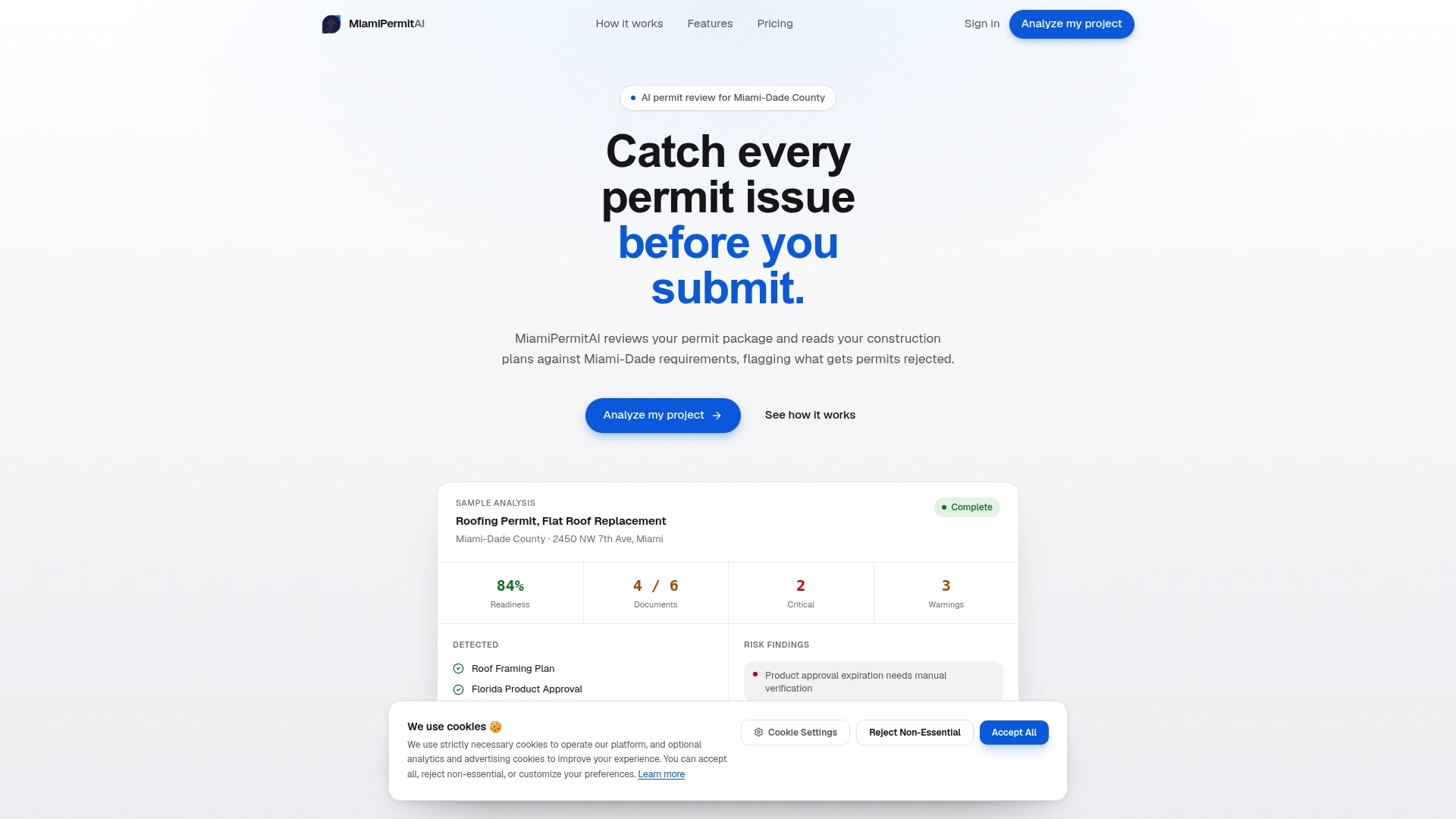
The platform reads your uploaded construction plans against Miami-Dade requirements, including Miami 21 zoning, FEMA flood zones, and Florida DBPR contractor license records. You get a readiness score, a list of what to fix, and plain-language guidance on each issue. After you submit to the county, Miamipermitai tracks your permit status using public Miami-Dade records and sends you email updates. Check your permit package before you submit and stop revision cycles before they start. You can also catch what gets permits rejected with a full pre-submission review tailored to your project type.
FAQ
What is the difference between a permit revision and an amendment?
A revision is submitted during active plan review before the permit is issued and typically requires no new application or fee. An amendment is filed after the permit is issued, requires a new application, and triggers a full re-review with additional fees.
How long does a permit revision review take in Miami-Dade?
Correction review cycles generally run 5–15 business days, while initial reviews range from 10 to 60 or more days depending on project complexity.
What causes most permit revision rejections in Miami-Dade?
The most common causes are missing revision clouds on changed sheets, expired contractor documentation, uncoordinated plans across disciplines, and undeclared deferred submittal items.
Do I need an architect’s stamp on revised sheets?
Yes. Miami-Dade requires an architect’s or engineer’s stamp with a revision date on every corrected sheet, and that date must match the package submission date.
Can I call the plan checker before resubmitting?
Calling the plan checker to clarify ambiguous comments is encouraged and can save weeks of written back-and-forth on disputed or unclear items.
Recommended
Is your permit package ready?
Run an AI readiness check against Miami-Dade requirements before you submit.
Start your first projectThis article is general guidance and not legal, engineering, or official county advice. Always verify requirements with Miami-Dade County before submitting a permit.