By the MiamiPermitAI team · July 8, 2026 · Updated September 30, 2026
Types of Code Violations in Miami-Dade: 2026 Guide

A Miami-Dade code violation is a formal finding by the Miami-Dade Code Enforcement Department that a property fails to meet local building, zoning, or maintenance standards. The primary types of code violations in Miami-Dade are unpermitted construction, expired building permits, unsafe structures, and property maintenance infractions. Each category carries distinct consequences: fines that accrue daily, liens on property title that block sales and refinancing, and in serious cases, demolition orders. Homeowners, contractors, and real estate investors all face real financial exposure when these violations go unaddressed.
1. Types of code violations in Miami-Dade: unpermitted construction
Unpermitted construction is work started or completed without the required building permits from Miami-Dade County. It is the most common violation category and the one that creates the most complications at resale.
Common unpermitted work includes:
- Residential room additions built without permits
- Electrical panel upgrades or rewiring done outside the permit process
- Pool and spa installations without structural or electrical permits
- Roof replacements completed without a roofing permit
- Structural modifications such as load-bearing wall removal
The risks go beyond fines. Unpermitted work can void a homeowner’s insurance policy if a claim arises from the unpermitted area. Buyers’ lenders routinely require proof that all improvements are permitted before closing. Retroactive legalization, called an “after-the-fact” permit, requires new inspections and sometimes demolition of walls to expose work for review.
Pro Tip: Before listing a property or starting a renovation, pull the permit history using the Miami-Dade Building Department’s online portal. Catching unpermitted work early costs far less than resolving it under a sale deadline.
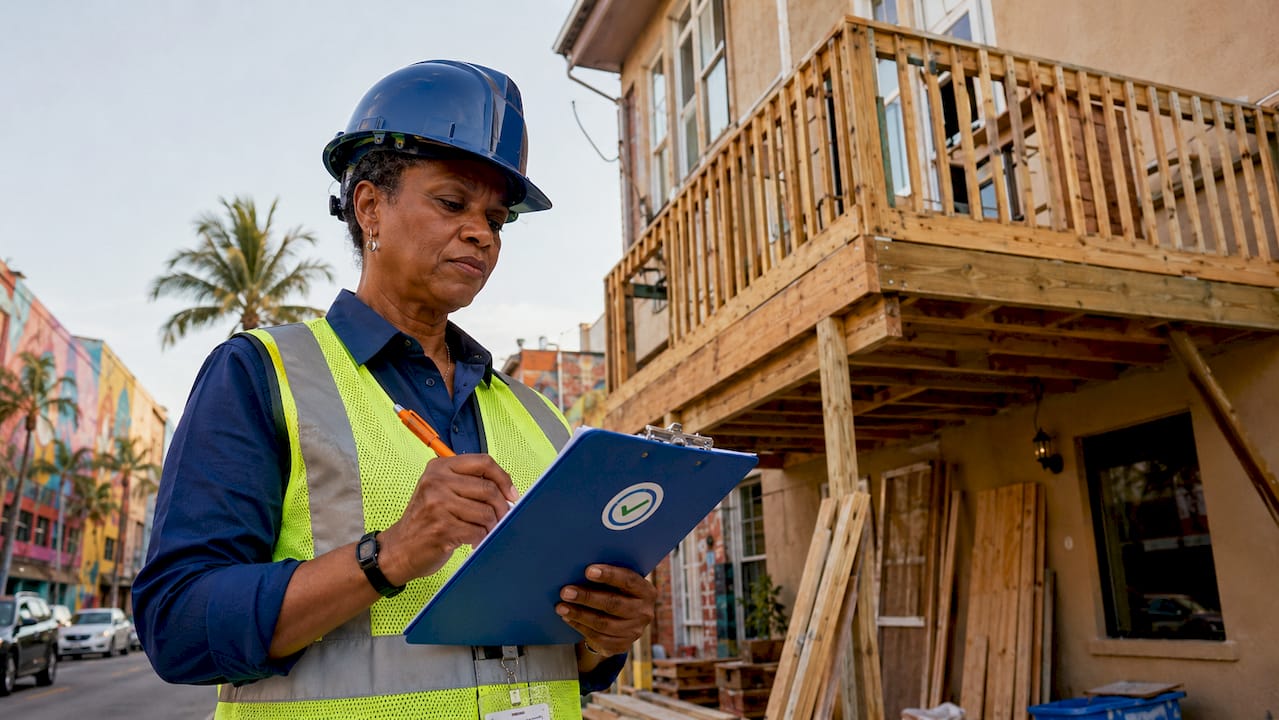
Resolution follows a predictable path: apply for a retroactive permit, pass all required inspections, and pay any assessed fines. Engaging a licensed contractor early in that process matters because Miami-Dade requires a licensed professional to sign and seal plans for most retroactive applications. Knowing why permits get rejected before you apply saves weeks of back-and-forth.
2. How expired building permits create violations in Miami-Dade
An expired permit violation occurs when a permit was issued but never closed with a final inspection. The permit sits open, the work is legally incomplete, and Miami-Dade Code Enforcement can cite the property as non-compliant.
The scale of this problem is significant. Zip code 33147 leads Miami-Dade with 3,148 open violations across 1,911 properties, including 558 expired building permits as of april 2026. That concentration shows how often contractors or owners pull permits and then skip the final inspection step.
Steps to cure an expired permit violation:
- Locate the original permit number through the Miami-Dade Building Department portal or your folio number.
- Contact the Building Department to determine whether the permit can be renewed or whether a new application is required.
- Hire a licensed contractor to complete any outstanding work and prepare documentation for inspection.
- Schedule and pass all required inspections to close the permit.
- Request a re-inspection from Code Enforcement to confirm the violation is resolved and stop daily fines.
| Permit status | Violation risk | Resolution path |
|---|---|---|
| Active, inspections pending | Low | Schedule remaining inspections |
| Expired, work complete | High | Renew permit, pass final inspection |
| Expired, work incomplete | Critical | New permit application required |
| Never pulled | Critical | After-the-fact permit application |
Daily fines begin accruing once Code Enforcement issues a notice of violation. Renewing the permit and passing the final inspection stops the clock, but only after a formal re-inspection confirms compliance.
3. Understanding unsafe structure violations in Miami-Dade
Unsafe structure violations are the most serious category in Miami-Dade code enforcement. They apply when a building poses an immediate risk to occupants or the public.
Unsafe structure cases typically involve:
- Visible structural deterioration such as cracked foundations or failing load-bearing walls
- Fire damage that compromises structural integrity
- Roof collapse or severe water intrusion causing structural failure
- Electrical hazards creating fire or shock risk throughout the building
“Unsafe structure violations often involve structural deterioration that poses risks to occupants and may lead to condemnation or demolition. These cases are prioritized by enforcement because the public safety stakes are immediate.”
Miami-Dade’s Unsafe Structures Board reviews cases where owners contest the violation or need time to cure. The Board can grant a compliance schedule, but it can also order demolition if the structure cannot be made safe within a reasonable period. A red tag posted on the property means no occupancy is permitted until the violation is resolved. Ignoring an unsafe structure notice is the fastest path to a county-ordered demolition, which leaves the owner with the bill and a vacant lot.
Resolution requires a licensed structural engineer to assess the building, a detailed repair plan, and a series of inspections. The timeline is short because enforcement treats these violations as emergencies.
4. Property maintenance and zoning violations in Miami-Dade
Property maintenance violations are the most frequently issued notices in Miami-Dade, and they are also the easiest to prevent. Zoning violations are less common but carry heavier consequences for investors and developers.
Common property maintenance citations include:
- Overgrown lots with grass or vegetation exceeding county height limits
- Trash, debris, or junk vehicles stored on the property
- Broken or missing windows, doors, or exterior surfaces
- Improper or unpermitted signage on commercial properties
- Swimming pools without required barriers or safety fencing
Zoning violations arise when a property is used in a way that conflicts with its designation under Miami 21 zoning. Running a commercial business from a residential zone, building a structure that exceeds setback requirements, or operating a short-term rental without proper approval all qualify. Zoning violations affect property use rights and can make a property unsaleable until the nonconforming use is corrected.
Pro Tip: Investors buying distressed properties should check for both maintenance and zoning violations before closing. A property with an illegal use designation may require a variance or rezoning, which adds months and significant cost to any redevelopment plan.
Code enforcement liens are statutory liens that attach to property title. They affect marketability and financing, meaning a buyer’s lender will require lien clearance before funding. Real estate professionals consistently flag lien-type violations as the top deal-killers in Miami-Dade transactions.
5. What are contractor-related violations in Miami-Dade?
Contractor violations are a distinct category that targets licensed professionals rather than property owners. Miami-Dade Code Enforcement and the Florida Department of Business and Professional Regulation (DBPR) both have authority here.
Common contractor violations include pulling permits under a license that does not cover the scope of work, abandoning a job site without completing permitted work, and allowing a permit to expire without scheduling required inspections. Subcontracting work to unlicensed individuals while billing the owner for licensed work is also a violation. These actions can result in license suspension, fines against the contractor, and citations against the property itself.
For property owners, the practical risk is that a contractor’s violation can leave your property with an open or expired permit in your name. You become responsible for resolving it even if the contractor caused the problem. Verifying contractor licenses through the Florida DBPR before signing any contract is the single most effective way to avoid this exposure.
6. How to find and resolve Miami-Dade code violations
Searching for violations requires more than one database. Incorporated municipalities such as Miami, Miami Beach, and Coral Gables maintain separate code enforcement portals that do not appear in county-level records. Searching only the county database leaves critical gaps.
Steps to search and resolve violations effectively:
- Obtain the property’s folio number from the Miami-Dade Property Appraiser’s website.
- Use the folio-based search to cross-reference violations across permits, citations, and court records. This method reduces address formatting errors and reveals comprehensive history.
- Search the specific municipal portal if the property sits within an incorporated city.
- Hire a licensed contractor or attorney to assess the scope of each violation and prepare a resolution plan.
- Cure the physical violation, then schedule a formal Code Enforcement re-inspection. Completing the work without requesting re-inspection does not stop daily fines.
- Request a mitigation hearing if fines have already accrued. Property owners who cure violations and present documentation at mitigation hearings can reduce fines by 80% or more.
At mitigation hearings, good faith effort to cure the violation heavily influences the outcome. The Code Enforcement Board weighs documentation, professional engagement, and full compliance when deciding fine reductions. Showing up without proof of cure rarely results in meaningful relief.
Pro Tip: Bring a licensed contractor’s invoice, permit approval, and inspection sign-off to your mitigation hearing. The Board responds to paper trails, not explanations.
For permit-related violations specifically, reviewing the required documents for your project type before applying saves rejection cycles that extend your violation timeline.
Key takeaways
Miami-Dade code violations fall into four primary categories, and resolving them requires both physical correction and formal re-inspection to stop daily fines.
| Point | Details |
|---|---|
| Unpermitted work is the top violation | Additions, roofing, electrical, and pools done without permits require retroactive permits and inspections. |
| Expired permits trigger active violations | Permits closed without final inspection create daily fines; renew and pass inspection to cure. |
| Unsafe structures get priority enforcement | Structural, fire, or safety hazards can lead to red tags, occupancy bans, or demolition orders. |
| Folio-based searches are most reliable | Use the folio number to cross-check county and municipal databases for complete violation history. |
| Mitigation hearings can cut fines by 80%+ | Full cure plus documentation at a hearing produces the largest fine reductions from the Code Enforcement Board. |
What most guides skip about Miami-Dade violations
Most articles on Miami-Dade code violations focus on what the violations are. The part that actually costs people money is what happens between the notice and the resolution.
A common mistake is fixing the physical problem and assuming the violation is closed. It is not. The re-inspection step is mandatory, and fines keep accruing until Code Enforcement confirms compliance in writing. That gap between “I fixed it” and “the county knows I fixed it” can add thousands of dollars in unnecessary fines.
The second issue is database gaps. Owners searching only the county portal miss violations filed by Miami, Hialeah, or Coral Gables. A property in an incorporated city can have a clean county record and a serious municipal lien sitting undetected. Using the folio number across both systems is the only way to get a complete picture.
Proactive permit management is the real answer. Violations almost always trace back to a permit that was never pulled or never closed. Catching those gaps before a sale or renovation, rather than during one, is where the real savings are.
How Miamipermitai helps you catch permit problems before they become violations
Permit violations almost always start with a submission that was missing something. Miamipermitai reviews your building permit package against Miami-Dade requirements before you submit to the county, flagging missing documents, plan inconsistencies, and the issues that most often cause rejections.
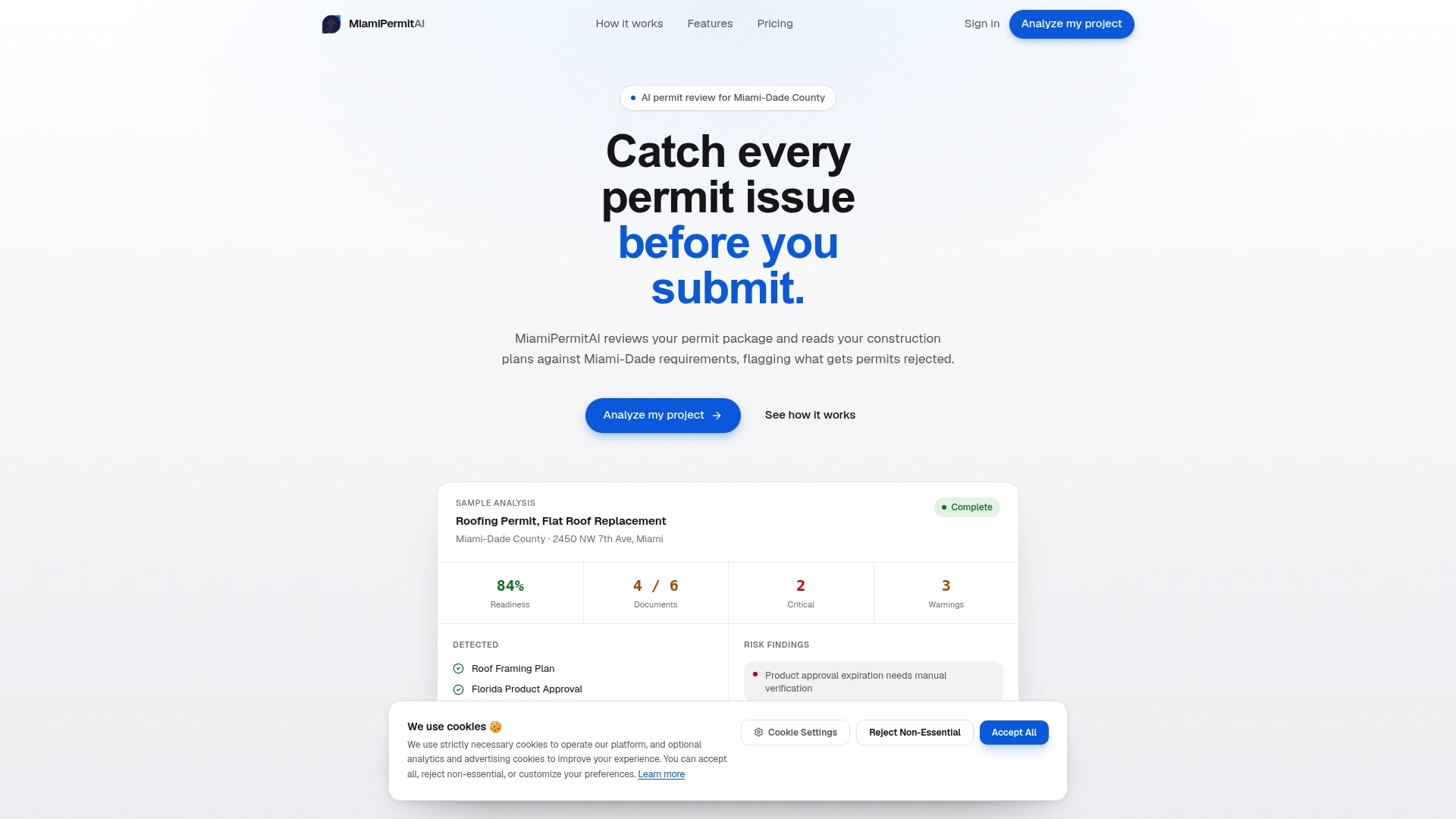
The platform checks your plans against Miami 21 zoning, FEMA flood zone requirements, folio property records, and Florida DBPR contractor license data. You get a readiness score and a plain-language list of what to fix. After you submit, Miamipermitai tracks your permit through approval and sends status updates by email. Check your permit package before submission and avoid the violations that start with a rejected or expired permit.
FAQ
What is a code violation in Miami-Dade?
A code violation is a formal citation issued by the Miami-Dade Code Enforcement Department when a property does not meet local building, zoning, or maintenance standards. Violations result in daily fines and, if unresolved, liens that attach to the property title.
What are the most common types of notice of violations in Miami-Dade?
The most common notices cover unpermitted construction, expired building permits, unsafe structures, and property maintenance issues such as overgrown lots or debris. Each notice type carries its own resolution process and fine schedule.
How does a Miami-Dade code enforcement lien affect my property?
A code enforcement lien is a statutory lien that attaches to the property title and must be cleared before the property can be sold or refinanced. Lenders will not fund a transaction on a property with an unresolved lien.
Can Miami-Dade code violation fines be reduced?
Property owners who fully cure their violations and present documentation at a mitigation hearing can reduce fines by 80% or more. The Code Enforcement Board weighs good faith effort and complete compliance when setting the final fine amount.
How do I search for code violations on a Miami-Dade property?
Use the property’s folio number from the Miami-Dade Property Appraiser to search county records, then check the specific municipal portal if the property is in an incorporated city. Searching only the county database misses violations filed by cities like Miami Beach or Coral Gables.
Recommended
Is your permit package ready?
Run an AI readiness check against Miami-Dade requirements before you submit.
Start your first projectThis article is general guidance and not legal, engineering, or official county advice. Always verify requirements with Miami-Dade County before submitting a permit.