By the MiamiPermitAI team · July 14, 2026 · Updated September 30, 2026
Zoning Compliance Review: A Miami-Dade Owner's Guide

A zoning compliance review is a mandatory administrative process that confirms a property and its proposed project meet local zoning laws before construction begins. For homeowners and real estate investors in Miami-Dade County, this review sits between your design plans and your building permit. Skip it, and the Miami-Dade Building Department will reject your permit application automatically. Get it right, and your project moves forward without costly redesigns or legal exposure.
What is a zoning compliance review in Miami-Dade County?
A zoning compliance review is the official verification that your property’s intended use, structure, or renovation adheres to local zoning ordinances including setbacks, height limits, lot coverage, and permitted uses. The industry also calls this a zoning clearance or zoning certificate. Both terms describe the same process: a municipality confirms your project is legal under its land-use code before issuing a building permit.
Miami-Dade County operates under the Miami 21 Zoning Code, a form-based code that governs everything from how far your addition must sit from the property line to how tall your fence can be. Miami 21 replaces older Euclidean zoning with transect zones, which means the rules vary significantly by neighborhood type. A project that is perfectly legal in a T5 Urban Center zone may be prohibited in a T3 Sub-Urban zone two blocks away.

One critical point most homeowners miss: zoning clearance is a separate step from the building permit application. Many assume the building permit process includes zoning review automatically. It does not. Failure to secure zoning clearance first leads to automatic building permit denial.
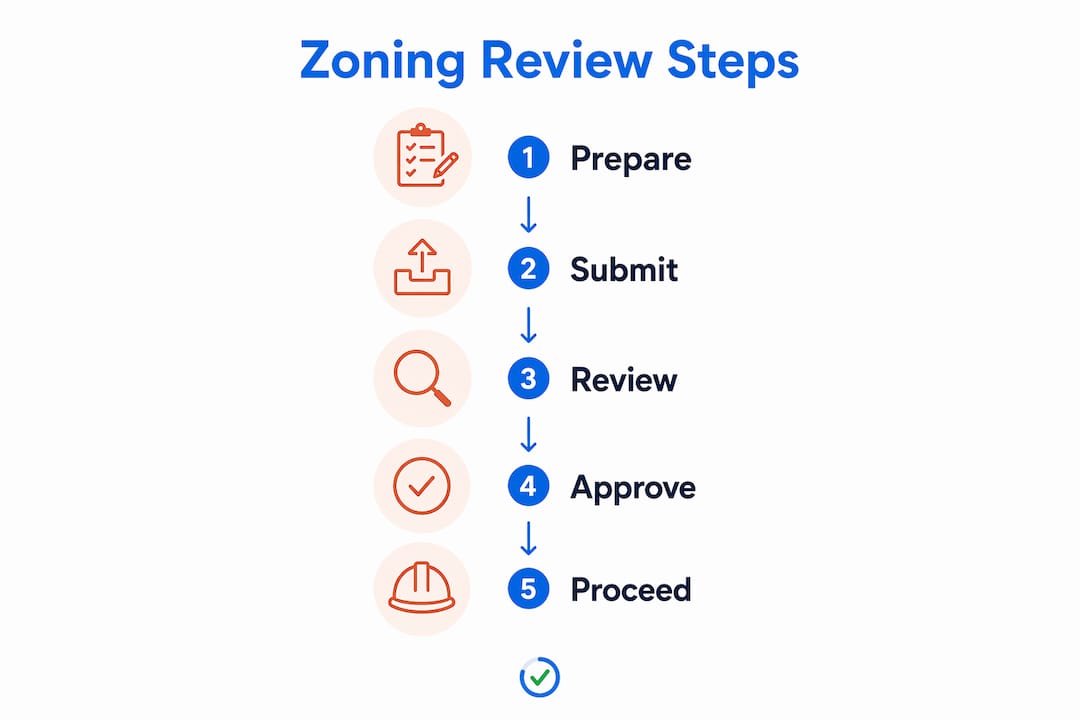
What does the zoning compliance process involve?
The zoning compliance process in Miami-Dade County follows a defined sequence. Understanding each step helps you avoid the delays that reset review timelines and add weeks to your project.
-
Assemble your project packet. Applicants must prepare a letter of intent, detailed site plan, proof of ownership, and specific project details. The site plan must show property lines, existing structures, and proposed changes with accurate dimensions. Plans must carry proper professional seals where required.
-
Schedule a pre-application meeting. Pre-application meetings with Miami-Dade planning staff are often free. They surface compliance issues before you invest in full construction drawings. Use this meeting to confirm your project’s zoning category and ask about any overlay district restrictions that apply to your parcel.
-
Submit your complete application. The municipal review clock starts only after the county confirms your application is complete. Missing documents reset the wait time entirely. Double-check every required item before submitting.
-
Internal departmental circulation. After completeness is confirmed, your application circulates among multiple municipal departments. Engineering, fire, and traffic each evaluate the project for impacts beyond basic zoning compliance. This internal circulation phase is where most substantive conditions are set.
-
Receive your zoning determination. The preliminary completeness review typically takes 2–4 weeks. Final approval for permitted-by-right projects is administrative and faster. Complex applications requiring public hearings may take 30–62 days after a complete submission. Fees vary by project complexity.
Pro Tip: Bring a printed copy of your property’s folio record and a screenshot of its Miami 21 transect zone to your pre-application meeting. Planning staff can confirm your zone on the spot and flag overlay restrictions before you leave the room.
What zoning requirements are evaluated in a compliance review?
The zoning review requirements cover several specific code elements. Reviewers check each one against your submitted plans.
- Setbacks. The minimum distance your structure must sit from property lines, streets, and adjacent buildings. Miami 21 specifies front, side, and rear setbacks by transect zone.
- Building height limits. Maximum allowable height measured in stories or feet, depending on the zone.
- Lot coverage. The percentage of your lot that structures can occupy. Exceeding this triggers a variance request.
- Floor area ratio (FAR). The ratio of total building floor area to lot size. FAR limits control density.
- Permitted uses. Some uses are permitted by right, meaning they require no special approval. Others are conditional or specially permitted, requiring public hearings.
- Parking requirements. Minimum parking spaces based on use type and square footage.
- Overlay district restrictions. Historic districts, environmental overlays, and flood zones impose additional requirements on top of base zoning.
The distinction between permitted-by-right and conditional uses matters enormously for your timeline. Projects classified as permitted-by-right proceed faster and with fewer obstacles than conditional uses, which involve public hearings and greater uncertainty. Identifying your project’s category early prevents unexpected delays and cost overruns.
One trap many investors fall into: relying on zoning map labels alone. Written municipal codes, including overlays, govern detailed restrictions and supersede maps. A parcel may show a residential label on the GIS map but carry historic district overlay restrictions that prohibit your planned addition entirely.
| Zoning element | What it controls | Common compliance issue |
|---|---|---|
| Setbacks | Distance from property lines | Addition too close to rear lot line |
| Lot coverage | Percentage of lot with structures | Pool deck pushes coverage over limit |
| FAR | Building floor area relative to lot | Second-story addition exceeds ratio |
| Permitted use | Allowed activities on the parcel | Short-term rental in restricted zone |
| Overlay restrictions | Historic, environmental, flood rules | Renovation in historic district needs board approval |
Why is zoning compliance critical for Miami-Dade homeowners and investors?
The importance of zoning compliance goes beyond avoiding a rejected permit. The consequences of non-compliance reach into your finances, your legal standing, and your property’s resale value.
- Permit rejections and redesigns. A non-compliant project forces you to revise drawings, resubmit, and wait through another review cycle. Each cycle costs money and time.
- Fines and enforcement actions. Miami-Dade Code Compliance can issue stop-work orders and daily fines for unpermitted or non-compliant construction. These fines accumulate fast.
- Financing and due diligence. Lenders require documented proof that a project’s use is legally permitted. GIS maps alone are not sufficient for lenders. An official stamped zoning verification letter is required. Without it, financing stalls.
- Property value and resale. Unpermitted additions or non-compliant structures show up in title searches. Buyers and their lenders will demand resolution before closing.
Pro Tip: Request an official zoning verification letter from Miami-Dade before you finalize your purchase contract on an investment property. This letter confirms the legal use and protects you if a seller misrepresents the property’s zoning status.
Zoning compliance certificates are official documents issued by municipalities confirming that a property’s use and structure conform with applicable zoning codes. These certificates are often a prerequisite for applying for building permits. Treating this document as optional is one of the most expensive mistakes a Miami-Dade investor can make.
How to prepare for a successful zoning review in Miami-Dade County
Preparation determines whether your review moves quickly or stalls. These steps reflect how to perform a zoning review submission that clears completeness checks on the first attempt.
-
Verify your Miami 21 transect zone and overlay districts. Look up your folio number on the Miami-Dade property appraiser’s website, then cross-reference with the Miami 21 interactive map. Note every overlay that applies to your parcel.
-
Gather all required documents before submitting. Assemble your letter of intent, sealed site plan, proof of ownership, and project specifications. Missing any one item resets your review timeline.
-
Confirm your project fits a permitted-by-right use. Planning projects to fit permitted-by-right categories avoids delays, public hearings, and additional fees. If your project requires a conditional use, budget at least 60 additional days for the hearing process.
-
Use a pre-application consultation. Bring your preliminary plans and a list of zoning approval questions to the meeting. Planning staff will identify issues before they become formal objections.
-
Check plan seals and signatures. Unsigned or improperly sealed plans fail completeness review immediately. Confirm that your architect or engineer has applied the correct Florida license seal.
| Preparation step | Why it matters | Time saved |
|---|---|---|
| Verify Miami 21 zone and overlays | Prevents surprises from overlay restrictions | Weeks of redesign |
| Complete document checklist | Avoids completeness rejection | 2–4 weeks per reset |
| Confirm permitted-by-right status | Skips public hearing process | 30–62 days |
| Pre-application consultation | Surfaces issues before formal submission | Multiple review cycles |
| Sealed and signed plans | Passes completeness check first time | 2–4 weeks per rejection |
A permit readiness check before you submit catches the document gaps and plan inconsistencies that most commonly trigger rejections in Miami-Dade County.
Key Takeaways
A zoning compliance review is a required, separate step before any Miami-Dade building permit is issued, and skipping it or submitting incomplete documents resets your entire timeline.
| Point | Details |
|---|---|
| Zoning clearance comes first | Secure zoning approval before applying for a building permit, not after. |
| Completeness resets the clock | Missing documents restart the review timeline, costing weeks of wait time. |
| Permitted-by-right saves time | Projects that fit permitted-by-right categories avoid public hearings and 30–62 day delays. |
| Official letters beat GIS maps | Lenders and title companies require a stamped zoning verification letter, not a map screenshot. |
| Overlays override base zoning | Historic and environmental overlay restrictions apply on top of Miami 21 base zone rules. |
Common reasons zoning reviews go sideways
One of the most expensive mistakes Miami-Dade homeowners and investors can make is treating zoning verification as something to handle after the architect finishes the drawings. By that point, you have paid for plans that may need to be completely reworked. Verify your zoning category and overlay restrictions before you spend a dollar on design.
The second mistake is assuming that a quick look at the Miami 21 map tells the whole story. The map shows your transect zone. It does not show historic district rules, environmental overlays, or the specific setback tables buried in the code text. An investor can buy a property in what looks like a straightforward T4 zone, only to discover a historic preservation overlay that blocks a planned addition entirely.
The third common pattern: applicants who skip the pre-application meeting because they think it will slow them down. Pre-application meetings almost always speed things up. Planning staff will tell you exactly what they need and flag problems before they become formal objections. That conversation is free. A rejected application and a redesign are not.
One more thing worth saying plainly: zoning compliance and building permits are two separate processes with two separate clocks. Getting zoning clearance does not mean your building permit application is ready. You still need to meet Miami-Dade Building Department requirements for construction documents, contractor licensing, and FEMA flood zone compliance. Treat them as sequential steps, not parallel ones.
How Miamipermitai supports your zoning compliance review
Zoning compliance issues are the leading reason Miami-Dade permit applications get rejected before they ever reach a plan reviewer.
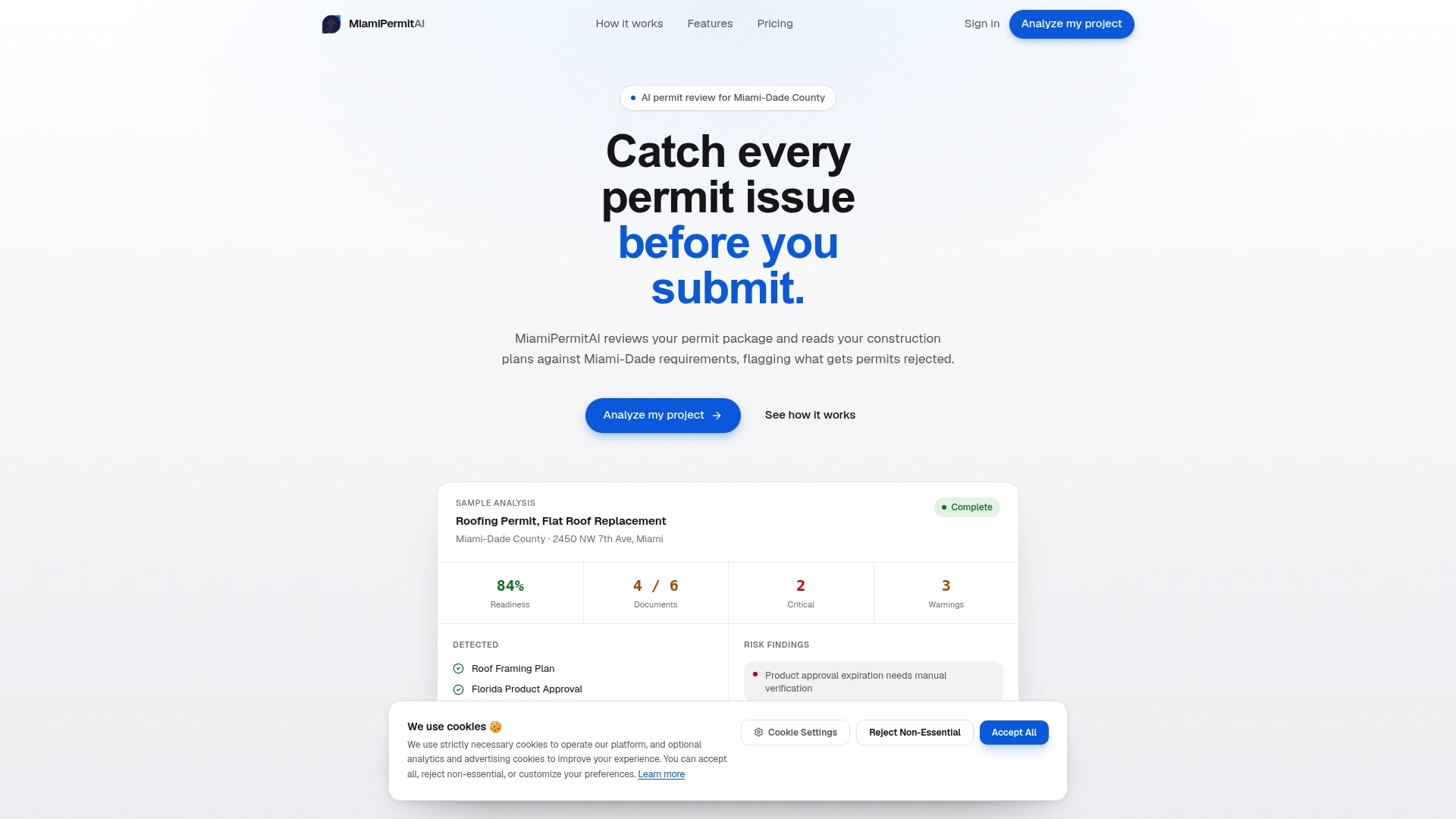
Miamipermitai reads your uploaded construction plans against Miami 21 zoning rules, FEMA flood zone requirements, and Miami-Dade folio records before you submit to the county. The platform flags setback violations, missing documents, and overlay conflicts that would otherwise send your application back for correction. You get a clear readiness score and a plain-language list of what to fix. After you submit, Miamipermitai tracks your permit status using public Miami-Dade records and sends you email updates. Check your permit package before you submit and avoid the delays that cost Miami-Dade homeowners weeks of lost time.
FAQ
What is the difference between a zoning review and a building permit?
A zoning compliance review confirms your project meets land-use rules like setbacks and permitted uses. A building permit verifies that your construction plans meet structural and safety codes. Zoning clearance must be obtained first.
How long does a zoning compliance review take in Miami-Dade County?
The preliminary completeness review typically takes 2–4 weeks. Final approval for permitted-by-right projects is faster, while applications requiring public hearings can take 30–62 days after a complete submission.
What documents do I need for a zoning compliance review?
You need a letter of intent, a detailed site plan showing property lines and proposed structures, proof of ownership, and project specifications. Plans must carry proper professional seals where required.
Can I rely on the Miami 21 zoning map to confirm compliance?
No. The zoning map shows your transect zone but does not reflect overlay district restrictions, which override base zoning rules. Always review the full written code for your parcel.
Do I need a zoning verification letter to get financing?
Yes. Lenders require an official stamped zoning verification letter as proof that the property’s use is legally permitted. A GIS map screenshot does not satisfy this requirement.
Recommended
Is your permit package ready?
Run an AI readiness check against Miami-Dade requirements before you submit.
Start your first projectThis article is general guidance and not legal, engineering, or official county advice. Always verify requirements with Miami-Dade County before submitting a permit.