
July 20, 2026
Addition Permit Plan Review Process: Miami-Dade Guide

Addition Permit Plan Review Process: Miami-Dade Guide
The addition permit plan review process in Miami-Dade County is a structured, multi-departmental workflow that ensures your home expansion meets all regulatory and safety standards before construction begins. The Miami-Dade Building Department, Zoning Division, and DERM each review your plans independently, then return unified comments. Unpermitted work creates serious title, insurance, and resale complications, making a complete, compliant submission the only practical path forward. Getting this right from the start saves weeks of back-and-forth and keeps your project on schedule.
What does the addition permit plan review process require?
The addition permit plan review process begins with a complete building permit application package. Submitting an incomplete package is the single fastest way to add weeks to your timeline. Miami-Dade reviewers will not begin substantive review until every required document is present and properly formatted.
A complete addition permit application must include the following:
- Building Permit Application form (signed by the owner and licensed contractor)
- Site plan or survey (showing property boundaries, existing structures, and proposed addition footprint)
- Signed and sealed architectural plans (prepared by a Florida-licensed architect)
- Signed and sealed structural plans (prepared by a Florida-licensed structural engineer)
- Energy compliance calculations (Florida Building Code Chapter 13 compliance)
- Recorded Notice of Commencement (required for projects over $5,000)
- Proof of contractor licensure or an owner-builder affidavit if you are acting as your own contractor
Sealed plans carry the most weight in this list. Florida law requires that a licensed design professional stamp and sign all architectural and structural drawings for permitted additions. Submitting unsealed plans is an automatic rejection trigger. For more detail on what sealed documents must contain, the sealed plans guide from Miamipermitai covers Miami-Dade’s specific requirements.
Zoning compliance documents are equally critical. Your site plan must demonstrate that the proposed addition respects Miami 21 setback requirements, lot coverage limits, and floor-area ratio rules for your specific zoning designation. If your project pushes against any of these limits, you may need a variance, which adds a separate review track and significant time.
| Document | Purpose | Responsible Party |
|---|---|---|
| Building Permit Application | Initiates the permit process | Owner or contractor |
| Site plan/survey | Confirms property layout and setbacks | Licensed surveyor |
| Sealed architectural plans | Shows design, dimensions, and materials | Florida-licensed architect |
| Sealed structural plans | Verifies load calculations and framing | Florida-licensed structural engineer |
| Energy compliance report | Confirms Florida Building Code compliance | Architect or energy consultant |
| Notice of Commencement | Legal protection for owner and lienholders | Owner, recorded with Clerk of Courts |
| Contractor license or affidavit | Confirms legal authority to build | Licensed contractor or owner-builder |
Pro Tip: Before you submit, cross-reference your site plan against Miami-Dade’s online folio records to confirm your property’s current zoning designation. A mismatch between your plans and the recorded zoning classification will trigger a Zoning hold on day one.
How does the plan review process work after you submit?
Miami-Dade uses a simultaneous multi-department review model. Once your application passes intake, it routes to Building, Zoning, DERM, Public Works, and Fire Rescue (when applicable) at the same time. Each department reviews your plans independently and enters comments into the system.

Each review cycle takes approximately 7 business days, and most addition projects go through 2–3 cycles before receiving approval. That means the review phase alone can span several weeks even when everything goes smoothly. The simultaneous model is a significant advantage over sequential review systems used in some other jurisdictions, where each department waits for the previous one to finish.
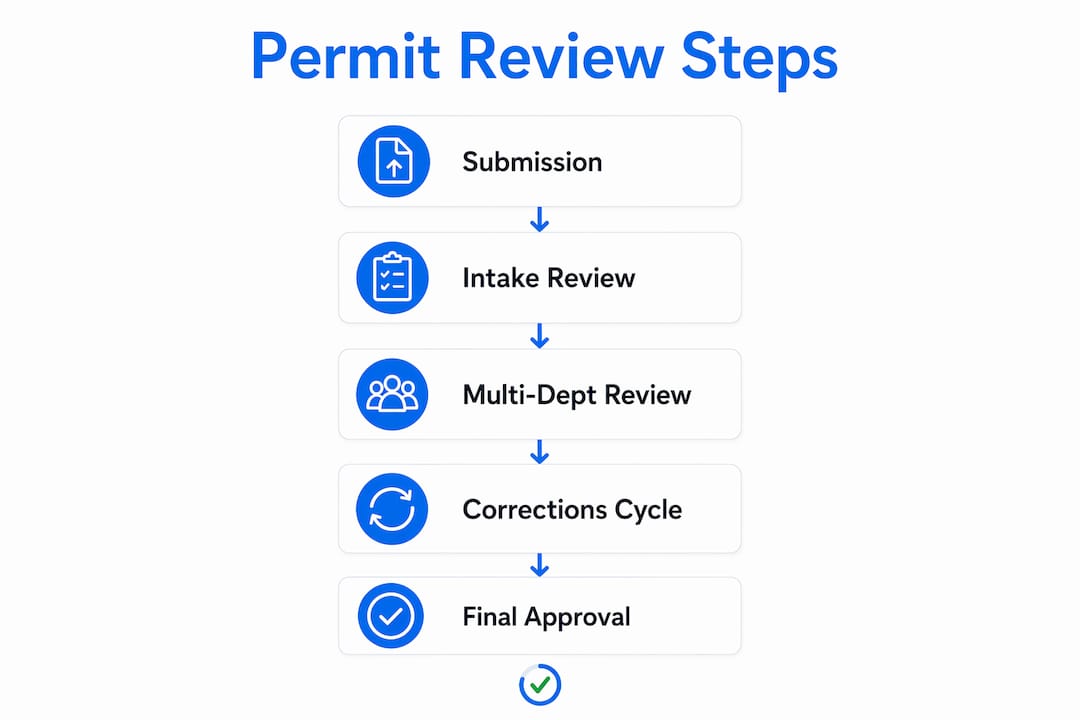
Here is how the process unfolds from submission to approval:
- Intake review. Staff verify that all required documents are present. Incomplete packages are returned without review.
- Routing. The application is distributed to all relevant review departments simultaneously.
- First review cycle. Each department reviews plans against its specific code requirements and enters comments. This takes approximately 7 business days.
- Comment batch returned. All department comments are compiled and sent to the applicant in one unified response.
- Applicant response. You revise your plans and documents to address every comment, then resubmit.
- Second review cycle. Reviewers check that all prior comments were resolved. New issues found during this cycle may generate additional comments.
- Approval or additional cycles. If all comments are resolved, the permit is approved. If not, the cycle repeats.
The most common reason for a third or fourth cycle is a partial response. Applicants sometimes address most comments but miss one from a secondary department like Public Works. Reviewers will not approve the application until every open comment is closed.
Pro Tip: Ask the Building Department at intake whether your project qualifies for simultaneous review across all departments. Some complex additions with environmental components default to sequential routing unless you specifically request concurrent review. Simultaneous review can cut total review time significantly.
What are the typical timelines and fees for an addition permit?
Realistic timeline expectations prevent costly project scheduling mistakes. Residential addition permits in Miami-Dade typically take 4–6 months total, with plan review alone taking 6–16 weeks depending on project complexity and submission completeness. Construction itself adds another 3–6 months after permit issuance.
Several factors push timelines toward the longer end. Large additions that trigger DERM environmental review, projects in FEMA flood zones requiring elevation certificates, and applications that need zoning variances all add weeks or months. A straightforward 400-square-foot room addition on a standard lot with no environmental issues moves faster than a two-story addition near a waterway.
Permit fees for residential additions range from $1,500 to $5,000 or more, based on the construction valuation of the project. Professional engineering stamps add another $500–$1,500 on top of that. Impact fees for roads, fire, police, and schools may also apply depending on the size and location of your addition.
| Phase | Typical Duration | Estimated Cost |
|---|---|---|
| Document preparation | 2–6 weeks | $500–$2,000 (design fees) |
| Plan review (1–3 cycles) | 6–16 weeks | $1,500–$5,000+ (permit fees) |
| Engineering stamps | Included in prep | $500–$1,500 |
| Permit issuance | 1–2 weeks after approval | Included in permit fee |
| Construction | 3–6 months | Varies by project scope |
Pro Tip: Request a pre-application meeting with the Miami-Dade Building Department before you finalize your plans. Reviewers will flag potential issues with your proposed scope before you invest in full architectural drawings, saving you from expensive plan revisions.
What mistakes cause the most delays and rejections?
Missing or incomplete structural engineering documentation is the most frequent cause of permit rejection and extended delays in Miami-Dade. Structural plans that lack load calculations, connection details, or foundation specifications will fail Building Department review every time. The fix requires a licensed structural engineer to revise and reseal the drawings, which takes time and money.
Beyond structural documentation, these are the pitfalls that most consistently derail addition permits:
- Uncoordinated plans. Architectural and structural drawings that contradict each other on dimensions, materials, or framing details trigger immediate review comments from multiple departments.
- Missing Notice of Commencement. The Notice of Commencement must be recorded with the Miami-Dade County Clerk of Courts before work begins on any project over $5,000. Starting work without it leads to failed inspections and potential stop-work orders.
- Zoning setback violations. Submitting plans that place the addition too close to a property line forces a variance request, which adds a separate public hearing track to your timeline.
- Unsealed or improperly sealed plans. Florida requires a licensed professional’s original seal on all structural and architectural drawings. Digital seals must meet Florida Statutes Chapter 471 requirements.
- Incomplete energy compliance reports. Florida Building Code Chapter 13 requires a full energy calculation report. Partial reports or reports that reference outdated code versions are rejected.
- Ignoring multi-department feedback. Responding to Building comments while overlooking DERM or Zoning comments results in a failed second review cycle.
For a deeper look at what triggers rejections, the permit rejection guide from Miamipermitai covers the most common causes with specific examples from Miami-Dade cases.
How do you track your plan review status in Miami-Dade?
Miami-Dade provides the iBuild platform and an online permit search portal for electronic plan submission, real-time status tracking, and responding to reviewer comments. Both tools are accessible without an in-person visit, which matters when your project is in active review and you need to respond quickly.
Here are the best practices for staying on top of your application:
- Check iBuild daily during active review cycles. Reviewer comments appear in the system as soon as they are entered. A fast response to comments shortens the gap between cycles.
- Monitor all department statuses, not just Building. A Zoning or DERM hold can stall your application even after Building approves its portion. Check every department’s status column.
- Respond to comments in writing through the portal. Verbal clarifications with reviewers do not update the official record. All responses must be documented in the system.
- Contact the Building Department directly for clarifications. If a reviewer comment is unclear, call or email the specific department that issued it. Do not guess at the intent and resubmit.
- Request a pre-application meeting for complex projects. Miami City requires in-person submission for some complex additions, while unincorporated Miami-Dade uses the online EPS Portal. Confirming your jurisdiction’s submission rules before you start prevents wasted trips and rejected uploads.
Pro Tip: Set a calendar reminder for day 5 of each review cycle. Reviewer comments often post on days 6–7. Responding within 24–48 hours of receiving comments keeps your project moving and signals to reviewers that you are an organized applicant.
Key Takeaways
A complete, coordinated submission is the single most effective way to shorten the addition permit plan review process in Miami-Dade County and avoid costly revision cycles.
| Point | Details |
|---|---|
| Complete submission first | Every required document must be present at intake or the application is returned unreviewed. |
| Simultaneous review saves time | Requesting concurrent multi-department review cuts total plan review time compared to sequential routing. |
| Timeline is 4–6 months total | Plan review takes 6–16 weeks; budget the full timeline before scheduling contractors. |
| Structural docs cause most rejections | Missing or uncoordinated structural engineering plans are the leading cause of permit delays in Miami-Dade. |
| Track iBuild daily during review | Responding to reviewer comments within 24–48 hours reduces the gap between review cycles. |
What I have learned from watching Miami-Dade addition permits go sideways
The pattern I see most often is not ignorance. Homeowners and contractors who hit the worst delays usually know the rules. The problem is sequencing. They hire the architect, get beautiful drawings, and submit before anyone has checked zoning setbacks against the actual survey. Then Zoning flags a violation on day 7, and suddenly a 6-week review turns into a 4-month ordeal while a variance application works its way through a separate hearing process.
The fix is simple but requires discipline. Verify your Miami 21 zoning designation and setback requirements before you finalize any plans. Pull your folio record from Miami-Dade’s property search system and confirm what the county actually has on file for your lot. Discrepancies between what you think your zoning is and what the county has recorded are more common than most people expect.
The second thing I would tell every applicant: do not treat the Notice of Commencement as an afterthought. It is a legal document that protects you as the property owner, and recording it before work starts is a hard requirement for projects over $5,000. I have seen contractors start demolition before the NOC was filed, which triggered a stop-work order and a failed inspection that set the project back by weeks.
Technology has made the tracking side of this process much more manageable. The iBuild portal gives you real-time visibility into every department’s review status. Use it aggressively. The applicants who respond to comments within a day or two consistently move through fewer total cycles than those who wait a week to look at the system.
— Leo
How Miamipermitai helps you submit with confidence
Getting to permit approval faster starts with knowing what is wrong before you submit. Miamipermitai is an AI permit-readiness platform built specifically for Miami-Dade County. It reads your uploaded construction plans against Miami-Dade requirements, including Miami 21 zoning, FEMA flood zones, and Florida DBPR contractor license records, and flags the issues that most often cause rejections and revision cycles.
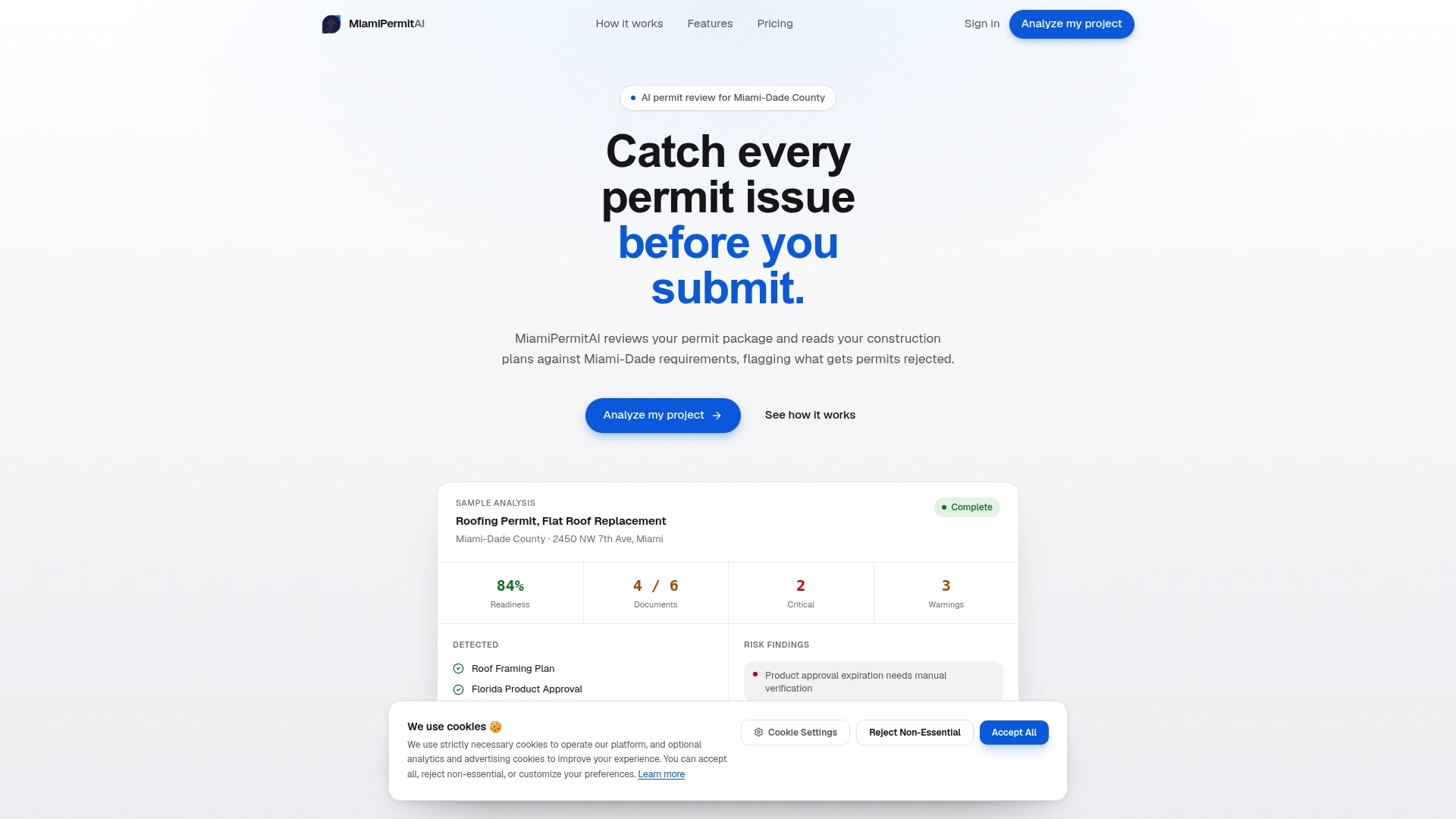
You get a clear readiness score, a plain-language list of what to fix, and specific guidance tied to Miami-Dade’s actual review standards. After you submit to the county yourself, Miamipermitai tracks your permit through approval using public records and sends you status updates by email. For homeowners and contractors who want to catch problems before a reviewer does, check your permit package at Miamipermitai before you submit.
FAQ
What documents are required for an addition permit in Miami-Dade?
A complete application requires a Building Permit Application form, a site plan or survey, signed and sealed architectural and structural plans, energy compliance calculations, a recorded Notice of Commencement, and proof of contractor licensure or an owner-builder affidavit.
How long does the addition permit plan review take in Miami-Dade?
Plan review for residential additions typically takes 6–16 weeks, with most projects going through 2–3 review cycles of approximately 7 business days each. The total permit process, including preparation and issuance, runs 4–6 months.
What causes the most permit rejections for additions in Miami-Dade?
Incomplete or uncoordinated structural engineering documentation is the leading cause of rejection. Unsealed plans, missing energy compliance reports, and zoning setback violations are the next most common triggers.
Do I need a Notice of Commencement for a home addition in Miami-Dade?
Yes. Any addition project valued over $5,000 requires a Notice of Commencement recorded with the Miami-Dade County Clerk of Courts before construction begins. Starting work without it leads to failed inspections and potential stop-work orders.
How do I track my addition permit status in Miami-Dade?
Use Miami-Dade’s iBuild platform or the online permit search portal to monitor real-time review status across all departments. Check the portal daily during active review cycles and respond to comments within 24–48 hours to keep your application moving.
Recommended
Is your permit package ready?
Run an AI readiness check against Miami-Dade requirements before you submit.
Try your first analysis freeThis article is general guidance and not legal, engineering, or official county advice. Always verify requirements with Miami-Dade County before submitting a permit.