
August 2, 2026
Elevator Inspection Permit Workflow: Miami-Dade Guide
Elevator Inspection Permit Workflow: Miami-Dade Guide
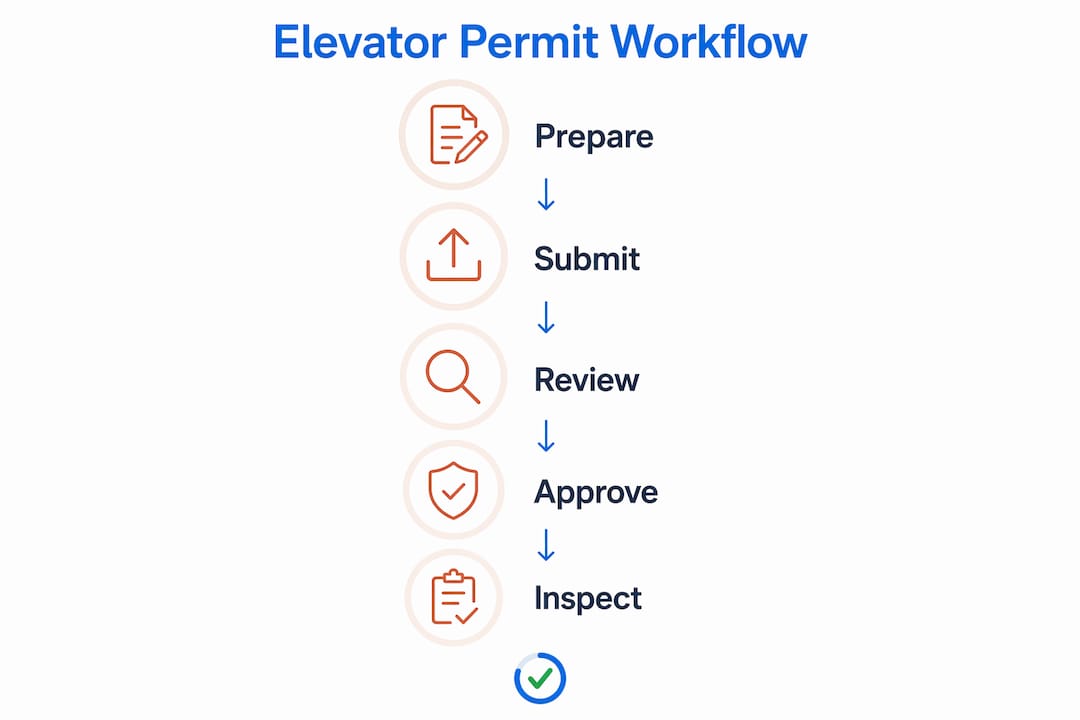
Submit a complete Permit to Install application to Miami-Dade County, pay plan-review and first-year Certificate of Operation fees, pass acceptance testing under ASME A17.1, and receive your Certificate of Operation before the unit goes into service.
What the Miami-Dade permit application requires:
- Elevator classification — the county form lists 18 types, including LU/LA, dumbwaiters, and inclined stairway chairlifts; select the correct one or the application stalls immediately
- Installation company name and Florida DBPR license numbers — both the contractor and any subcontractors
- Sealed plans and specifications — hoistway, pit, machine room layout, structural supports; see the permit-ready plan set checklist for what reviewers check
- Maintenance contract status — contract details and maintenance company contact information; leaving these fields blank is one of the most common causes of plan-review delays
- Fees — plan review, first-year Certificate of Operation, and an optional expedite fee if your schedule demands faster turnaround
Step-by-step process:
- File the permit application with all fields complete
- Pay plan-review and first-year Certificate of Operation fees (expedite available)
- Respond to any plan-review corrections
- Schedule acceptance testing and witness inspection
- Performing inspector runs tests; a neutral witnessing inspector or county designee independently verifies results before the Certificate of Operation is issued
- Certificate of Operation issued — the permit is valid for one year from issuance under Chapter 61C-5, FAC
Quick compliance flags:
- The performing inspector and witnessing inspector must be separate parties; combined roles invalidate the acceptance test
- ASME A17.1 governs the safety requirements; ASME A17.2 guides inspection procedures but is advisory, not law — always confirm which edition and local amendments Miami-Dade enforces
- Alterations and modernizations require the same full permit and inspection process as new installations; treating them as maintenance-only is a frequent and costly mistake
- Permits expire after one year; plan your project schedule so inspections finish before that date
Checking permit status: Use Miami-Dade’s public records portal to track your application after submission. Typical plan-review timelines vary by workload, but expedited processing shortens the wait when construction financing draws or project milestones depend on a faster approval.
Pro Tip: Pull your Florida DBPR license numbers and confirm they are active before you touch the application. A mismatched or expired license number is the single fastest way to trigger a rejection.
Table of Contents
- What causes elevator permit rejections and how to fix them
- Miamipermitai catches rejections before you submit
What causes elevator permit rejections and how to fix them
Most rejections trace back to a handful of the same problems. Knowing them in advance saves weeks.

Missing or incomplete maintenance-contract data is the top culprit. The Miami-Dade application requires contract status, company name, and contact information at first submission. Leaving any of those fields blank sends the application back before a reviewer even looks at the plans. Fix: fill every maintenance field on the first pass, even if the contract is pending.
Mismatched contractor license numbers are the second most common trigger. The name on the application must match the Florida DBPR record exactly, and the license must be active on the submission date. Cross-reference the Miami-Dade permit documents checklist and verify DBPR status the day you submit, not the day you prepare the package.
Incomplete or unsealed plans round out the top three. Reviewers check that the plan set covers the machine room layout, hoistway dimensions, pit clearances, and structural supports. A plan set missing any of those elements — or bearing an engineer’s stamp that does not match the license on file — fails review. The commercial renovation permit checklist covers the plan components reviewers flag most often.
Wrong elevator classification is less common but just as damaging. Selecting the wrong type from the options on the county form means the reviewer cannot match your plans to the correct code requirements.
Miamipermitai catches rejections before you submit
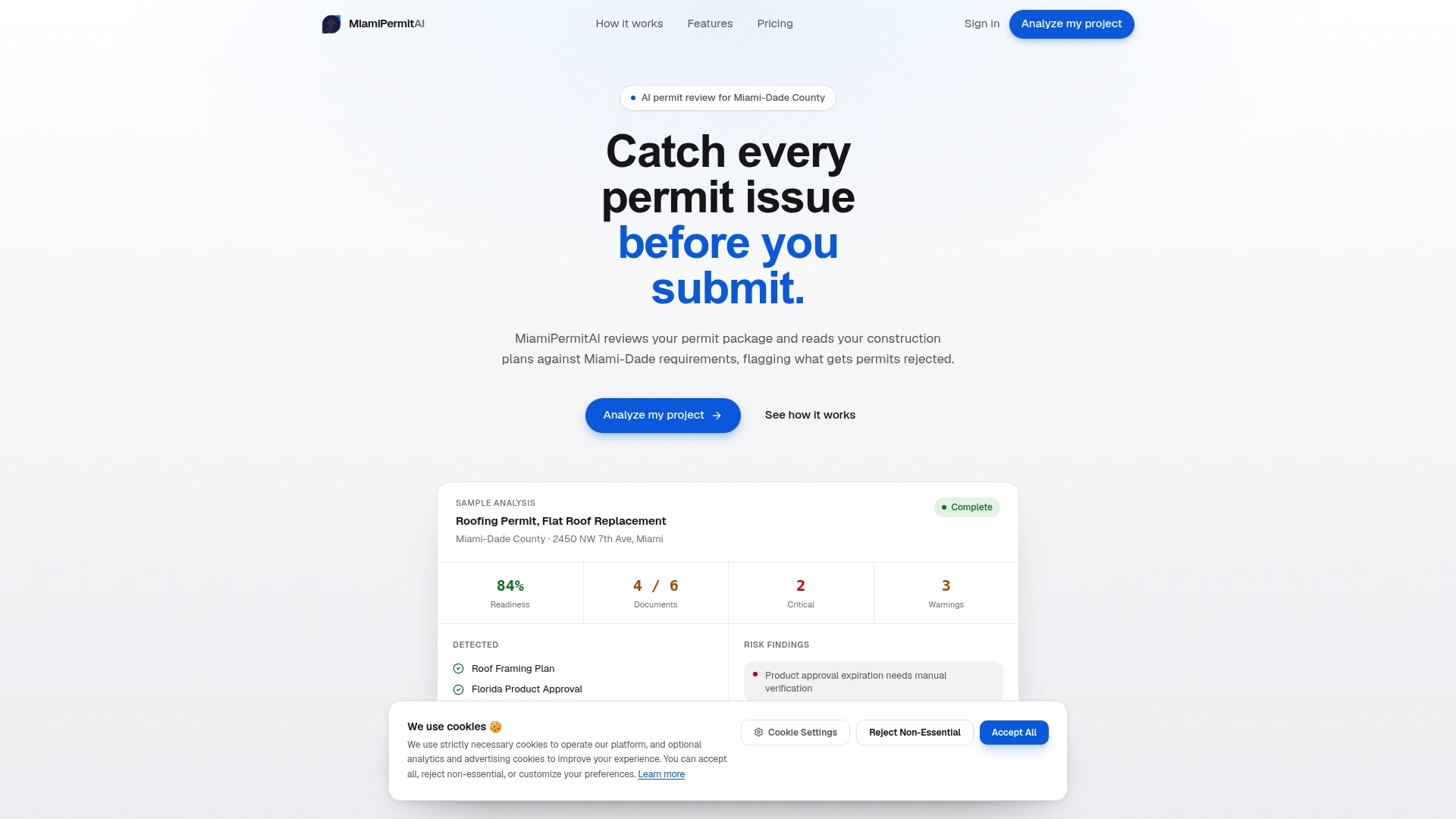
The most expensive part of a permit rejection is not the resubmission fee. It is the two to four weeks you lose waiting for a reviewer to tell you what you already could have known. Miamipermitai runs that check before you submit.
Upload your permit package and plans, and the platform cross-checks every Miami-Dade application field against your documents: contractor license numbers against Florida DBPR records, maintenance-contract fields for completeness, elevator classification against your plan set, and sealed-plan consistency against county requirements. You get a readiness score, a prioritized fix list in plain language, and a clear picture of what will stop your application before it reaches a reviewer’s desk.
After you submit to the county yourself, Miamipermitai tracks the permit through Miami-Dade’s public records and sends you status updates by email — no manual portal checks required.
Check your elevator permit package now before the county tells you what is missing.
Recommended
Is your permit package ready?
Run an AI readiness check against Miami-Dade requirements before you submit.
Try your first analysis freeThis article is general guidance and not legal, engineering, or official county advice. Always verify requirements with Miami-Dade County before submitting a permit.