
July 23, 2026
Miami-Dade Certificate of Occupancy Requirements: 2026 Guide
Miami-Dade Certificate of Occupancy Requirements: 2026 Guide
What are the core Miami-Dade certificate of occupancy requirements?
A Certificate of Occupancy (CO) in Miami-Dade County is legally required before anyone can occupy or use a building for its intended purpose. The Miami-Dade certificate of occupancy requirements apply to new construction, major renovations, remodeling, and any change of use, such as converting a school into a restaurant. No occupancy happens without one, and no Certificate of Use (CU) for a business can be issued until the CO is in hand.
The Miami-Dade County Department of Regulatory and Economic Resources (RER) administers the CO process. Before the county issues a CO or Certificate of Completion (CC), every required inspection must pass, all completion holds must be released, and applicable fees must be paid. Getting any one of those three wrong stops the process cold.
Here is what the CO process requires at a high level:
- New construction, major renovation, or change of use triggers a CO requirement.
- All trade inspections (building, roofing, electrical, plumbing, mechanical, and fire) must receive final approval.
- Completion holds from Public Works, DERM (Department of Environmental Resources Management), Zoning, and the Fire Department must be fully released.
- Fees must be paid, including a non-refundable upfront application fee and remaining amounts due upon approval.
- A CO is a prerequisite to obtaining a Certificate of Use for any business operating in unincorporated Miami-Dade County.
- Signed and sealed plans prepared by a Florida-registered architect or professional engineer are required for space evaluations.
- Notarized property owner signatures or written authorization letters are required on permit applications.
The three certificates that matter in Miami-Dade are the CO, the CC, and the CU. They are not interchangeable. Confusing them is one of the most common reasons applications get rejected or delayed.
How CO, CC, and CU differ in Miami-Dade
The distinction between a Certificate of Occupancy, a Certificate of Completion, and a Certificate of Use trips up property owners and contractors more often than any other part of this process. Each certificate serves a different legal purpose, and they follow a specific sequence.
Certificate of Occupancy (CO)
A CO confirms that a building is safe and suitable for occupancy. Miami-Dade issues a CO for new construction, remodeling, renovation, or change of use. If you are building a new structure, adding onto an existing one, removing interior walls, or converting a building from one use to another, a CO is what you need before anyone moves in or opens for business.
Certificate of Completion (CC)
A CC is issued for standalone permits that do not involve occupancy. Think fences, windows, shell buildings, and similar projects. A shell building gets a CC after its final inspection, but it cannot be occupied until the owner later obtains a CO through a separate building permit. Developers sometimes assume a CC is enough to lease space. It is not. The CC does not grant occupancy rights.
Certificate of Use (CU)
A CU confirms that a specific business activity is permitted at a given location under Miami-Dade’s zoning rules. It also verifies compliance with the Florida Fire Prevention Code, the Florida Building Code, and local environmental ordinances. The CU comes last in the sequence. A CO must already exist before the county will process a CU application.
- CO = building is safe and legally occupiable.
- CC = permitted work is complete, but occupancy is not authorized.
- CU = the specific business use is zoned and code-compliant at that address.
- Sequence: CO first, then CU. A premature CU application will be denied.
- Operating without a CU in unincorporated Miami-Dade can result in fines and citations for both the business owner and the property owner.
- Shell buildings follow a different path: CC upon final inspection, then CO when ready for occupancy, then CU for business operations.
For investors evaluating a property, the certificate of completion vs. occupancy distinction has real financial consequences. A building with only a CC cannot generate rental income from occupants until a CO is obtained, which requires a new building permit and additional inspections.
How to apply for a Certificate of Occupancy in Miami-Dade, step by step
The Miami-Dade CO application process has several moving parts, and the order matters. Skipping a step or submitting incomplete documents sends the application back to square one.
Step 1: Prepare signed and sealed plans

A Florida-registered architect or professional engineer must prepare a complete space evaluation. The plans must demonstrate compliance with the Florida Building Code and Miami-Dade codes for the specific proposed use. Required elements include means of egress, restroom and plumbing fixture counts, ventilation and outside air calculations, electrical illumination requirements, and parking. The plans must also document compliance with DERM, Water and Sewer (WASD), the Miami-Dade Fire Rescue Department (MDFR), and the State Department of Health (DOH) where applicable.
Step 2: Submit the building permit application
The building permit application requires a notarized signature from the property owner. If the applicant is a tenant without permit authorization under the lease, a written letter from the property owner authorizing the work is required instead. A copy of the lease agreement (with sensitive personal information redacted) is also needed.
Step 3: Obtain all required trade permits
Before a CO or CC application is accepted, all trade permits for the project must be on file. The Building Permit and Occupancy Representative verifies this when the permit number is submitted.
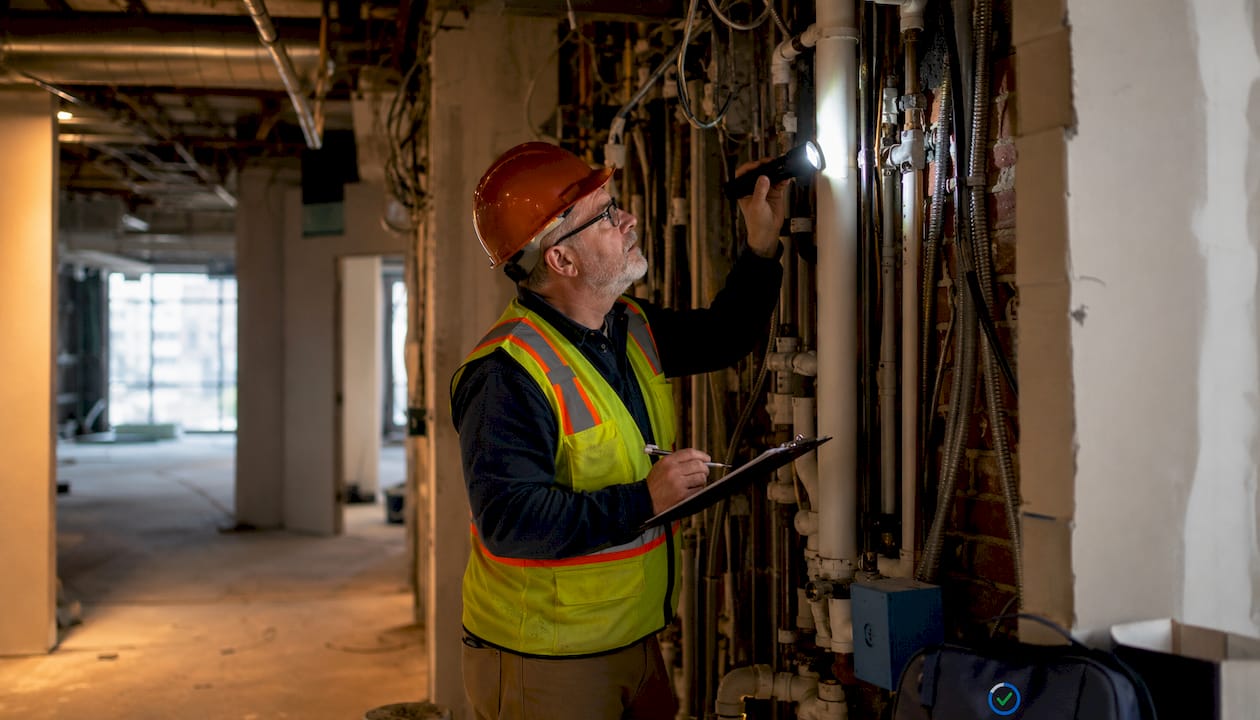
Step 4: Schedule and pass all inspections
Inspections must be scheduled in advance using specific codes. Inspections can be requested by calling Voice Response at (305) 591-7966, the Permit Records Section at (786) 315-2000, or online at miamidade.gov/building. Requests must be submitted before 4:00 p.m. the day before the inspection is needed.
Step 5: Clear all completion holds
Holds from Public Works, DERM, Zoning, and the Fire Department must be released before the CO/CC application can be finalized. For commercial buildings, the Fire Department hold must have a final or temporary release.
Step 6: Submit the CO/CC application
Once inspections are approved and holds are cleared, submit the application to the RER Permit Records Section. Fees must be paid at this stage.
Step 7: Apply online and track status
Miami-Dade’s Online Certificate of Occupancy/Completion system allows applicants to apply, print certificates, and search CO/CC history by address, certificate number, or permit number. For assistance, contact RER-SPA@miamidade.gov or call 786-315-2100.
Temporary Certificate of Occupancy (TCO)
A TCO is available when minor outstanding items remain but the building is otherwise safe for occupancy. The TCO application requires notarized signatures from both the qualifying agent and the property owner. The completed original application must be physically present at the jobsite for inspectors to sign. Use inspection code 030 for TCO requests and code 061 for Temporary Certificate of Completion (TCC) requests.
| Certificate Type | Inspection Code | Validity |
|---|---|---|
| Temporary Certificate of Completion (TCC) | 061 | 90 days (SFBC); active permit duration (FBC) |
| Temporary Certificate of Occupancy (TCO) | 030 | 90 days (SFBC); active permit duration (FBC) |
| Permanent CO/CC | N/A | Permanent upon issuance |
For Florida Building Code permits, the TCO remains valid as long as the master permit is active. For South Florida Building Code permits, validity is 90 days, and a third temporary certificate requires Board of Rules and Appeals (BORA) approval. Contact BORA at (786) 315-2573.
What inspections does Miami-Dade require before issuing a CO?
Every CO in Miami-Dade depends on passing a full set of trade inspections. There are no shortcuts here, and an unresolved inspection in any category blocks the entire process.
The required inspection categories are:
- Building inspection: verifies structural compliance with the Florida Building Code and Miami-Dade codes.
- Roofing inspection: confirms the roof system meets code requirements for the project type.
- Electrical inspection: covers wiring, panels, lighting, and all electrical systems.
- Plumbing inspection: checks fixtures, supply lines, drainage, and compliance with plumbing fixture counts from the space evaluation.
- Mechanical inspection: covers HVAC systems, ventilation, and outside air requirements.
- Fire inspection: verifies compliance with the Florida Fire Prevention Code, including egress, sprinklers, and alarms.
Beyond the trade inspections, completion holds from four agencies must be released:
- Public Works: typically related to site infrastructure, drainage, and right-of-way issues.
- DERM: environmental compliance, especially relevant for properties near water or with hazardous material concerns.
- Zoning: confirms the proposed use is consistent with the approved zoning designation.
- Fire Department: for commercial buildings, a final or temporary release of the Fire Department hold is required before a TCO or TCC can be issued.
Inspectors verify that all code provisions related to public safety are met before granting approval. Any outstanding item that affects safety will block the CO, not just delay it. Scheduling inspections early in the project timeline, rather than waiting until construction wraps up, prevents the bottleneck that catches most applicants off guard.
Pro Tip: Request all trade inspections at least two weeks before your target CO date. Inspectors often have limited availability, and a single missed inspection in one trade category can push your CO issuance back by weeks.
Common challenges in the CO application process and how to avoid them
Most CO delays in Miami-Dade trace back to a handful of predictable mistakes. Knowing them in advance is the fastest way to avoid them.
Confusing CO, CC, and CU
Misunderstanding the purpose of each certificate is the most frequent cause of application setbacks. A developer who applies for a CU before the CO is issued will be denied. A tenant who assumes the CC on a shell building allows them to move in will face a stop-work situation. Getting the sequence right, CO before CU, and understanding that a CC does not authorize occupancy, prevents these entirely avoidable rejections.
Incomplete or improperly sealed plans
Plans that are missing required elements, such as egress routes, restroom counts, or ventilation calculations, or that are not signed and sealed by a Florida-registered architect or professional engineer, will not be accepted. The space evaluation must be thorough enough to demonstrate compliance with every applicable code provision for the specific proposed use.
Outstanding inspection holds
Applicants sometimes submit CO applications while holds from DERM, Zoning, or Public Works are still open. The application cannot proceed until every hold is released. Tracking hold status proactively, rather than assuming they will clear automatically, saves significant time.
Missing notarized signatures or authorization letters
The property owner’s notarized signature is required on the building permit application. Tenants who are not authorized under their lease to pull permits must obtain a written authorization letter from the property owner. Missing either document means the application is not accepted.
Late inspection scheduling
Inspection requests must be submitted before 4:00 p.m. the day before the inspection is needed. Applicants who wait until the last minute often find that inspector availability does not align with their project timeline, pushing the CO date back by days or weeks.
Delays in zoning and environmental clearances
DERM and Zoning clearances can take time, particularly for properties near environmentally sensitive areas or for uses that require additional review. Starting those clearance processes early, before the final inspection push, keeps the overall timeline on track.
Pro Tip: Before submitting your CO package, run it through Miamipermitai’s permit readiness check. The platform flags missing documents, plan inconsistencies, and hold issues before you submit to the county, which means fewer correction cycles and a faster path to approval.
Timeline and fees for a Miami-Dade Certificate of Occupancy
The timeline for a CO in Miami-Dade varies by project complexity, inspection scheduling, and how quickly holds are cleared. A straightforward residential renovation with no outstanding holds can move through the process in a matter of weeks. A large commercial project with multiple trade permits, DERM review, and zoning clearances can take considerably longer.
Key timeline factors:
- Inspection scheduling: requests must be submitted before 4:00 p.m. the day before, and inspector availability varies.
- Hold clearance: DERM, Zoning, and Public Works holds can each add days or weeks depending on the issue.
- TCO validity: for Florida Building Code permits, the TCO stays valid as long as the master permit is active; for South Florida Building Code permits, validity is 90 days, after which an extension must be applied for.
- BORA approval: a third temporary certificate under the South Florida Building Code requires Board of Rules and Appeals approval, which adds processing time.
- Final CO issuance: once all inspections are approved and holds are cleared, the CO/CC application is submitted to the Permit Records Section and fees are paid.
Fee structure:
Fee amounts for CO applications in Miami-Dade vary by certificate type and project size, and the county does not publish a single flat rate. What is consistent is the payment structure: a non-refundable upfront fee is due when the application is submitted, and remaining fees are due upon approval.
| Fee Component | Timing | Notes |
|---|---|---|
| Application fee (non-refundable) | At submission | Required for CO, CC, and CU applications |
| Remaining fees | Upon approval | Amount varies by project type and size |
| TCO/TCC extension fees | Before expiration | Required if final CO cannot be obtained before TCO expires |
| BORA review fee | Before 3rd TCO | Required for South Florida Building Code permits only |
For current fee schedules, contact the RER Permit Records Section at (786) 315-2000 or visit miamidade.gov/building. Fee amounts are subject to change, and verifying the current schedule before submitting is worth the five-minute call.
For projects that require construction financing, factoring CO-related fees and potential extension costs into the project budget from the start prevents cash flow surprises late in the process.
Working with professionals to get your CO right the first time
A CO application is not a solo project. The complexity of Miami-Dade’s requirements, across multiple agencies, inspection disciplines, and code frameworks, makes professional involvement a practical necessity for most projects.
Florida-registered architects and professional engineers
Space evaluations must be prepared by a Florida-registered architect or professional engineer. These professionals are responsible for demonstrating that the building or space complies with the Florida Building Code and Miami-Dade codes for the specific proposed use. Their sealed plans cover egress, plumbing fixtures, ventilation, electrical requirements, parking, and compliance documentation for DERM, WASD, MDFR, and DOH. Choosing a design professional with direct experience in Miami-Dade projects, not just Florida generally, reduces the back-and-forth with plan reviewers.
Experienced contractors
Contractors who know Miami-Dade’s inspection process understand which issues trigger holds and how to address them before the inspector arrives. A contractor unfamiliar with local codes may pass inspections in other jurisdictions but miss Miami-Dade-specific requirements under Miami 21 zoning or local environmental ordinances. The Miami 21 Zoning Code governs land use across much of the county, and contractors who work within it regularly know where the friction points are.
Miamipermitai for permit readiness and status tracking
Miamipermitai reviews a permit package against Miami-Dade and Florida requirements before submission. The platform checks plans against Miami 21 zoning, FEMA flood zone data, folio property records, and Florida DBPR contractor license verification. Applicants get a readiness score, a prioritized list of issues to fix, and plain-language guidance on what to correct. After submission to the county, Miamipermitai tracks the permit through approval using public Miami-Dade records and sends email status updates. For contractors managing multiple projects, that tracking function alone prevents the “I forgot to check” delays that push CO timelines back.
Contact information for key Miami-Dade offices:
- RER Permit Records Section: (786) 315-2000
- CO/CC inquiries: RER-SPA@miamidade.gov or 786-315-2100
- CU inquiries: RER-CUINFO@miamidade.gov or 786-315-2660
- BORA: (786) 315-2573
- Inspection scheduling (Voice Response): (305) 591-7966
- Online portal: miamidade.gov/building
Best practices for documentation:
- Keep a complete, organized file of all permits, inspection records, and hold releases.
- Maintain copies of all notarized documents and authorization letters.
- Track inspection request confirmations separately from the permit file.
- Store the original TCO/TCC application at the jobsite until the permanent certificate is issued.
Maintaining compliance after your CO is issued
Getting the CO is not the finish line. Miami-Dade has ongoing compliance requirements that property owners and business operators need to stay on top of, and the consequences of ignoring them are real.
Annual CU renewal
Certificates of Use must be renewed annually, and at renewal, the property is subject to inspection to verify continued compliance with all applicable code requirements. A home occupation CU, for example, is inspected at each renewal to confirm the business activity still meets code. Missing a renewal does not just create a paperwork problem. It can result in fines and citations.
Ongoing code compliance
The CO does not freeze the property’s obligations. Building, fire, and zoning codes evolve, and certain changes to a property or business trigger new permit and certificate requirements. Expanding a business operation, changing the type of business, or altering the physical space all require updated permits and, in many cases, a new or amended CU.
Consequences of non-compliance:
- Fines and citations for operating without a valid CU.
- Revocation of the CO or CU for sustained code violations.
- Stop-work or stop-use orders that halt business operations.
- Personal liability for both the business owner and the property owner.
Record keeping and inspection scheduling:
- Keep all CO, CC, and CU documents in a single, accessible file.
- Set calendar reminders for CU renewal deadlines well in advance.
- Schedule any required renewal inspections early to avoid last-minute conflicts.
- Update the CO and CU whenever the business name, ownership, or use changes.
For property owners managing commercial tenants, tracking each tenant’s CU status is part of the landlord’s compliance picture. A tenant operating without a valid CU creates exposure for the property owner, not just the tenant.
What documents and forms does a CO application require?
The document requirements for a Miami-Dade CO application are specific, and a missing item at submission means the application is not accepted. Here is what the county requires:
For the building permit application (to establish use/occupancy):
- A complete Building Permit Application with a notarized property owner signature, or a written authorization letter from the property owner for tenants not authorized under their lease to pull permits.
- A complete set of signed and sealed plans prepared by a Florida-registered architect or professional engineer, including the full space evaluation covering egress, plumbing fixtures, ventilation, electrical, and parking.
- Documentation of compliance with DERM, WASD, MDFR, and DOH as applicable to the project.
- A copy of the lease agreement (with sensitive personal data redacted) if the applicant is a tenant.
- A completed Contact Sheet.
For the Certificate of Use application:
- A completed Application for Certificate of Use.
- An executed lease agreement clearly showing square footage, specific unit, and designated usage. If square footage is not in the lease, a notarized landlord letter specifying name, square footage, unit number, and designated usage is required.
- A business process letter from the business owner explaining the business use.
- The folio number for the property.
- Business name and address, square footage of the area to be occupied, type of business, and business owner’s name. If the business is a corporation, the name of a corporate officer is required.
- For hazardous materials, applicable DERM documentation.
- For ADU applications, a completed ADU owner disclosure statement.
For Temporary Certificate of Completion or Occupancy applications:
- The completed TCC or TCO application form with notarized signatures from both the qualifying agent and the property owner.
- The building permit number for verification of trade permits.
- The original completed application must be physically present at the jobsite for inspector signatures.
- A written description of all outstanding work remaining before final inspections can be completed.
- Projected completion date for outstanding work.
For a detailed renovation-specific document checklist, the commercial renovation permit checklist covers the full document set for projects involving tenant buildouts and change-of-use scenarios.
What happens if your CO application is denied?
A denied CO application in Miami-Dade is not the end of the road, but the path forward depends on why it was denied. The county’s process distinguishes between administrative deficiencies and substantive code violations, and the response strategy differs for each.
Administrative deficiencies
If the denial is due to missing documents, an unsigned form, or an incomplete application, the fix is straightforward: correct the deficiency and resubmit. The county will typically identify the specific missing item. Resubmission with the corrected documents restarts the review process. There is no formal appeal required for administrative rejections, just a corrected package.
Failed inspections
When an inspection fails, the inspector documents the specific code violation or deficiency. The contractor or property owner must correct the cited issue and request a re-inspection. Re-inspection requests follow the same scheduling process: submit before 4:00 p.m. the day before using the appropriate inspection code. Repeated failures on the same item can trigger additional scrutiny, so addressing the root cause rather than just the symptom is the right approach.
Substantive code violations or zoning conflicts
If the denial stems from a zoning conflict, a code violation that cannot be corrected as-built, or a determination that the proposed use is not permitted at the location, the applicant has several options. These include applying for a variance or special exception through the Miami-Dade Zoning Hearing Board, modifying the project scope to bring it into compliance, or appealing the decision to the Board of Rules and Appeals (BORA). BORA handles appeals related to building code interpretations and can be reached at (786) 315-2573.
Reapplication after denial
A reapplication requires addressing every cited deficiency before resubmitting. Submitting the same package that was denied, hoping for a different outcome, wastes time and fees. The non-refundable application fee applies to each submission, so getting the package right before resubmitting protects both time and money. Running the revised package through a permit readiness check before resubmission catches the issues that caused the denial and any others that might have been missed.
How zoning and land use regulations affect your CO
Zoning is not a background consideration in the CO process. It is a gating factor. Miami-Dade’s zoning framework, anchored by the Miami 21 Zoning Code for much of the county, determines what uses are permitted at a given location before any CO or CU can be issued.
Zoning verification before application
Before applying for a building permit to establish use/occupancy, applicants must verify with the Zoning Section that the proposed business or use is permissible at the subject location. A restaurant in a zone that does not permit food service, or a warehouse in a residential zone, will not receive a CO regardless of how well the construction is executed. This verification step happens before the permit application, not after.
Miami 21 and land use compatibility
Miami 21 is a form-based code that governs building form, density, and use by transect zone. The transect zone assigned to a property determines what uses are permitted by right, what requires a special exception, and what is prohibited entirely. A change of use from one business category to another, even within the same building, can trigger a new zoning review and a new CO requirement. For a detailed breakdown of how Miami 21 affects permit applications, the zoning compliance review guide covers the key decision points for property owners.
Environmental and overlay districts
Properties in environmentally sensitive areas, flood zones, or special overlay districts face additional review requirements. DERM holds are often tied to these designations. A property in a FEMA Special Flood Hazard Area, for example, must demonstrate compliance with elevation requirements before the CO can be issued. Miamipermitai checks FEMA flood zone data as part of its permit readiness review, which surfaces these issues before the county’s reviewers do.
Zoning holds and CO timing
A Zoning completion hold blocks CO issuance until the Zoning Section confirms that the proposed use is consistent with the approved zoning designation. These holds are not always resolved quickly, particularly for uses that require additional documentation or a zoning interpretation. Starting the zoning verification process early, before construction begins rather than after, prevents the situation where a building is physically complete but legally unable to receive its CO because a zoning question is still open.
Key Takeaways
A Certificate of Occupancy in Miami-Dade requires passing all trade inspections, clearing agency holds, and submitting complete documentation in the correct sequence, with the CO always preceding the Certificate of Use.
| Point | Details |
|---|---|
| CO is legally required | New construction, major renovation, and change of use all require a CO before occupancy. |
| CO, CC, and CU serve different purposes | A CC does not authorize occupancy; a CU cannot be issued until the CO exists. |
| All holds must be cleared | Public Works, DERM, Zoning, and Fire Department holds must be released before CO issuance. |
| Inspections must be scheduled early | Requests must be submitted before 4:00 p.m. the day before; late scheduling is the most common delay. |
| Miamipermitai flags issues before submission | The platform reviews plans against Miami-Dade requirements and tracks permit status after submission. |
The part of the CO process most people underestimate
The paperwork side of a Miami-Dade CO application gets most of the attention, and for good reason. Missing a notarized signature or submitting unsealed plans will stop an application immediately. But the part that actually costs people the most time is the sequencing problem, specifically, not understanding that the CO, CC, and CU are three separate legal instruments that must be obtained in a specific order, each with its own application, fees, and review process.
Property owners who have been through the process once tend to understand this intuitively. First-time applicants, and even experienced contractors working in Miami-Dade for the first time, often treat the CO as a formality that follows construction rather than as a distinct process that requires its own preparation. That assumption is what turns a two-week CO timeline into a two-month one.
The TCO is genuinely useful as a bridge when minor items remain outstanding, but it is not a substitute for the permanent CO. A TCO under the Florida Building Code stays valid as long as the master permit is active, which sounds reassuring until the permit expires and the TCO goes with it. The permanent CO still has to be obtained, and if the outstanding items have not been addressed, the applicant is back at the beginning of the inspection cycle.
Zoning is the other underestimated variable. A building can be structurally complete, fully inspected, and ready for occupancy, and still not receive a CO because a Zoning hold is open. Starting the zoning verification process before construction begins, not after, is the single most effective way to prevent that outcome. The same logic applies to DERM clearances for properties near water or with environmental considerations.
The tools available now, including AI-driven permit readiness platforms, make it possible to catch these issues before they become delays. That is a real change from even five years ago, when the only way to know if your package was complete was to submit it and wait for the county’s response.
Miamipermitai catches CO package problems before the county does
Submitting a CO package to Miami-Dade with missing documents or plan inconsistencies means waiting for a correction notice, fixing the issue, and resubmitting, all while the project clock runs. Miamipermitai cuts that cycle short by reviewing your permit package before it reaches the county.
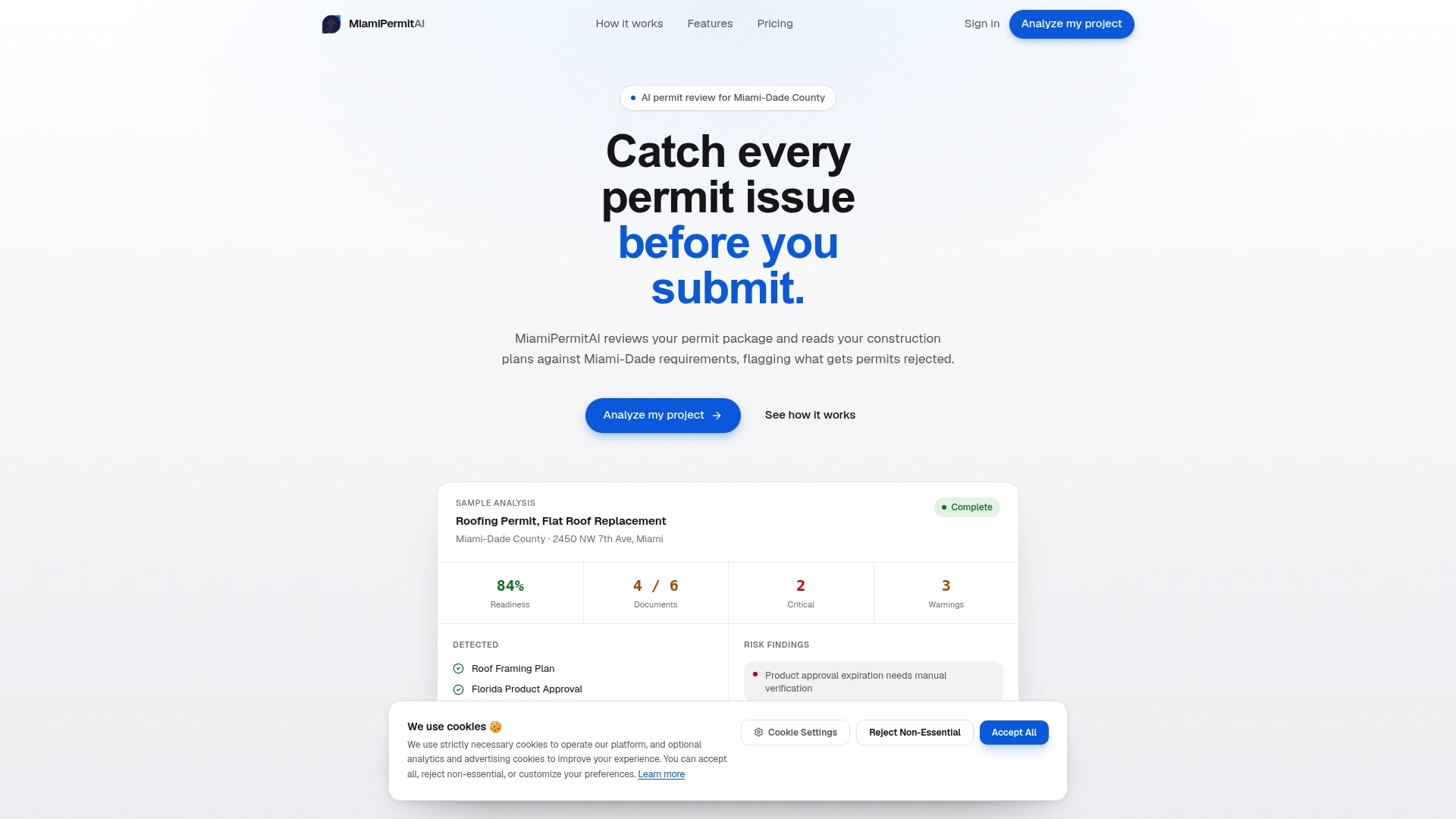
The platform reads your uploaded construction plans against Miami-Dade requirements, including Miami 21 zoning, FEMA flood zone data, and folio property records, and flags the specific issues most likely to cause rejections or correction requests. You get a readiness score and a prioritized list of what to fix, in plain language, before you submit. After submission, Miamipermitai tracks your permit through the county’s system using public Miami-Dade records and sends email status updates so you always know where things stand.
For contractors managing multiple projects and property owners navigating the CO process for the first time, that combination of upfront review and post-submission tracking is what keeps timelines on track. Check your permit readiness at Miamipermitai before your next submission.
Recommended
Is your permit package ready?
Run an AI readiness check against Miami-Dade requirements before you submit.
Try your first analysis freeThis article is general guidance and not legal, engineering, or official county advice. Always verify requirements with Miami-Dade County before submitting a permit.