
July 29, 2026
Miami-Dade Permit Application Project Valuation Guide
Miami-Dade Permit Application Project Valuation Guide
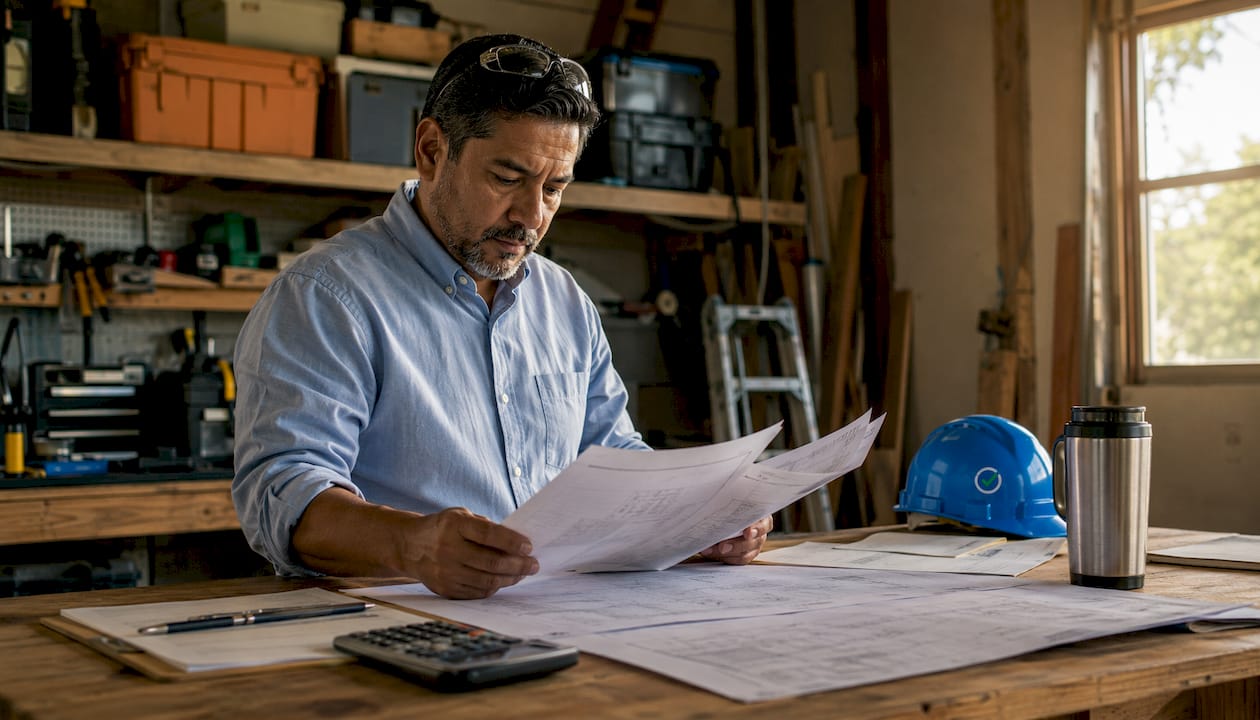
Submit a detailed, line-item cost estimate — not a round number — and you will clear the single biggest hurdle in Miami-Dade’s permit review process. The Miami-Dade County Building/Permitting Department compares every declared valuation against county cost averages, and vague totals get flagged for re-valuation or outright rejection. A well-organized packet typically includes:
- An itemized cost sheet breaking out labor, materials, subcontractors, permit fees, and a contingency to cover unexpected costs
- Sealed plans or an architect/engineer cost memo (required for structural work)
- A signed contractor bid or owner-builder declaration
- A Florida DBPR license verification printout for any licensed contractor on the project
- Miami-Dade folio property record extract confirming ownership and zoning
Pro Tip: Attach a one-page itemized cost sheet and the contractor or owner-builder declaration directly to your permit submission. Reviewers who can match every line item to the plans rarely send applications back for re-valuation.
Miamipermitai cross-checks all of these elements against live Miami-Dade data before you submit, so nothing slips through.
Table of Contents
- How to calculate a defensible permit project valuation in Miami-Dade
- Miamipermitai catches valuation gaps before they cost you
How to calculate a defensible permit project valuation in Miami-Dade
Understand the three value terms
Before you fill in the valuation field, get clear on which number actually belongs there. Miami-Dade property records carry three distinct figures:
- Just Value (market/replacement value): what the property would sell for, or what it costs to rebuild. This is the number permit reviewers care about.
- Assessed Value: Just Value adjusted downward by Florida’s Save Our Homes cap for homesteaded properties.
- Taxable Value: Assessed Value minus any exemptions.
Your tax bill reflects Assessed or Taxable Value, not Just Value. Copying the tax bill into the permit valuation field is one of the most common mistakes that triggers a re-valuation.
Step 1: Map the scope and pick a cost method
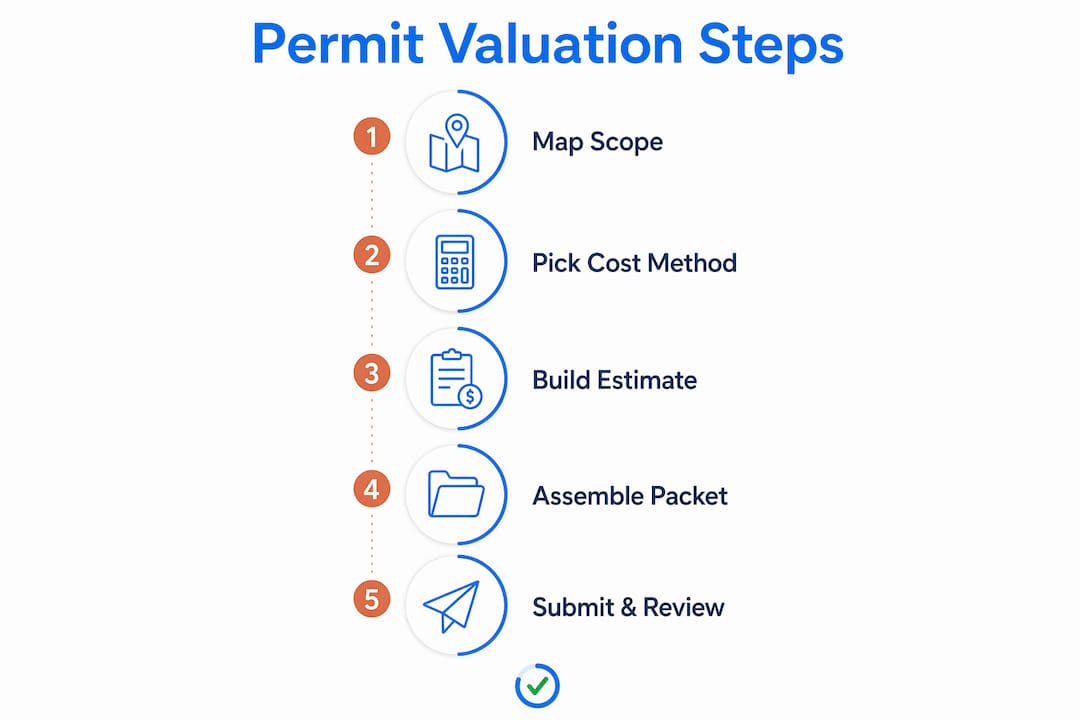
Identify every trade the project touches — structural, electrical, plumbing, mechanical, finishes. Then choose a cost basis: per-square-foot pricing for straightforward renovations, unit pricing for discrete items (windows, fixtures), or a contractor bid for complex scopes. If your property sits in a Special Flood Hazard Area, check whether the project triggers Substantial Improvement rules. When it does, market value must reflect actual cash value or replacement cost minus depreciation — the tax assessment alone will not satisfy the reviewer.

Step 2: Build the itemized estimate
Use this template as your starting point:
Permit fees are then calculated from that declared total. Miami-Dade’s fee schedule includes minimum fees (the residential building permit minimum is $110), percentage surcharges such as a solid waste fee, and upfront processing charges. Projects with declared values above $10,000 attract stricter scrutiny and may require third-party cost backup or a detailed invoice of actual costs.
Step 3: Assemble the evidence packet
A small, well-organized packet is usually enough to defend a valuation under routine review and prevents the county from applying a square-foot default. Pull together:
- Signed contractor bid or owner-builder documentation
- DBPR license lookup screenshot for every licensed contractor
- Sealed plans or architect cost memo
- Miami-Dade folio extract (confirms ownership, zoning, and flood zone)
- FEMA flood map reference if the project is in a flood zone
For Miami 21 zoning impacts — setbacks, height limits, use restrictions — confirm compliance before declaring scope, since a zoning issue can force a scope reduction that changes the valuation entirely.
Common mistakes that slow approval or trigger re-valuation
Round numbers ($20,000 exactly), non-itemized totals, unsigned bids, and unverified contractor licenses are the fastest path to a correction notice. Starting work before the permit is issued is worse: Miami-Dade applies a mandatory after-the-fact penalty equal to 100% of the usual permit fee, effectively doubling it. If the project scope grows after submission, file an amended application promptly — waiting until after work starts compounds both the fee and the compliance risk. For a full list of documentation errors that cause rejections, the common permit submission mistakes guide covers the patterns reviewers see most often.
Evaluating vendor bids line by line before you sign them also helps — a bid that bundles labor and materials into one figure gives reviewers nothing to verify.
This article is general information, not legal or professional advice. Confirm current Miami-Dade fee rules and flood zone requirements with the county building department or a licensed professional for your specific project.
Miamipermitai catches valuation gaps before they cost you
Skip the guesswork on whether your valuation packet will hold up. Miamipermitai reads your uploaded plans against Miami-Dade’s actual requirements — Miami 21 zoning, FEMA flood maps, folio property records, and Florida DBPR license data — and flags every mismatch before you submit.
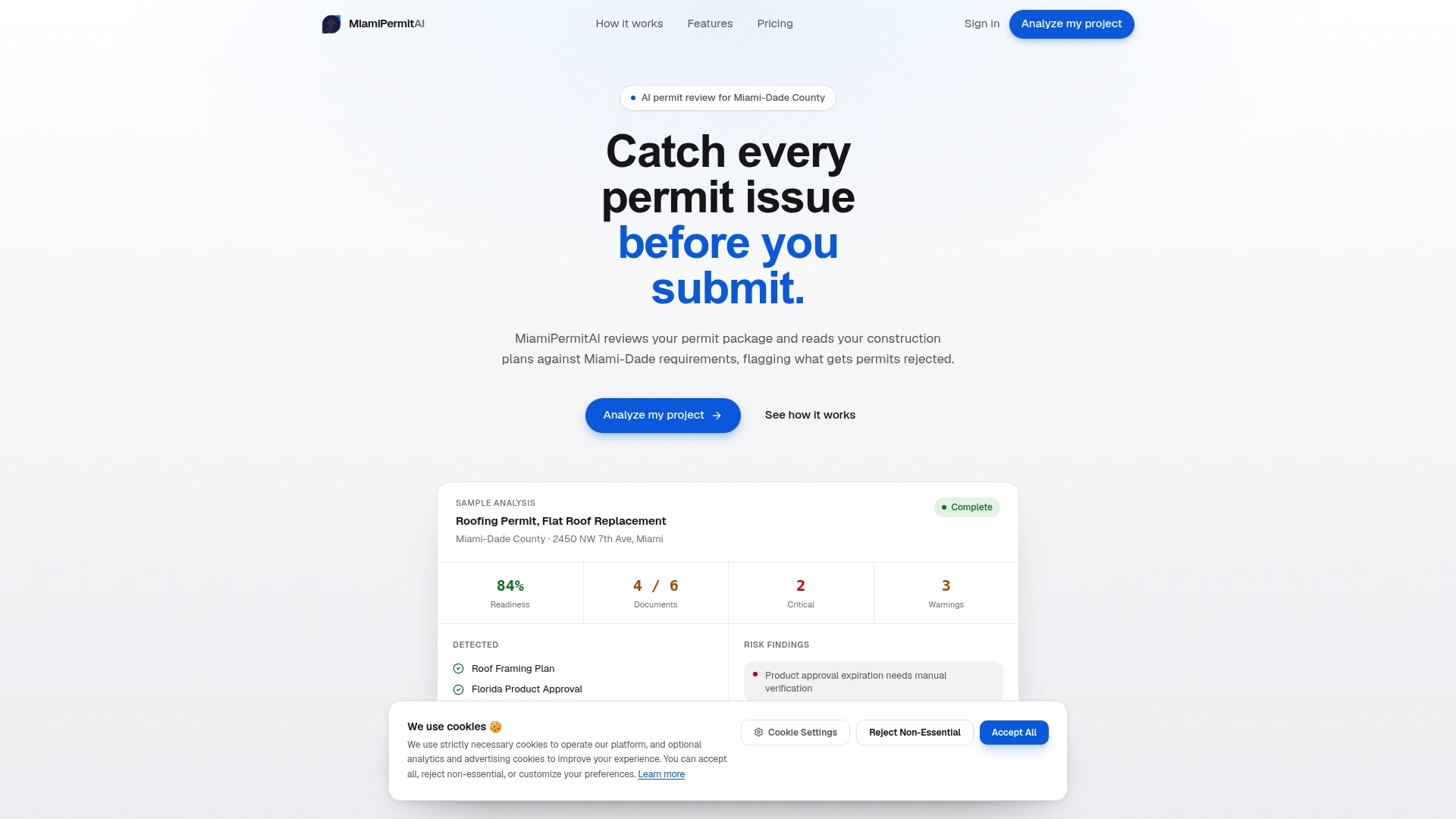
You get a clear readiness score, a plain-language list of what to fix, and confidence that your declared valuation is backed by the right documents. After submission, Miamipermitai tracks your permit through approval using public Miami-Dade records and sends you status updates by email. Run your permit readiness check now and go into the county’s queue with a complete, defensible package.
Recommended
Is your permit package ready?
Run an AI readiness check against Miami-Dade requirements before you submit.
Try your first analysis freeThis article is general guidance and not legal, engineering, or official county advice. Always verify requirements with Miami-Dade County before submitting a permit.