August 13, 2026
Short-Term Rental Permit Compliance in Miami-Dade
Short-Term Rental Permit Compliance in Miami-Dade
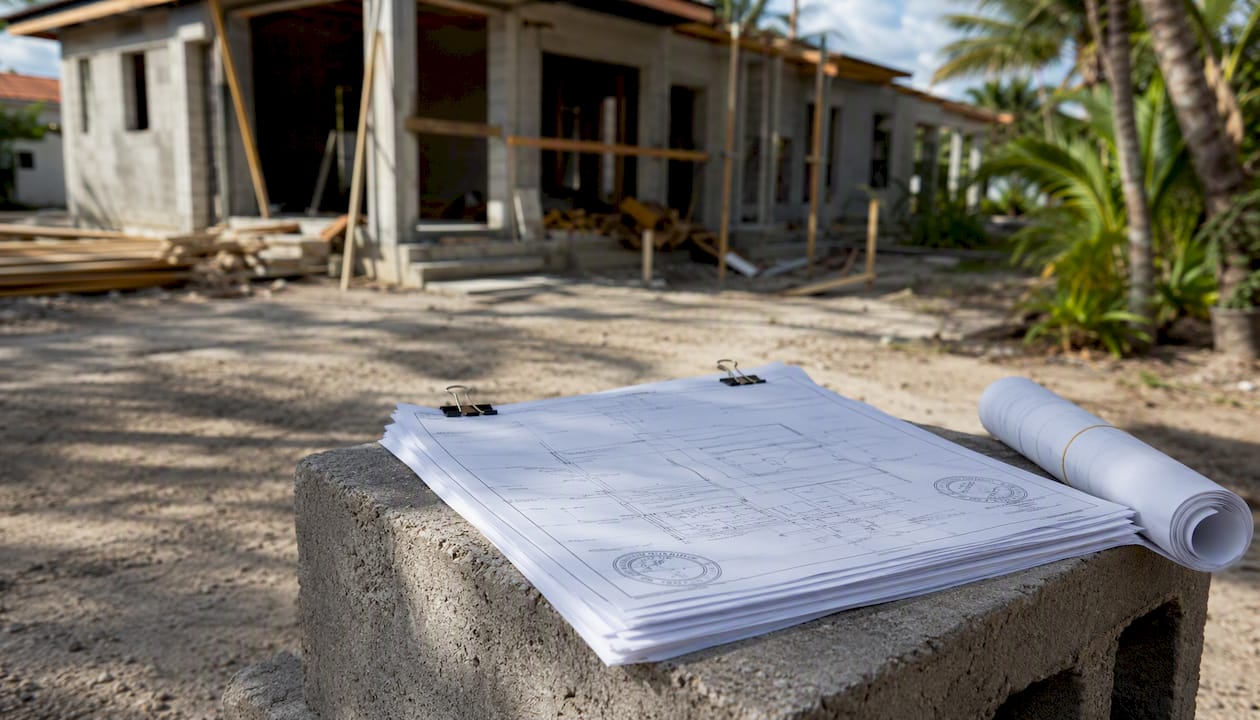
A permit-ready package for short-term rental construction work in Miami-Dade must combine sealed construction plans with a verified Miami 21 Transect Zone check, a boundary survey signed and sealed within the past year, licensed-contractor documentation or valid owner-builder authorization, and correct routing to every required agency reviewer before you submit a single page to the county.
The most common rejection triggers are preventable: a missing engineer or architect seal, floor plans that contradict each other across sheets, an expired survey, or no elevation certificate in a FEMA flood zone. Get these wrong and you are looking at correction rounds that add weeks, not days.
Your permit-readiness checklist:
- Sealed drawings covering all required discipline sheets (architectural, structural, MEP where applicable), signed and sealed by a Florida-licensed design professional
- Boundary survey signed and sealed by a Florida-licensed surveyor, dated within one year of submission
- Structural calculations attached and referenced in the plan set
- Contractor license and Florida DBPR verification on the application, or a valid owner-builder authorization form
- Digital signatures and seals where required (municipalities using the e-municipal system mandate digitally signed and sealed plans)
- Notice of Commencement (NOC) recorded and posted before the first inspection; include it in the package when applicable
Building permit approval does not automatically change permitted occupancy. If your renovation converts a property to lodging use, a separate Certificate of Use is required to finalize that use change. Skipping this step is one of the most expensive mistakes STR investors make in Miami-Dade.
Under Miami 21 zoning, short-term rental is treated as a lodging use. That classification means you must confirm the property’s Transect Zone permits lodging before your architect draws a single line. Article 4, Table 3 of Miami 21 is where that determination lives. If lodging is not Allowed By Right in the Transect Zone, you need a Warrant, Exception, or Waiver — each of which carries its own documentation requirements, timeline, and cost.
Key Takeaways
Getting to a permit-ready package for short-term rental construction in Miami-Dade requires zoning verification, sealed documents, and correct agency routing — all confirmed before submission, not after a correction round.
| Point | Details |
|---|---|
| Zoning check comes first | Confirm lodging is Allowed By Right in the Miami 21 Transect Zone before commissioning sealed plans. |
| Five documents drive approval | Sealed plans, a current boundary survey, structural calcs, DBPR-verified contractor license, and NOC when required. |
| Fees must be paid upfront | Miami-Dade will not begin plan review until required fees are paid; approved submittals receive a process number starting with C, N, or M. |
| Waivers carry strict deadlines | City of Miami Waivers have finite lifespans and a 15-day appeal window before building permits can be obtained. |
| Miamipermitai catches issues first | The platform flags plan inconsistencies, missing seals, and zoning mismatches before you submit to Miami-Dade. |
Your 7-day prep plan:
- Day 1: Pull the folio number and confirm jurisdiction (county vs. municipal) and Miami 21 Transect Zone
- Day 2: Verify lodging is Allowed By Right; if not, assess Warrant/Waiver timeline and cost before proceeding
- Day 3: Confirm your boundary survey is signed, sealed, and dated within one year; order a new one if not
- Day 4: Finalize sealed construction plans with all discipline sheets; confirm digital seals meet e-municipal requirements per Miami-Dade permitting procedures
- Day 5: Verify contractor license against the Florida DBPR record; confirm owner-builder authorization if applicable
- Day 6: Run a pre-submission readiness review; check which agency reviews (DERM, WASD, Fire Rescue) your scope triggers per the permit-ready plan set checklist
- Day 7: Pay required upfront fees and upload through the EPS portal; record and post the NOC before scheduling the first inspection
Table of Contents
- Why pre-submission review consistently saves money and time
- How Miamipermitai prepares your package before you submit
- Official Miami-Dade and City of Miami resources
- Sources
Why pre-submission review consistently saves money and time
Plan reviewers at the Miami-Dade Building Department / Permitting & Inspection Center work from strict code rubrics. They are not there to help you fix your package; they are there to check whether it meets the Florida Building Code and local amendments. A single missing seal or one inconsistent dimension between the site plan and floor plan triggers a correction request, which restarts the clock.
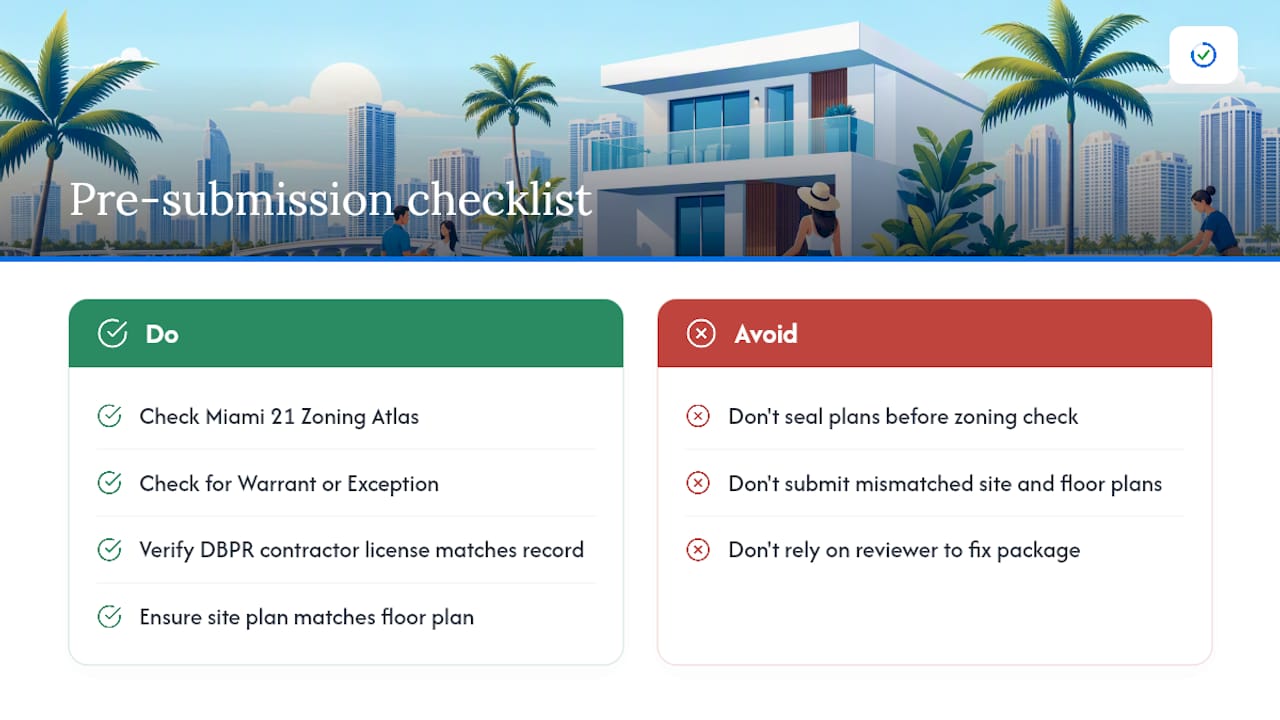
The practical case for a pre-submission readiness check is straightforward. Consider a renovation project where the architect’s floor plan showed a new bathroom addition, but the site plan did not reflect the updated footprint. A pre-check catches that mismatch before submission. Without it, the reviewer issues a correction, the architect revises, the applicant resubmits, and the project loses three to four weeks minimum. The Florida DBPR contractor license verification is another frequent stumble: if the license number on the application does not match the active DBPR record, the county flags it immediately.
Checking the Miami 21 Zoning Atlas before commissioning sealed plans is the single highest-ROI step for any STR investor. A Warrant or Exception can shift a project’s timeline by months and its budget by tens of thousands of dollars. Knowing that before the architect starts work changes the entire project calculus.
How Miamipermitai prepares your package before you submit
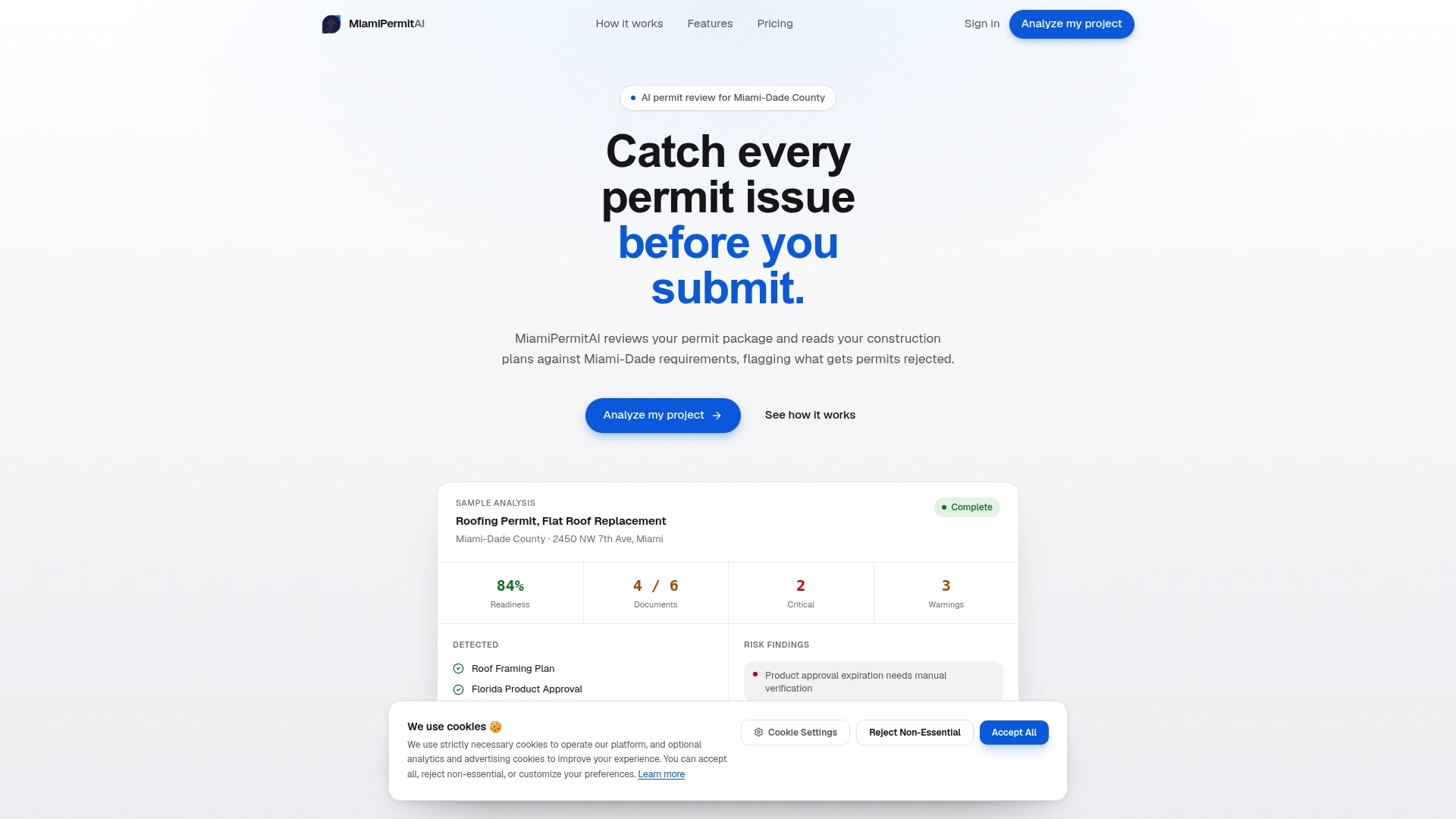
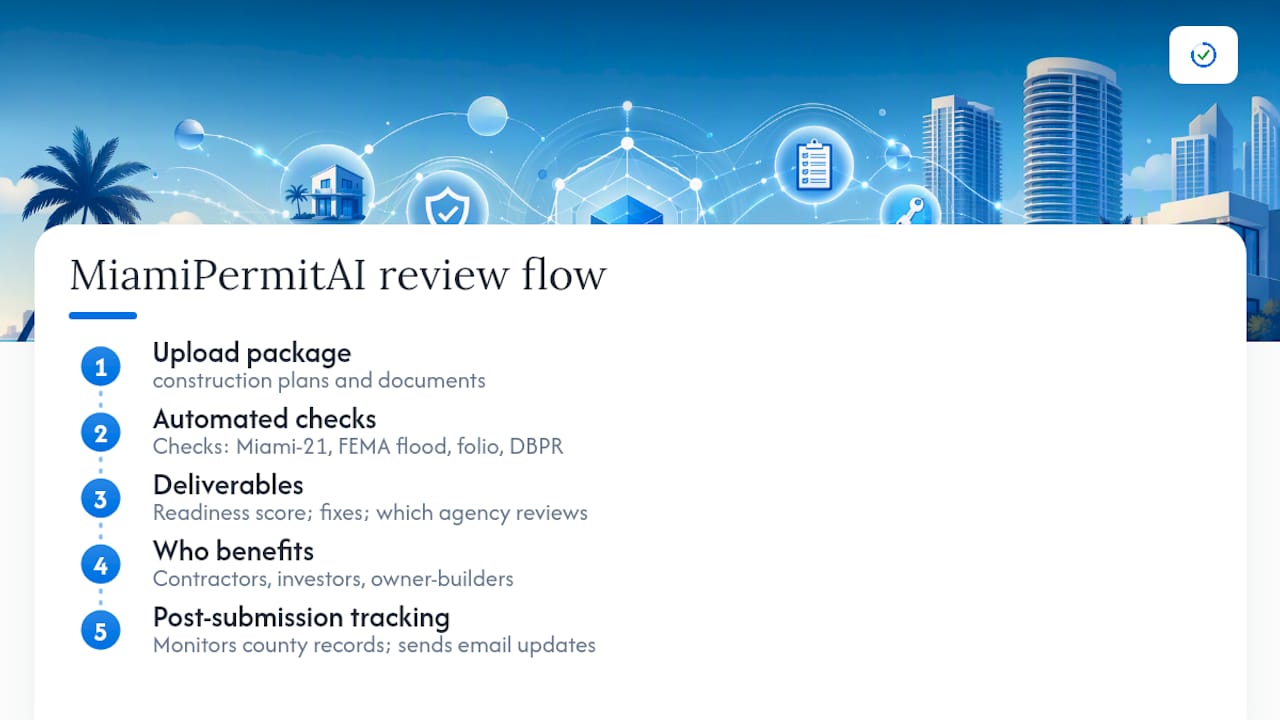
Miamipermitai runs your permit package through the same checks a Miami-Dade plan reviewer applies, before you upload anything to the county. Upload your construction plans and application documents, and the platform cross-references them against Miami 21 zoning, FEMA flood zone data, folio property records, and Florida DBPR contractor license records. You get a readiness score, a prioritized list of what to fix, and plain-language guidance on which agency reviews your project triggers — DERM, WASD, Fire Rescue, or State DOH.
Licensed contractors use it to catch plan inconsistencies before they become correction rounds. Investors use it to verify zoning and flood exposure before committing to a renovation budget. Owner-builders use it to confirm their authorization is correctly structured for county review.
After you submit to Miami-Dade yourself, Miamipermitai tracks the permit through approval using public county records and sends you status updates by email. No more logging into the EPS portal every day to check whether your application moved.
Run your permit readiness check at MiamiPermitAI before your next submission.
Official Miami-Dade and City of Miami resources
These are the primary portals and pages you need for STR construction permit submissions, zoning verification, and agency routing.
- EPS Portal (permit submissions and Certificates of Use): Miami-Dade EPS Portal — submit building permit applications, plan corrections, revisions, and Certificate of Use applications for both municipal and unincorporated properties
- How to apply for permits: Miami-Dade permit application guidance — covers upfront fee requirements, process numbers, and submittal steps
- Home renovation permit requirements: Miami-Dade renovation brochure — lists which projects require building and trade permits under the Florida Building Code
- Miami 21 Zoning Code: City of Miami Zoning FAQs — confirms lodging use classification and directs you to Article 4, Table 3 for Transect Zone lookups
- Zoning Waiver applications: City of Miami Waiver page — documentation requirements, lifespan rules, and the 15-day appeal period before permits can issue
- Agency review triggers (DERM, WASD, Fire Rescue, DOH): Miami-Dade homeowner permit information — explains which scopes of work require additional agency approvals during plan review
Sources
- Home - EPS
- Home renovation brochure — Miami‑Dade County
- How to apply for permits — Miami‑Dade County
- Apply for a zoning waiver — City of Miami
- Zoning FAQs — City of Miami
Recommended
Is your permit package ready?
Run an AI readiness check against Miami-Dade requirements before you submit.
Try your first analysis freeThis article is general guidance and not legal, engineering, or official county advice. Always verify requirements with Miami-Dade County before submitting a permit.