By the MiamiPermitAI team · August 21, 2026
Do You Need a New Certificate of Occupancy After Renovation?
Most renovations that change how a building is used, exit, or resist fire require a new or amended certificate of occupancy (CO) before anyone moves back in. A kitchen remodel usually doesn’t. A converted garage, a gutted retail space turned into apartments, or an addition that changes square footage almost always does.
Start here: figure out whether your project changed the occupancy classification, altered a means of egress, or touched fire-rated assemblies. Then confirm which municipal office or online portal handles CO requests in your jurisdiction, since the process varies from city to city.
Before anything gets issued, expect these gating items:
- Final sign-offs from building, electrical, plumbing, and (if applicable) elevator inspectors
- Closeout of every permit pulled for the job, not just the primary one
- Payment of any outstanding fees, including reinspection charges,
Key Takeaways
A certificate of occupancy after renovation is required whenever the work changes occupancy classification, egress, or fire rating, and issuance depends on closed permits, paid fees, and completed agency sign-offs.
| Point | Details |
|---|---|
| Know your trigger | Change of use, egress changes, fire-rating work, and additions typically require a new or amended CO. |
| Sequence your inspections | Pass building, electrical, plumbing, and elevator inspections before applying, or apply early where local rules allow. |
| Build a compliance binder | Keep permits, inspection tickets, receipts, and stamped plans together to avoid reinspection delays. |
| Know the fallback options | A TCO, Certificate of Completion, or Letter of No Objection can bridge the gap when a full CO isn’t ready yet. |
| Check your package before submitting | MiamiPermitAI flags missing documents and zoning or licensing issues before Miami-Dade reviews your plans. |
Table of Contents
- When Renovations Trigger a New or Amended Certificate of Occupancy After a Renovation
- How to Get a Certificate of Occupancy After Renovation: Step by Step
- Temporary Certificates and Other Alternatives to a Final CO
- Why Certificates of Occupancy Get Delayed or Denied
- What Goes in a Permit-Ready Documentation Package
- How Long Does It Take and Who Pays?
- What Happens If You Occupy a Renovated Space Without a CO
- How to Find or Request an Existing Certificate of Occupancy
- How Experienced Owners and Contractors Shorten CO Turnaround
- Get Your Permit Package Reviewed Before the County Sees It
- Where to Check Forms, Portals, and Records
- Frequently Asked Questions
- Sources
When Renovations Trigger a New or Amended Certificate of Occupancy After a Renovation
A CO shows a building is safe to occupy, and cities in the U.S. require a new or updated one whenever a renovation crosses certain lines. The common triggers:
- Change of use or occupancy classification (retail to residential, office to medical, warehouse to event space)
- Work affecting means of egress, exit widths, or corridor layouts
- Changes to fire-resistance ratings or fire protection systems, including sprinkler or alarm modifications
- Additions that expand the building’s footprint or add habitable space
- Conversions between residential unit counts, such as splitting a duplex into three units
Not every project needs a fresh CO. Many jurisdictions treat purely cosmetic work like new flooring, paint, or fixture swaps as exempt, and some issue a Letter of Completion instead of a full CO for minor alterations. In Philadelphia, that Letter of Completion route applies to smaller-scope work that doesn’t touch exits or fire ratings.
One more wrinkle worth knowing: some cities fold the CO into the building permit itself, so there’s no separate application once final inspections pass. Others, including several with dedicated occupancy divisions, require you to file a distinct CO request even after the permit closes.
How to Get a Certificate of Occupancy After Renovation: Step by Step
Getting a certificate of occupancy after renovation work wraps up comes down to sequencing. Skip a step and you’ll be back in the inspection queue.
- Schedule and pass final trade inspections. Building, electrical, plumbing, and elevator inspections (where relevant) all need sign-off. Chicago requires applicants to be present for these inspections, and any unpaid reinspection fee stalls the process.
- Secure agency approvals tied to change of use. Fire marshal review, zoning clearance, health department sign-off, or planning approval may all apply depending on what the space is becoming.
- Close out every underlying permit. A CO won’t issue while any permit tied to the project remains open, even a minor one for a water heater swap. If you’re stuck here, closing an open permit before it blocks your closing is worth reviewing.
- Pay outstanding fees. Inspection fees, reinspection fees, and the CO application fee itself (where one exists) all need to be cleared.
- Submit or pick up the certificate. Some cities, like San Diego, deliver COs by mail or email after final inspection approval; others require in-person pickup.
Have these documents ready before you start:
- Signed and stamped final plans
- Completed inspection tickets from each trade
- Permit closeout receipts
- Contractor license verification, where the jurisdiction requires it
- Written agency approvals for fire, zoning, or health where applicable
Timing matters more than most owners expect. Alexandria’s guidance recommends applying for the CO before scheduling final inspections, since multiple agencies each need multiple business days per reviewing agency to review. Waiting until after the last inspection to start that paperwork just adds a week you didn’t need to lose.
Pro Tip: Assign one person, whether it’s the owner, GC, or project manager, as the single point of contact for every inspector and agency. Split coordination across three people and something always falls through.
Temporary Certificates and Other Alternatives to a Final CO
A Temporary Certificate of Occupancy (TCO) lets you occupy part or all of a renovated space before every final item is closed out, provided life-safety systems, exits, and fire protection have already passed inspection. It’s a bridge document, not a substitute for the real thing.
Other alternatives show up depending on jurisdiction:
- Certificate of Completion, often used for minor alterations that don’t rise to full CO territory
- Letter of No Objection, sometimes issued for older buildings (pre-1938 in some cities) or exempt structure types
A common scenario: an owner needs to hit a move-in date, so the city issues a TCO once egress and fire systems clear, while punch-list items like final landscaping or a certificate of insurance stay outstanding. San Antonio’s TCO and CO phases illustrate how that staged approach works in practice.
Why Certificates of Occupancy Get Delayed or Denied
The reasons a CO stalls after renovation are almost always preventable, which is exactly why they’re frustrating.
- Open underlying permits or a failed trade inspection nobody rescheduled
- Unresolved code violations sitting on the property record
- Unpaid fees, including reinspection charges from an earlier failed visit
- Zoning noncompliance discovered only after a change of use was already built out
- Missing stamped plans or work that doesn’t match what was submitted
Process failures cause just as many delays as construction defects. Fire, planning, and health departments often don’t talk to each other, so if you’re not tracking each agency’s sign-off separately, gaps appear. Nobody showing up to represent the project at a scheduled inspection is another common, entirely avoidable cause.
Pro Tip: Keep a compliance binder, physical or digital, with every permit, inspection ticket, receipt, warranty, and stamped plan. Bring it to the final inspection. When an inspector has a question, you answer it on the spot instead of scheduling a reinspection two weeks out.
What Goes in a Permit-Ready Documentation Package
Municipal reviewers expect a specific paper trail, and assembling it before final inspection saves real time. Your package should include:
- All permits closed, with receipts on hand
- Signed inspection tickets from every trade
- Stamped final plans matching the completed work
- Contractor license numbers and current insurance certificates
- Fee payment receipts
- Agency approvals for fire, zoning, or health where the project touched them
- Warranty or product data sheets for any life-safety systems installed
When a renovation involved a change of use or a complex code interpretation, get a licensed design professional’s sign-off on file. Consulting an architect early on zoning or occupancy questions catches conflicts before they turn into a denial after the walls are already closed up. Keep contact information for your site designee and the plans examiner together, since you’ll likely need both during the final review.
Pro Tip: Hire an independent inspector to walk the space before you release final payment. Municipal inspectors check code compliance, not contract scope, so a private inspection catches workmanship defects that would otherwise become your problem after the contractor is gone.
How Long Does It Take and Who Pays?
Timelines swing widely by city. Some jurisdictions issue a CO within a few business days of the final inspection; others, especially when multiple agencies review a change of use, take longer. Alexandria flags up to five business days per reviewing agency, which stacks up fast on a complex project.
Typical costs include:
- Any outstanding permit fees from the original scope
- Reinspection fees if a trade inspection failed the first time
- A CO application fee, where the jurisdiction charges one separately
- Agency review fees tied to fire, planning, or health sign-off
Owners usually cover these costs, though renovation contracts sometimes shift responsibility to the contractor. Submit your CO request early wherever the local process allows it. That five-day agency lead time only helps you if you’ve already started the clock.
What Happens If You Occupy a Renovated Space Without a CO
Enforcement varies, but it’s rarely gentle. Houston can issue a 15-day notice to apply for a commercial space lacking a posted CO, followed by daily citations until fees are paid and an application is filed. Some jurisdictions escalate to a formal order to vacate.
Commercial spaces face tighter scrutiny than single-family homes. Occupying without a valid CO can jeopardize a lease, a business license, and insurance coverage, all at once, since most insurers and lenders treat an unresolved CO as a red flag on renovation loan approvals.
How to Find or Request an Existing Certificate of Occupancy
Need a copy of a CO that already exists, or unsure whether one was ever issued for the property? Work through it in order:
- Search the municipal building department or permit portal by address or property profile.
- Request a copy directly through the portal or by emailing the records office if the search doesn’t turn up a digital file.
- File a formal records request if the CO predates digital record-keeping, since older documents are often archived on paper.
- If no CO turns up anywhere, complete the municipality’s Request for Certificate form. Some cities charge a research fee for this, and a few may issue a duplicate CO or a Letter of No Objection instead of a fresh certificate.
- If the online search comes up empty, escalate to the permit center or borough office directly rather than assuming the property has none.
How Experienced Owners and Contractors Shorten CO Turnaround
Assign one point of contact for the whole closeout process, pre-submit CO documentation wherever the local portal allows it, and book inspections with a contingency window built in for reinspection. Projects that skip that buffer lose weeks the moment one trade fails on the first pass.

When a change of use is involved, call fire, planning, and health departments before construction wraps, not after. Non-obvious conditions, an exit sign requirement, a hood suppression detail, surface early enough to fix cheaply. Document everything: photographs, stamped plans, and signed inspection tickets resolve disputes with building staff far faster than a phone call.
Get Your Permit Package Reviewed Before the County Sees It
Miamipermitai is the alternative to guessing whether your renovation package will survive a Miami-Dade review: it reads your plans and documents against Miami 21 zoning, FEMA flood zone rules, and Florida DBPR contractor licensing before you ever submit, and hands back a readiness score with a prioritized fix list in plain language.
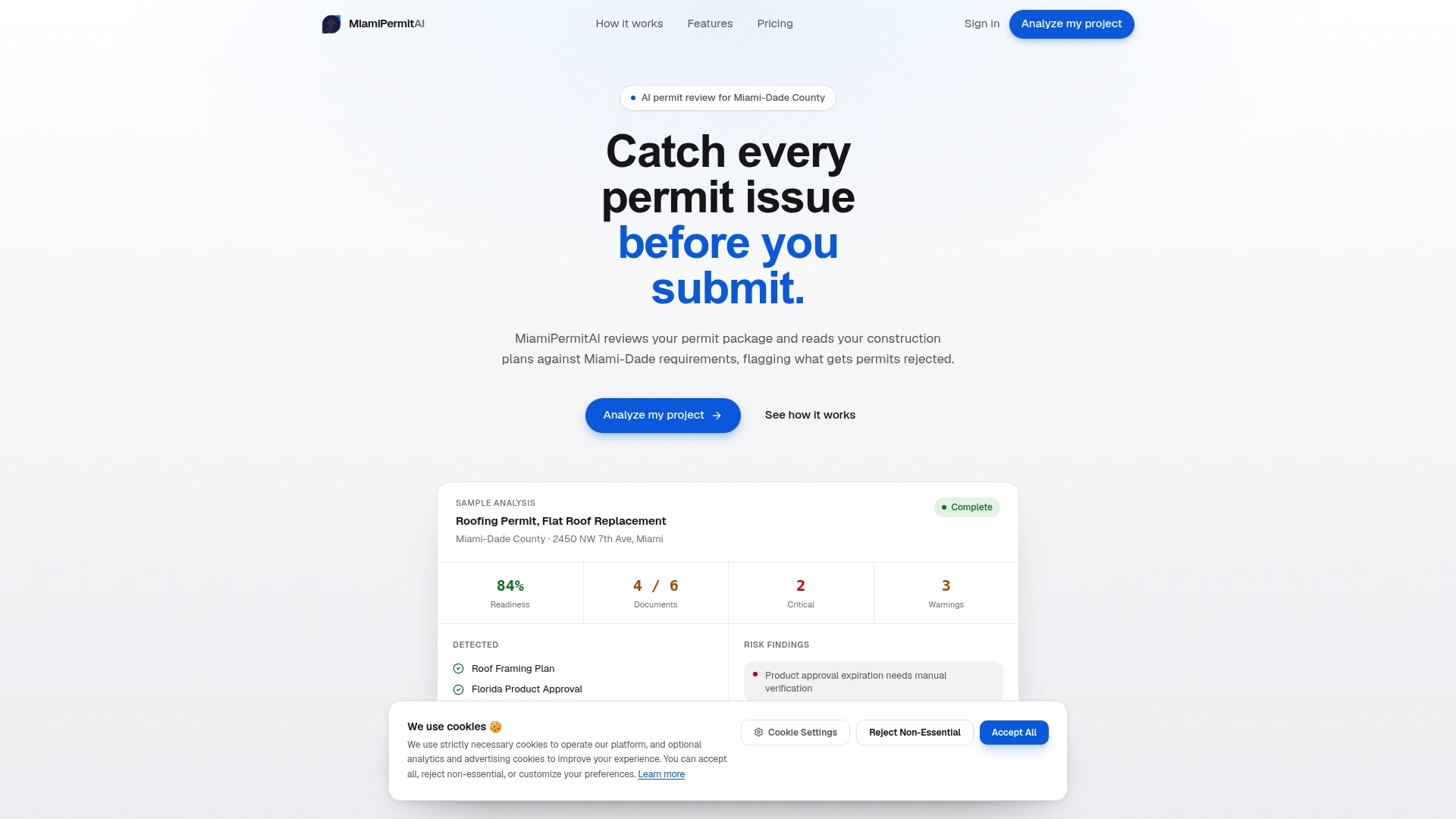
That matters most on the exact projects covered here: change-of-use conversions, tenant improvements, and additions where a single missing stamped plan or a zoning mismatch can push your certificate of occupancy back by weeks. Instead of finding out about an inconsistency at the final inspection, you catch it before the county’s plans examiner does. Fewer rejections mean fewer reinspection fees and a faster path from last trade sign-off to a certificate in hand.
If your renovation touches occupancy classification, egress, or fire rating, run a readiness check with MiamiPermitAI before you submit and see exactly what needs fixing first.
Where to Check Forms, Portals, and Records
- Certificate of Occupancy overview for CO issuance conditions and requirements
- Miami’s CO/CC request page for local forms and contacts
- Chicago’s CO portal for inspection scheduling and fee payment
- San Diego’s CO information bulletin for request channels and delivery timelines
Frequently Asked Questions
Does every renovation require a new certificate of occupancy? No. Cosmetic updates like flooring, paint, or fixture replacement typically don’t. Work that changes occupancy classification, egress, or fire-resistance ratings usually does.
How long does it take to get a certificate of occupancy after a renovation? It varies by city and by how many agencies must review the project. Some jurisdictions issue a CO within a few business days of final inspection; others need a week or more when fire, planning, or health departments are all involved.
Can I occupy a renovated space while waiting on the final CO? Sometimes, through a Temporary Certificate of Occupancy, provided life-safety systems, exits, and fire protection have already passed inspection. It’s not automatic and comes with conditions.
What if my certificate of occupancy request gets denied? Ask for the specific deficiency in writing, correct it (a failed inspection, an open permit, a zoning conflict), and request reinspection. Most denials are procedural, not fatal, once the underlying issue is fixed.
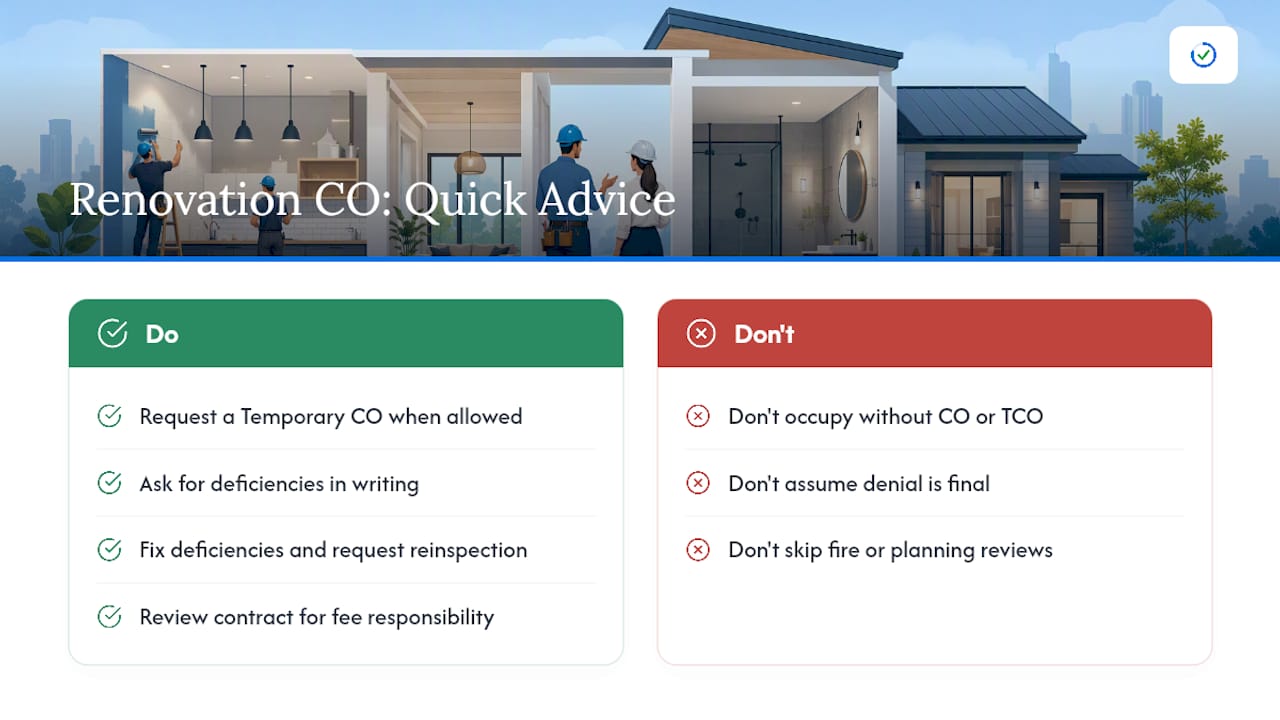
Who pays for reinspection fees and CO application fees? Owners typically cover these costs, though renovation contracts sometimes assign responsibility to the general contractor. Check your contract language before assuming either way.
Sources
- Certificate of Occupancy - Buildings
- Get a Certificate of Occupancy | Services | City of Philadelphia
- City of Chicago :: Certificates of Occupancy
- Information Bulletin: Certificates of Occupancy (City of San Diego)
- Certificate of Occupancy Procedures (City of Alexandria)
Recommended
Is your permit package ready?
Run an AI readiness check against Miami-Dade requirements before you submit.
Start your first projectThis article is general guidance and not legal, engineering, or official county advice. Always verify requirements with Miami-Dade County before submitting a permit.