By the MiamiPermitAI team · August 22, 2026 · Updated September 30, 2026
Flip House Permit Strategy for Miami Investors in 2026
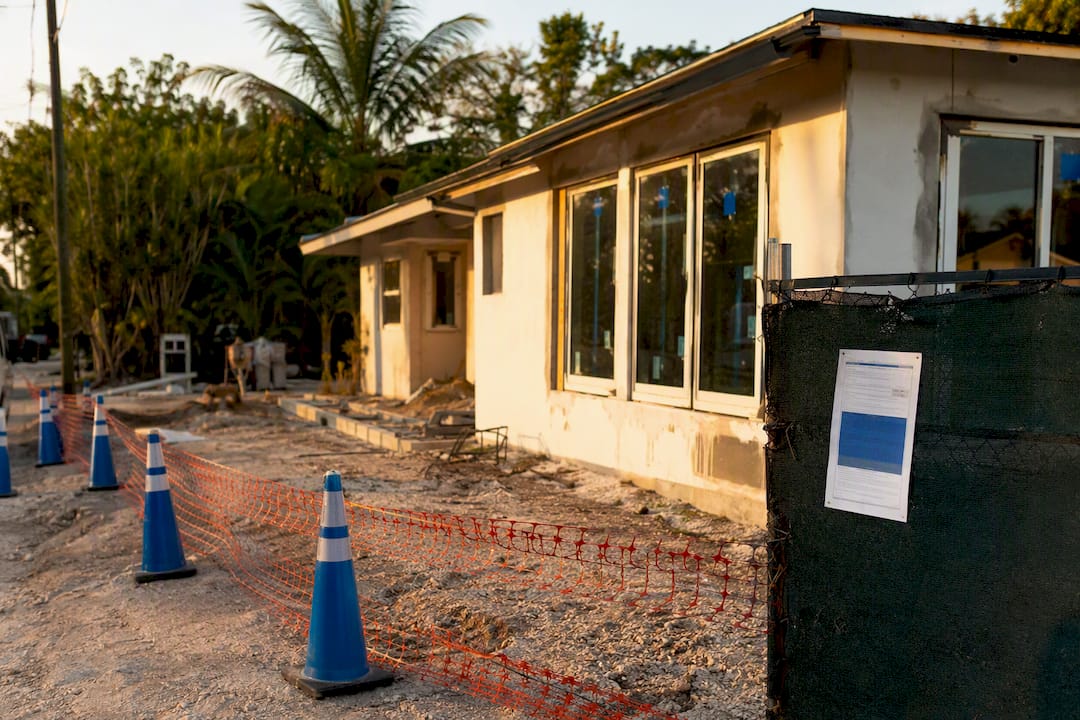
Before you close on a flip, pull the property’s permit history and decide who will hold the permit, owner-builder or licensed contractor. That single move determines whether your renovation timeline runs 6 weeks or 6 months. Do it before you sign, not after.
Three tasks for today:
- Search the county permit portal and the folio number for open or closed permits and code violations.
- Estimate whether your planned scope exceeds Florida’s new $7,500 exemption threshold under House Bill 803, effective July 1, 2026.
- Check City of Miami Easy Permit eligibility for trade work.
Pro Tip: Budget several weeks of buffer time for anything structural, as permit reviews can take longer and cause scheduling delays when underestimated.
Key Takeaways
Verifying open permits and locking a permit-holder strategy before closing is the single move that protects a Miami flip’s timeline and profit.
| Point | Details |
|---|---|
| Check permit history first | Search the folio and permit portal for open permits and code violations before you close. |
| Know the $7,500 exemption’s limits | HB 803 exempts minor non-structural work under $7,500 starting July 1, 2026, but not HVHZ, structural, or system work. |
| Budget 4 to 6 weeks | Complex scopes need that buffer, since each correction cycle restarts part of the review clock. |
| Let a licensed contractor pull the permit | Owner-builder permits carry personal liability that can complicate resale and lender review. |
| Run a readiness check pre-submission | MiamiPermitAI flags missing documents and HVHZ mismatches before the county sees your package. |
Table of Contents
- Pre-Purchase Permit Checklist for Your Miami Flip
- Which Renovations Actually Need a Permit in Miami?
- How Long Do Miami Permits Actually Take?
- Why Do Miami Permit Plans Get Rejected?
- Owner-Builder or Licensed Contractor: Who Should Pull the Permit?
- What HVHZ, Flood Zones, and Coastal Rules Mean for Your Flip
- What Should a Permit-Readiness Review Actually Check?
- Sources
Pre-Purchase Permit Checklist for Your Miami Flip
Run this in order during due diligence, before you write an offer that assumes a clean renovation path.
- Pull the property folio and search Miami-Dade’s and the relevant municipal permit portal for open, closed, and expired permits, plus any code enforcement complaints.
- Confirm the flood zone designation and whether the address sits inside the High Velocity Hurricane Zone (HVHZ).
- Request approved plans, prior permits, surveys, and elevation certificates from the seller before closing, not after.
- Estimate permit fees and how many inspections the scope will trigger, since each inspection adds a scheduling dependency.
Pro Tip: An open permit from a previous owner becomes your problem the day you take title. Sellers rarely disclose this voluntarily, so you have to go find it yourself.
Which Renovations Actually Need a Permit in Miami?
Almost everything that touches structure, the building envelope, or a system needs one. That includes:
- Structural work: load-bearing wall removal, additions, foundation repair
- Roofing replacement or repair beyond minor patching
- Electrical, plumbing, and mechanical (HVAC) system changes
- Pools, spas, and their equipment
- Accessory dwelling units (ADUs)
- Impact window and door replacement
- Any interior demolition tied to the above
House Bill 803 exempts certain non-structural residential projects valued under $7,500 from local permit requirements, starting July 1, 2026. That exemption is narrow. It generally covers minor cosmetic work, not roofing, structural changes, HVHZ-rated products, or anything touching electrical and plumbing systems. Don’t let a contractor talk you into skipping a permit because the bill “raised the threshold.” If the scope touches structure, the envelope, or a system, assume a permit applies until a licensed reviewer tells you otherwise.
How Long Do Miami Permits Actually Take?
Standard reviews typically take 1 to 2 weeks for initial feedback, according to Miami-Dade County’s own permitting guidance. Complex scopes, additions, structural work, HVHZ product swaps, run longer, so budget 4 to 6 weeks total lead time before you count on having a permit in hand.
Every correction cycle restarts part of that clock. Miami-Dade issues a UP# on submission, but plans don’t get reviewed until upfront fees are paid, and a rejected plan set goes back into the same queue behind new submissions.
| Stage | Typical duration |
|---|---|
| Document prep and plan assembly | 1–2 weeks |
| Initial plan review | 1–2 weeks (standard scope) |
| Correction response window | Varies by reviewer, often adds 1–3 weeks per cycle |
| Issuance to first inspection | Days once approved |
Sequence it as: prepare documents, submit and pay fees, initial review, respond to comments, issuance, then framing, rough-in, and final inspections.
Why Do Miami Permit Plans Get Rejected?
Incomplete plans and missing stamped engineering top the list of rejection causes, and they’re almost entirely preventable. Reviewers typically want a full document set: architectural plans, structural calculations where applicable, a current survey, and product approval documentation for HVHZ-rated materials.
- Missing or unsealed engineering: attach stamped structural calculations for anything load-bearing.
- Wrong HVHZ product approvals: verify windows, doors, and roofing against Miami-Dade’s approved product list before you order materials, not after.
- Outdated surveys or missing elevation certificates: order a new survey if the existing one predates recent renovations or if you’re in a flood zone requiring a current elevation certificate.
- Incomplete trade documentation: electrical riser diagrams and plumbing isometrics get flagged constantly when they’re missing or inconsistent with the architectural set.
Pro Tip: Ordering HVHZ-rated windows before confirming their product approval number is one of the most expensive mistakes a flipper can make. Product approval mismatches force a reorder, and reorders can add a month.
Incomplete plans and missing engineering remain the most common causes of Miami permit delays, and a full first submission is the single best lever you have against rework cycles.
Owner-Builder or Licensed Contractor: Who Should Pull the Permit?
Florida law lets a property owner pull an owner-builder permit. Investor best practice usually says don’t. Owner-builder permits carry personal liability that most lenders and buyers scrutinize at resale, and a licensed contractor’s permit shifts that exposure where it belongs.
- Verify the contractor’s Florida DBPR license is active and matches the scope of work before you sign a contract; if you need door replacement solutions in Miami, check options at One Day Doors & Closets.
- Confirm the contractor’s email on file with the county is current. Easy Permit issuance for eligible trade work depends on that email being accurate.
- Once standing is confirmed, Easy Permit lets qualified contractors pull permits for routine items like AC change-outs and minor electrical or plumbing repairs without a full plan review, with the permit card issued by email.
- Keep the permit card on-site and visible for inspections.
An expediter can be worth the fee when in-person record updates or complex applications are eating your calendar.
What HVHZ, Flood Zones, and Coastal Rules Mean for Your Flip
Miami’s coastal exposure adds layers most out-of-state investors underestimate. HVHZ construction requires wind-rated product approvals and often stamped engineering for anything touching the roof or envelope, and those approvals need to match the exact product installed, not a similar one.
Flood-zone properties can trigger “substantial improvement” review once renovation costs cross a threshold tied to the structure’s value, which can require a new elevation certificate and sometimes state-level coastal permitting under CCCL rules for waterfront work.
- Confirm HVHZ product approval numbers against Miami-Dade’s list before ordering materials.
- Check whether your scope crosses the substantial improvement threshold in your flood zone.
- Verify jurisdiction. Properties inside city limits (City of Miami) and those in unincorporated Miami-Dade follow different application pathways, and applying to the wrong one wastes weeks.
Pro Tip: Two houses on the same street can fall under different jurisdictions. Confirm which one governs your parcel before you submit anything.
What Should a Permit-Readiness Review Actually Check?
A readiness check should validate the same items reviewers flag most often, before the county ever sees the package.
- Folio match between the application and property records
- Required sealed engineering and architectural plans present and consistent
- Correct HVHZ product approvals for every window, door, and roofing product listed
- Active, matching Florida DBPR contractor license
- Current flood zone data and elevation certificate where required
MiamiPermitAI runs exactly this kind of check against Miami 21 zoning, FEMA flood data, folio records, and DBPR licensing before you submit, producing a readiness score and a specific fix list. That mirrors the completeness standard that reduces correction cycles in the first place. A documents checklist is a useful reference before you assemble your own package.
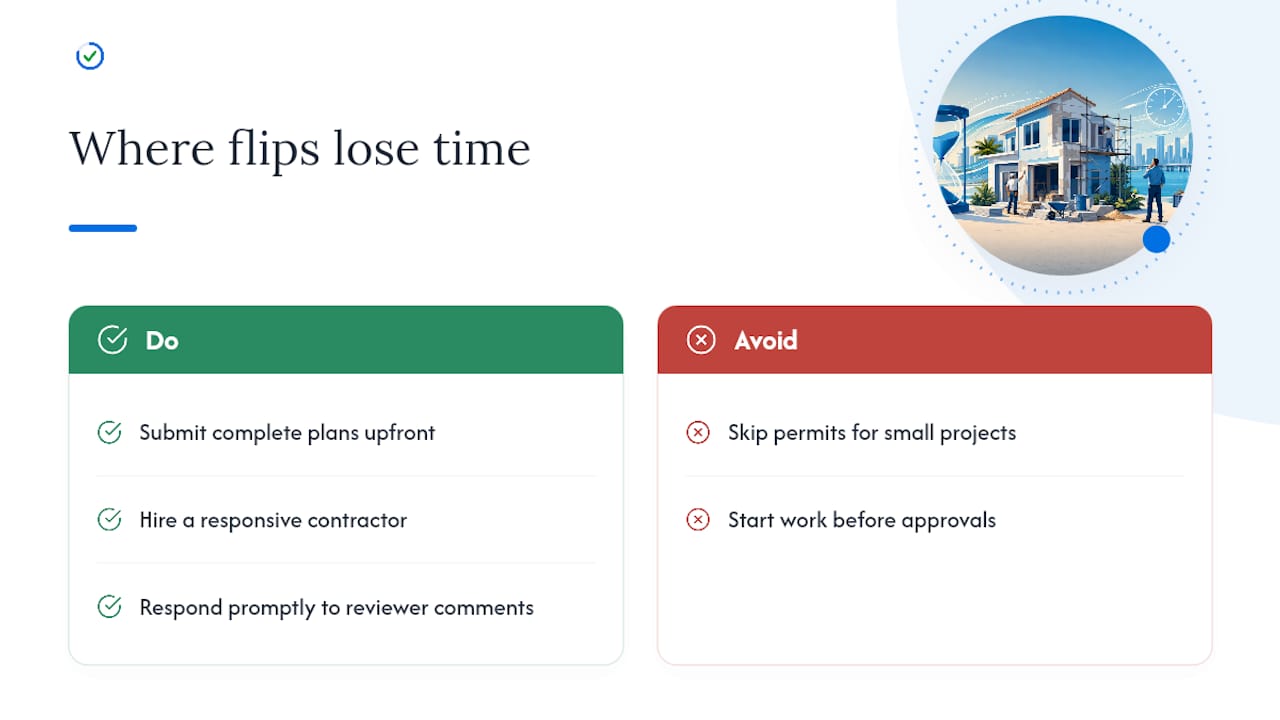
An experienced reviewer’s take on where flips actually lose time
The most common mistake isn’t a bad architect or a slow reviewer. It’s a flipper who assumed a small scope didn’t need a permit, then got a stop-work order mid-renovation. That single oversight can cost weeks and thousands in carrying costs. Most delays are avoidable with a complete first submission and a contractor who answers review comments fast.
A faster way to know if your permit package will pass
There’s no shortcut around Miami-Dade’s review queue, but you can control what happens before you’re in it. MiamiPermitAI reads your uploaded plans and documents against Miami 21 zoning, FEMA flood data, folio records, and Florida DBPR licensing, and returns a readiness score with a specific list of what’s missing or inconsistent, before the county ever sees the package.
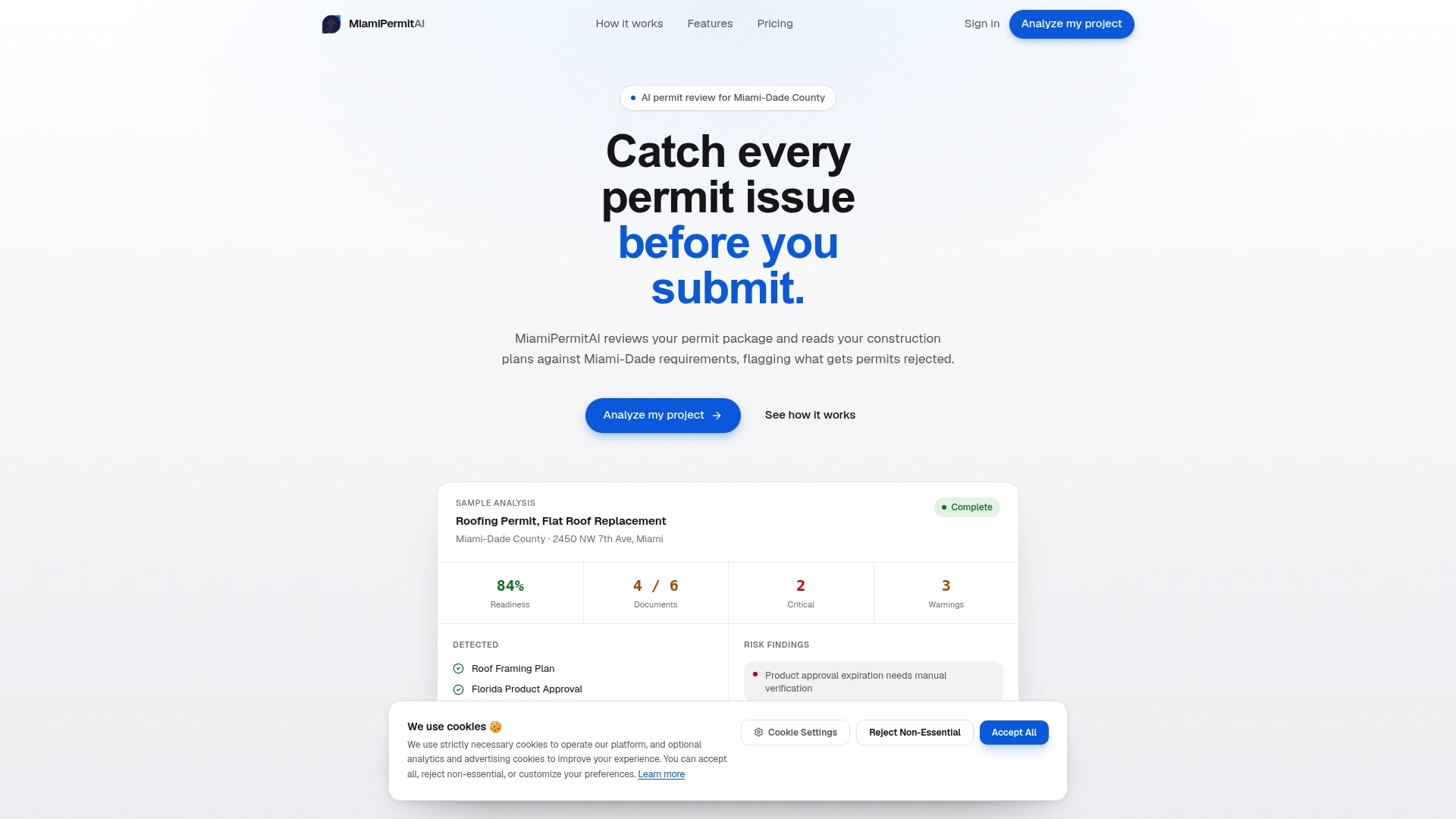
For a flipper, that means fewer correction cycles, faster issuance, and status tracking after you submit, without paying an expediter to babysit the file. If your renovation budget crosses that $7,500 exemption line or touches structure, roofing, electrical, plumbing, or HVHZ products, check your permit package before you submit it.
Sources
- Palmetto Bay NewsFlash: House Bill 803 exemption notice
- City of Miami: Get an Easy Permit
- Miami Building Permits: How to avoid delays in 2026 (Contractor Guide)
Recommended
Is your permit package ready?
Run an AI readiness check against Miami-Dade requirements before you submit.
Start your first projectThis article is general guidance and not legal, engineering, or official county advice. Always verify requirements with Miami-Dade County before submitting a permit.